António de Noli: The Navigator Who Founded Cape Verde
In the mid-15th century, the Atlantic Ocean was the final frontier for European explorers seeking new trade routes and territorial expansion. While names like Christopher Columbus and Vasco da Gama dominate the history books, the story of the discovery and settlement of Cape Verde (Cabo Verde) begins with a lesser-known but equally pivotal figure: António de Noli. A Genoese navigator in the service of the Portuguese Crown, de Noli’s arrival at the uninhabited archipelago changed the course of Atlantic history and established the foundations of the first permanent European settlement in the tropics.
The Origins of a Navigator
Born in Genoa, Italy, around 1415, António de Noli (also known as Antoniotto usodimare in some records) was part of a prestigious lineage of Italian sailors. During the 15th century, the Republic of Genoa was a powerhouse of maritime knowledge, and its navigators were frequently recruited by the Portuguese monarchy, specifically under the patronage of Prince Henry the Navigator. De Noli, seeking fortune and discovery, moved to Portugal where he obtained the backing of King Afonso V.
The Discovery of the Archipelago
For millennia, the ten volcanic islands of Cape Verde remained untouched by human footprints. Formed approximately 40 to 50 million years ago, these islands—located between 600 and 850 kilometers off the coast of West Africa—were a mystery until the mid-1450s.
According to official Portuguese records, António de Noli is credited with the first discovery of several islands in the archipelago around 1456. Navigating the treacherous waters of the central Atlantic, de Noli was accompanied by other notable explorers, including the Venetian Alvise Cadamosto and the Portuguese Diogo Gomes. While historical accounts sometimes debate which navigator reached which island first—Gomes, for instance, claimed to be the first to land on the island of Santiago—de Noli remains the central figure in the formal recognition of the archipelago.
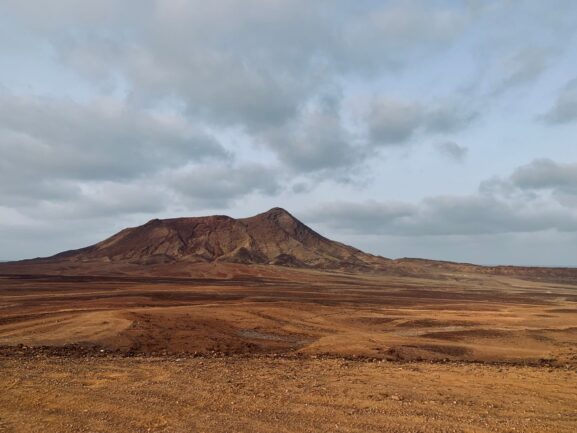
The islands were named “Cabo Verde” (Green Cape) after the Cap-Vert peninsula in modern-day Senegal, which had been sighted by explorers a few years earlier. Ironically, while the name suggests lush greenery, many of the islands like Sal and Boa Vista are arid and sandy, though the mountainous interiors of islands like Santiago provided the fertile ground necessary for the colony to take root.
First Governor and the Birth of Ribeira Grande
Recognizing his contribution and leadership, King Afonso V appointed António de Noli as the first Governor (Captain-Major) of Cape Verde. His mandate was clear: establish a presence for the Portuguese Crown and begin the arduous task of colonizing uninhabited land.
In 1462, de Noli orchestrated the arrival of the first settlers on the island of Santiago. They founded Ribeira Grande, known today as Cidade Velha (Old City). This was a landmark moment in world history, as Ribeira Grande became the first permanent European colonial outpost in the tropics. Under de Noli’s administration, the settlement served as a vital laboratory for Atlantic colonization. The settlers introduced livestock, Mediterranean crops, and sugarcane, attempting to adapt European agricultural practices to the Macaronesian climate.
A Strategic and Controversial Hub
De Noli’s tenure as governor coincided with the archipelago’s rise as a strategic “crossroads of the Atlantic.” Because of its position between Africa, Europe, and the newly “discovered” Americas, Cape Verde became a crucial re-supply point. However, this strategic value led to a darker legacy. The islands soon became a central hub for the transatlantic slave trade.
The economy de Noli helped initiate was driven by the exchange of manufactured goods, rum, and cloth for African gold, ivory, and enslaved persons. This trade brought rapid economic growth to Ribeira Grande, transforming it into a wealthy city that would eventually attract the attention of legendary pirates and privateers like Francis Drake in the following century.
Cultural and Demographic Legacy
António de Noli did not just establish a port; he oversaw the beginning of a new ethnic and cultural identity. Because the islands were originally uninhabited, the population that formed under and after de Noli’s rule was entirely migratory. This created a unique melting pot of West African populations and early Portuguese and Genoese settlers.
This fusion gave birth to the Cape Verdean Creole (Crioulo), the national language spoken by the vast majority of the population today. While the official language remains Portuguese—a nod to the colonial structure de Noli helped build—the soul of the country is found in this hybrid culture that spans music, food, and social traditions.
The End of an Era
António de Noli remained an influential figure until his death, though the exact details of his final years remain somewhat obscured by the fog of history. Some accounts suggest he returned to Italy, while others believe he remained tied to the islands he helped bring to the world map. Regardless, his family continued to play a role in the governance of the islands for several generations.
Cape Verde Today: From Discovery to Democracy
The archipelago that de Noli first sighted in the 1450s has undergone a radical transformation. After centuries of colonial rule and a grueling struggle for independence led by Amílcar Cabral in the 20th century, Cape Verde became a sovereign nation in 1975.
Today, the Republic of Cabo Verde is celebrated as one of Africa’s most stable and democratic nations. While it lacks the natural resources that fueled early colonial interest, it has reinvented itself as a leader in tourism and renewable energy. In a poetic evolution of the maritime legacy started by de Noli, the country is now at the “frontlines” of the climate crisis, leading the way in “debt-for-nature” swaps and aiming for 50% renewable energy by 2030.
Conclusion
António de Noli was more than just a navigator; he was the architect of a new Atlantic world. By bridging the gap between the Mediterranean maritime tradition and the unexplored islands of Macaronesia, he set in motion the history of a nation that remains a vital link between continents. While the modern traveler visits Cape Verde for its stunning volcanic landscapes and vibrant Morna music, the foundations of this unique mid-Atlantic society were laid over 500 years ago by a Genoese sailor who looked west and saw a future in the “Green Cape.”
Image: Pexels – damien Saillet