Deserto de Viana: Exploring Boa Vista’s Saharan Sands
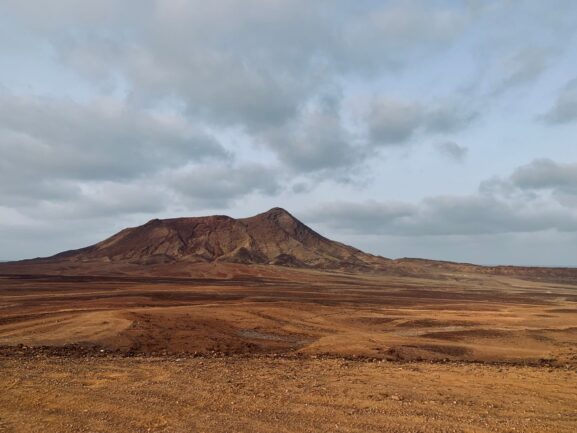
In the middle of the Atlantic Ocean, nestled within the horseshoe-shaped archipelago of Cabo Verde, lies a geological anomaly that defies the expectations of tropical island life. On the eastern island of Boa Vista, the lush volcanic imagery of West Africa gives way to a landscape of golden peaks and shifting silts. This is the Deserto de Viana, a miniature Sahara that serves as a stunning testament to the power of wind and the interconnectedness of our planet’s ecosystems.
A Saharan Soul in the Atlantic
While Cabo Verde is a volcanic archipelago formed 40 to 50 million years ago, the Deserto de Viana is a much younger, dynamic feature. Located in the northwestern part of Boa Vista, just east of the towns of Rabil and Sal Rei, the desert spans roughly 10 to 20 kilometers in length. What makes this site extraordinary is its origin: it is not a traditional desert formed solely by local aridity, but rather a gift from the African continent.
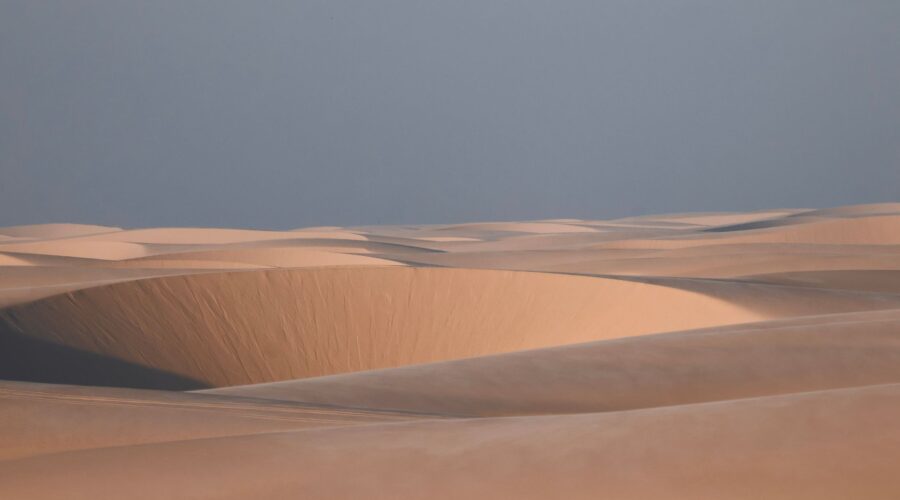
Strong trade winds, known as the Harmattan, carry massive quantities of fine sand across the 600 kilometers of ocean separating Cabo Verde from the coast of Senegal and the Sahara. Over millennia, this “sand bridge” has deposited Saharan dust and sand onto the flat plains of Boa Vista. Because Boa Vista (along with Sal and Maio) is one of the oldest and flattest islands in the chain, it lacks the high mountain peaks found on islands like Santiago or Fogo that might block the wind’s path. The result is a mesmerizing moonscape of shifting dunes, known locally as lombas.
The Geography of the “Dunes of Viana”
Cabo Verde is officially part of the Sahelian semi-arid belt, but the Deserto de Viana takes aridity to the extreme. While the humid mountains of Santiago may receive over 1,000 mm of rainfall annually, the plains around Sal Rei often see as little as 67 mm. This extreme lack of moisture, combined with the constant influx of new sand, prevents the growth of significant vegetation, creating a pure desert aesthetic.
Walking through Viana, visitors are greeted by a palette of ivory, ochre, and gold. The sand here is remarkably soft and fine, often mixed with crushed volcanic rock and coral particles, giving it a unique texture compared to the continental Sahara. Scattered throughout the dunes, you will find the occasional tamareira (date palm) or hardy acacia trees, which provide a stark green contrast to the undulating waves of sand.
Interesting Facts About the Desert
- The “Singing” Sands: On particularly windy days, the movement of the sand grains over the dunes creates a low-frequency hum or whistle, a phenomenon known as “singing sands.”
- A Protective Shield: The desert is part of a protected landscape area, ensuring that its unique ecosystem—home to endemic reptiles and migratory insects—remains undisturbed by heavy industrial development.
- Moving Landscapes: The dunes are not static. Due to the relentless Atlantic winds, the desert is slowly expanding and shifting its borders every year.
Cultural Context: Life in the Dust
The Deserto de Viana is more than just a tourist attraction; it is woven into the identity of the Bubistas (the people of Boa Vista). Historically, the harsh environment of the island led its inhabitants to rely on salt production and fishing. Today, as Cabo Verde transitions toward a service-oriented economy, the desert has become a cornerstone of the island’s tourism.
The silence of Viana reflects the broader Cape Verdean philosophy of Morabeza—a word that encompasses hospitality, tranquility, and the relaxed pace of island life. To visit the desert is to experience a profound sense of isolation and peace, far removed from the bustling capital of Praia on Santiago.
Practical Information for Travelers
Exploring the Deserto de Viana is a “must-do” for any traveler venturing to the Barlavento (windward) islands. Here is how to make the most of your visit:
How to Get There
The desert is easily accessible from the main tourist hubs of Sal Rei. Most visitors choose one of three ways to explore:
- 4×4 Jeep Tours: Professional guides lead caravans across the dunes, often combining the desert visit with stops at the Cabo Santa Maria shipwreck.
- Quad Biking: For the adventurous, renting an ATV (Quad) is the most popular way to traverse the sandy terrain.
- Hiking: It is possible to walk the perimeter, but the heat can be intense. Always bring a local guide to avoid getting disoriented by the shifting landscape.
The Best Time to Visit
The golden hour—either just after sunrise or an hour before sunset—is the best time for photography. The low sun creates dramatic shadows across the ripples of the dunes, highlighting the desert’s architectural beauty. Temperature-wise, the most comfortable months are between November and June, when the Atlantic breeze moderates the heat.
What to Pack
- Scarf or Buff: Essential for protecting your face from wind-blown sand.
- High-SPF Sunscreen: The white sand reflects UV rays, increasing the risk of sunburn.
- Water: There are no shops or facilities within the desert interior.
Conservation and the Future
As Cabo Verde faces the existential threat of climate change—ranked as one of the most endangered nations due to rising sea levels—the Deserto de Viana stands as a reminder of nature’s fragility. The government of Cabo Verde has set ambitious goals to reach 50% renewable energy by 2030, and sustainable tourism in areas like Viana is a key part of that strategy. By visiting with licensed local guides and respecting the “leave no trace” principle, travelers help preserve this Saharan piece of the Atlantic for generations to come.
Conclusion
The Deserto de Viana is a geological poem—a story of how the wind brings the heart of Africa to the shores of a volcanic archipelago. It offers a rare opportunity to stand in a silent, golden wilderness while hearing the distant roar of the Atlantic Ocean. For those seeking the soul of Cabo Verde beyond its beaches, Viana is an unforgettable destination that captures the raw, untamed beauty of the islands.
Image: Pexels – Renata Meneses