The Iago Sparrow: Ecology of Cape Verde’s Endemic Bird
In the rugged, volcanic landscape of the Republic of Cabo Verde, a small but resilient flutter of feathers symbolizes the unique biodiversity of Macaronesia. The Iago sparrow (Passer iagoensis), also known as the Cape Verde sparrow, is a bird that exists nowhere else on Earth. As a national endemic species, it is a living testament to the archipelago’s isolation and the evolutionary processes that have shaped life on these ten volcanic islands off the coast of West Africa.
Taxonomy and Evolutionary History
The Iago sparrow is a member of the Passeridae family, the same family that includes the ubiquitous House Sparrow found across the globe. However, the Iago sparrow’s lineage is distinct. Genetic studies suggest it is more closely related to the Spanish sparrow (Passer hispaniolensis) or the Dead Sea sparrow, rather than the common House Sparrow. Its name, “Iago,” is derived from Santiago—the largest and most populous island of Cape Verde—where the species was first described by naturalists.
Interestingly, the famous naturalist Charles Darwin visited Cape Verde in 1832 as the first stop on his voyage with HMS Beagle. While his work in the Galápagos is more widely known, his observations of the flora and fauna in the Cape Verdean archipelago provided important early insights into how species adapt to isolated, arid environments.
Physical Appearance and Identification
To the untrained eye, the Iago sparrow may resemble other sparrows, but it possesses subtle, beautiful distinctions. Measuring approximately 12.5 to 13 centimeters in length, it is slightly smaller and more slender than the House Sparrow. Sexual dimorphism is present in the species:
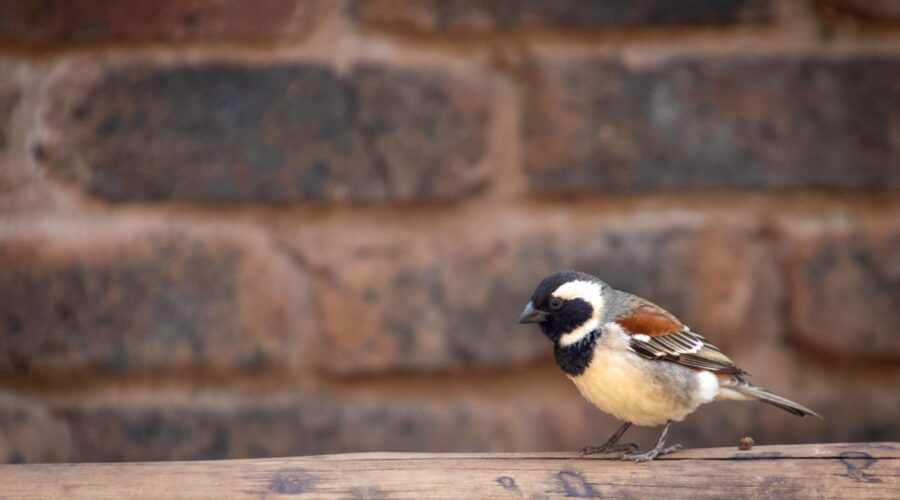
- Males: Feature a striking black bib and a distinctive cinnamon-brown crown and nape. They often show a bright white supercilium (the stripe above the eye) and chestnut-colored streaks on their wings.
- Females: Generally display more muted tones, with sandy-brown plumage and a less prominent eye stripe, providing excellent camouflage against the volcanic soil and dry grasses.
Ecology: Life in a Volcanic Archipelago
The Iago sparrow is remarkably versatile, having adapted to the various microclimates found across the archipelago. Cape Verde spans four broad ecological zones—arid, semiarid, sub-humid, and humid—and the Iago sparrow can be found in almost all of them.
Habitat and Distribution
The bird is found on all of the main islands except perhaps the tiniest uninhabited islets. It thrives in various environments, from the flat, sandy salt flats of Sal and Maio to the steep, rocky slopes of Fogo and Santo Antão. Unlike many other endemic species that shy away from humans, the Iago sparrow is frequently seen in urban centers like Praia and Mindelo, often foraging in parks, gardens, and near outdoor cafes.
Diet and Behavior
Primarily granivorous, the Iago sparrow feeds on seeds of grasses and small plants. However, like many island endemics, it is an opportunistic feeder. During the brief rainy season (typically August to October), it supplements its diet with insects and larvae, which provide essential protein for breeding. They are social birds, often seen in small flocks, chattering with a call that is softer and more musical than that of the European House Sparrow.
The Challenges of Conservation
While the Iago sparrow is currently listed as “Least Concern” by the IUCN because of its relatively stable population across several islands, it remains vulnerable due to its limited geographic range. Being a national endemic means that if the species faces a catastrophic threat in Cape Verde, it faces extinction globally.
Competition and Hybridization
One of the primary ecological threats to the Iago sparrow is the introduction of the House Sparrow (Passer domesticus). On islands where the House Sparrow has established a foothold, the Iago sparrow is often pushed out of urban niches toward more marginal, rural areas. There have also been concerns regarding potential hybridization, which could dilute the genetic uniqueness of the endemic species.
Climate Change and Habitat Loss
Cape Verde is on the frontlines of the climate crisis. Rising temperatures and increasingly unpredictable rainfall patterns threaten the delicate balance of the “Cape Verde Islands dry forests” ecoregion. As UN Secretary-General António Guterres noted during a 2023 visit, the archipelago is facing an existential crisis. If droughts become more persistent—a trend that historically led to economic decline in the 19th century—the food sources for the Iago sparrow may diminish, impacting their breeding success.
Cultural Significance
The Iago sparrow is more than just a biological specimen; it is a part of the Cape Verdean identity. In a nation where Crioulo (Cape Verdean Creole) is the heart of the culture, the bird is a familiar sight in daily life. It represents the “morabeza” (the spirit of hospitality and resilience) of the islands—a small creature thriving in a landscape of lava and sea spray.
Future Outlook
Fortunately, Cape Verde is a leader in environmental stewardship in Africa. The government’s recent “debt-for-nature swap” with Portugal, which involves investing €140 million into environmental and climate projects, bodes well for the protection of endemic species. Conservationists are focused on monitoring the population balance between the Iago sparrow and invasive species, as well as preserving the humid mountain forests where the Mist provides essential moisture for the ecosystem.
For birdwatchers and nature enthusiasts visiting the islands, the Iago sparrow offers a unique opportunity to witness evolution in action. Whether you are trekking the caldera of Pico do Fogo or walking the historic streets of Cidade Velha, a glimpse of this cinnamon-crowned bird is a reminder of the precious, fragile nature of island life.
Fast Facts: The Iago Sparrow
Scientific Name: Passer iagoensis
Status: Endemic to Cape Verde
Best time to see: Year-round, but most active during the post-rainy season (October–December)
Key Identification: Look for the rusty-cinnamon crown on the males, distinct from the gray crown of the common House Sparrow.
Summary
The Iago sparrow is a resilient survivor in one of the most beautiful yet challenging environments on earth. As Cape Verde continues to grow its tourism sector and address the impacts of climate change, the protection of this national endemic bird remains a priority. It serves as a feathered ambassador for the archipelago, reminding us that even the smallest residents of these “Green Capes” deserve our attention and protection.
Image: Pexels – Magda Ehlers