Dangerous Detours: Hardline Border Controls Drive African Migration Risk
Tightened border controls across Africa are forcing migrants onto longer, more dangerous journeys as smuggling routes shift toward more remote and hazardous territories, the International Organization for Migration (IOM) warned in a report released Monday.
The “Global Overview of Migratory Routes” for the first four months of 2026 reveals a complex landscape: while arrivals on some traditional routes have plummeted, the underlying risks of death, human trafficking, and exploitation remain alarmingly high.
Shifting Sands on the Atlantic Route
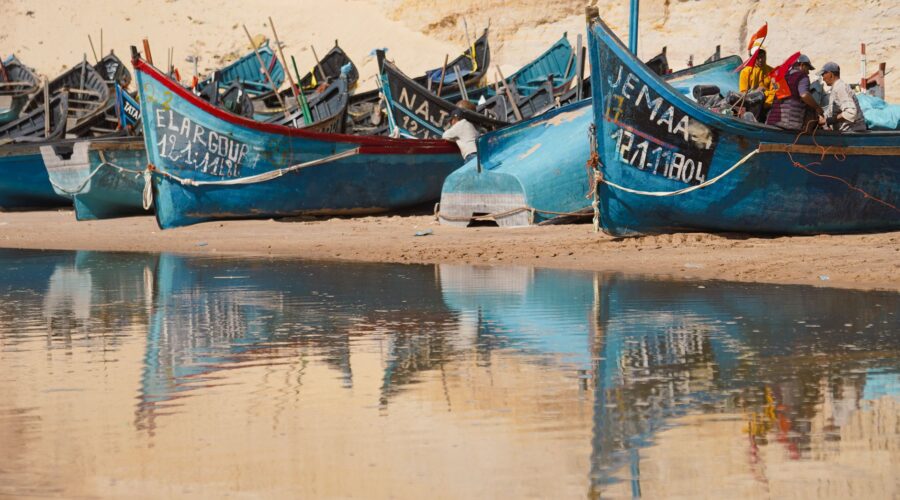
The West African Atlantic Route—a treacherous sea crossing to the Spanish Canary Islands—saw a dramatic 78% drop in arrivals between January and April compared to previous periods. However, the IOM cautioned that this decline does not signal a victory for migrant safety. Instead, increased surveillance in Morocco, Mauritania, and Senegal has pushed departure points further south to Guinea-Conakry, Guinea-Bissau, and the Gambia.
The UN agency noted that as Spain and the European Union pour funding into coastal surveillance and migration control, migrants are being forced into “more remote coastal areas.” In these isolated spots, they are increasingly vulnerable to traffickers, extortion, and misinformation, with almost no access to humanitarian assistance.
While deaths on this route fell by 48% to 155 recorded fatalities, drowning remains the primary killer. The report highlighted that traffickers continue to use overcrowded, unseaworthy vessels that are frequently swept off course toward Cape Verde or lost in the vastness of the Atlantic due to engine failure.
Rising Numbers in the Horn of Africa
In contrast to the Atlantic, the Eastern Horn of Africa Route is seeing a surge in activity. Approximately 70,200 migrants—mostly from Ethiopia—arrived in Yemen during the first trimester of 2026, a 9% year-on-year increase. These migrants cross through Djibouti and Somalia to reach the Arabian Peninsula, braving a route made doubly dangerous by the ongoing conflict in Yemen.
The IOM documented 105 deaths on this path, warning that travelers face a gauntlet of “persistent and widespread risks,” including arbitrary detention, physical violence, and exploitation by sophisticated trafficking networks.
Southern Africa: Economic Desperation and Strict Controls
Movement toward South Africa—the continent’s southern economic hub—decreased by 39% to 24,200 recorded movements. The IOM attributes this decline to South Africa’s aggressive strengthening of migration controls. The drop was most pronounced among Zimbabweans (down 69%) and Ethiopians (down 62%).
Despite the dip in numbers, the motivations for the journey remain unchanged: unemployment and a lack of access to land. Those who still attempt the crossing face grueling conditions, traveling in “unsafe and overcrowded transport” while being exposed to extreme weather, wild animals, and predatory smugglers.
The IOM report underscores a grim reality for global migration policy: while border walls and patrols may redirect the flow of people, they rarely stop the journey. Instead, they often drive the world’s most vulnerable populations further into the shadows.
Image: Pexels – Msaidi Art