The Geology of Cape Verde: A Soda-Alkaline Province
In the vast expanse of the central Atlantic Ocean, the archipelago of Cape Verde (Cabo Verde) stands as a geological marvel. While most travelers are drawn to its rhythmic Morna music, turquoise waters, and the historic cobblestones of Cidade Velha—the first European settlement in the tropics—geologists are fascinated by something hidden beneath the surface. Cape Verde is not just a collection of ten volcanic islands; it is a primary example of a Soda-Alkaline Petrographic Province.
This scientific classification defines the unique chemical DNA of the islands’ rocks. Unlike the typical basaltic rocks found on the ocean floor, Cape Verde’s igneous compositions are exceptionally rich in sodium and potassium, telling a story of deep-earth processes that began nearly 50 million years ago. Understanding this “petrographic province” is key to understanding why this horseshoe-shaped cluster of islands looks and behaves the way it does today.
The Foundations of the Cape Verde Rise
The story of Cape Verde’s geology begins between 125 and 150 million years ago, evidenced by magnetic anomalies in the surrounding seafloor. However, the islands we see today are much younger, having emerged from the waves between 8 and 20 million years ago. The archipelago sits atop the Cape Verde Rise, one of the most significant bathymetric swells in the world’s oceans. This massive protrusion rises 2.2 kilometers from the sea floor, covering a semi-circular area of 1,200 square kilometers.
This rise is a geological “bulge” caused by a mantle plume—a localized hotspot of intense heat rising from deep within the Earth. As the African tectonic plate moved slowly over this hotspot, the pressure and heat forced magma upward, creating the volcanic structures that eventually breached the surface to form the Barlavento (windward) and Sotavento (leeward) islands.
What is a Soda-Alkaline Petrographic Province?
In geology, a “petrographic province” refers to a region where the igneous rocks share a common chemical and mineralogical character, usually because they originated from the same parent magma source. Cape Verde is classified as soda-alkaline, a term that describes a specific chemical “flavor” of igneous rock.
1. High Alkali Content
Most oceanic islands, such as Hawaii, are primarily composed of tholeiitic basalts. However, Cape Verde’s rocks are distinctly “basic” and “alkaline.” They contain high concentrations of alkalis—specifically sodium (soda) and potassium. This suggests that the magma underwent significant transformation or originated from a part of the mantle that is chemically distinct from the source of the surrounding ocean floor.
2. Diverse Rock Types
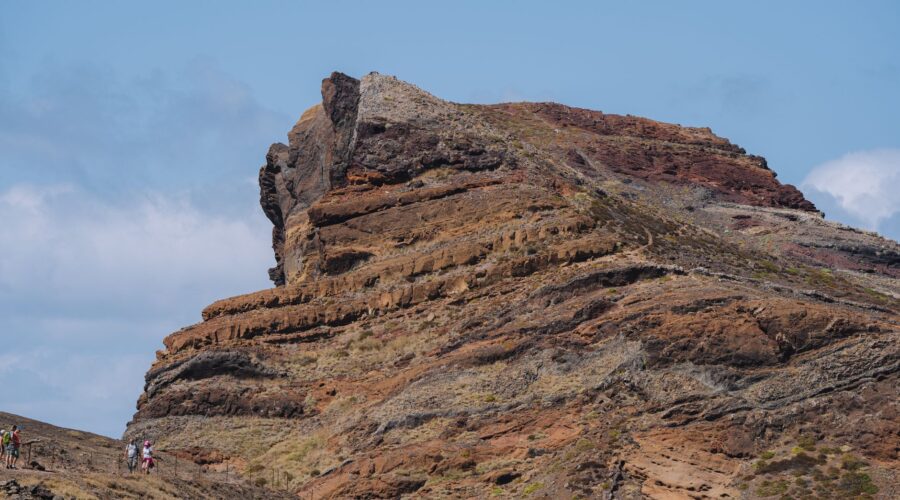
The archipelago features a petrologic succession similar to its Macaronesian neighbors (the Azores, Canary Islands, and Madeira). This includes a variety of rocks such as phonolites, trachytes, and basanites. These rocks are often lighter in color or have different crystallization patterns than standard black basalt, contributing to the stark, dramatic landscapes seen on islands like Fogo and Santo Antão.
3. Pyroclastic and Plutonic Structures
The islands aren’t just made of cooled lava flows. A huge portion of their volume consists of pyroclastic debris—fragmented material ejected during explosive eruptions—and plutonic rocks, which are igneous rocks that cooled and solidified beneath the surface before being exposed by erosion.
The Active Heart: Pico do Fogo
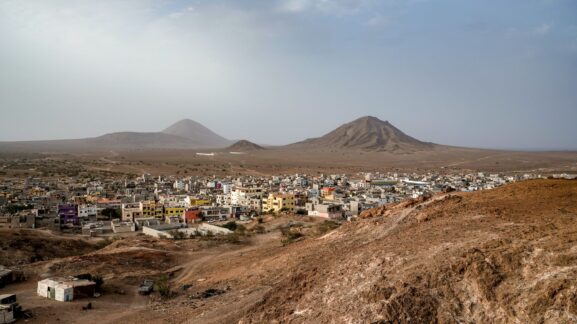
While the eastern islands like Sal and Maio are geologically older, flatter, and heavily eroded—yielding extensive salt flats—the western islands remain rugged and volcanically active. The epicenter of this activity is Pico do Fogo on the island of Fogo.
Fogo provides a living laboratory for studying soda-alkaline volcanism. The island features an impressive eight-kilometer-wide caldera, the result of a massive subsidence event where the land collapsed into a partially emptied magma chamber. The interior cone of Pico do Fogo reaches 2,829 meters above sea level, making it the highest point in the country. Its most recent eruption in 2014 served as a reminder that the geological forces that birthed the Soda-Alkaline Petrographic Province are still very much at work.
Geology and the Human Landscape
The unique rock composition of Cape Verde has directly influenced its history and economy. The oldest exposed rocks, found on Maio and Santiago, are 128-million-year-old “pillow lavas,” formed when lava erupts underwater. These ancient foundations eventually supported the arrival of Portuguese explorers in 1456, who found the islands uninhabited.
Because the soda-alkaline rocks weather into specific types of soil, the islands’ agricultural potential varies wildly. On islands like Santiago and Santo Antão, the steep volcanic slopes and orographic rainfall allow for the growth of sugarcane and banana plantations. In contrast, the flat, arid islands of Sal and Boa Vista rely on the minerals left behind by geological processes, such as the salt that fueled a major export industry in centuries past.
Conclusion: A Laboratory in the Atlantic
Cape Verde is much more than a “Green Cape” (as its name Cabo Verde implies). It is a complex geological puzzle. Its status as a Soda-Alkaline Petrographic Province places it among a select group of locations worldwide where scientists can study the deep chemical reservoirs of the Earth’s mantle.
From the ancient pillow lavas of Maio to the smoking cone of Fogo, the archipelago remains a testament to the power of alkaline volcanism. For the traveler, these rocks form the towering cliffs and black-sand beaches that define the islands’ beauty. For the scientist, they represent a window into the molten processes that continue to shape our planet’s crust. As Cape Verde looks to the future—transitioning toward renewable energy and protecting its endemic biodiversity—its volcanic foundation remains the silent, sturdy protagonist of its national story.
Image: Pexels – Diogo Miranda