Iberian Union & Cape Verde: History of Atlantic Trade
In the late 16th century, the geopolitical landscape of the Atlantic underwent a seismic shift. In 1580, the death of King Sebastian of Portugal without an heir led to the “Philippine Dynasty,” a period known as the Iberian Union. For sixty years, the crowns of Portugal and Spain were united under the Spanish Habsburgs—Philip II, III, and IV. This union did more than just redraw the map of Europe; it fundamentally altered the trajectory of the Atlantic islands, most notably the strategic archipelago of Cape Verde (Cabo Verde).
A Strategic Hub in the Middle of the Ocean
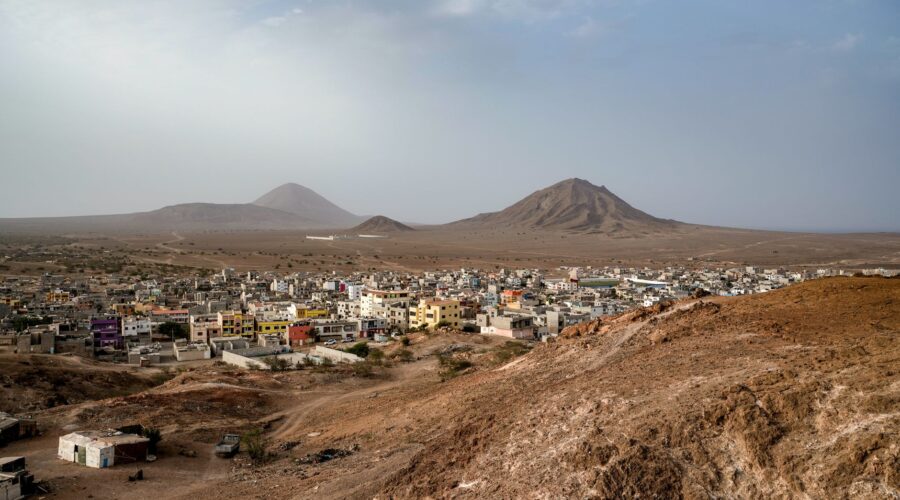
Located approximately 570 kilometers off the coast of West Africa, Cape Verde was uninhabited when Portuguese explorers first arrived in the mid-15th century. By the time the Iberian Union was established in 1580, the islands—particularly Santiago and its capital, Ribeira Grande (now Cidade Velha)—had become the nerve center of the Portuguese maritime empire in the tropics. They served as a vital “reorder point” for ships traveling between Europe, the Americas, and the African coast.
The Union of 1580 effectively brought the vast Portuguese overseas territories under the protection—and the crosshairs—of the Spanish Empire. For Cape Verde, this meant transitioning from a purely Portuguese commercial outpost into a critical frontier of the world’s most powerful empire. However, this newfound status came with a heavy price.
The Impact on Atlantic Trade: Prosperity and Peril
During the early years of the Union, Cape Verde saw continued economic activity driven by the transatlantic trade. The islands functioned as a clearinghouse for goods such as rum, cloth, and manufactured items, which were exchanged on the African mainland for ivory, gold, and, most significantly, enslaved people. The “contract” system (asiento) often saw Spanish merchants utilizing Portuguese maritime expertise, further entrenching Cape Verde as a hub for the logistics of the Atlantic slave trade.
However, the union of the two crowns also meant that Portugal’s enemies became Spain’s enemies. As Spain was frequently at war with England, France, and the Netherlands, the previously secure Portuguese settlements in Cape Verde became prime targets for privateers and naval forces seeking to weaken the Habsburg grip on Atlantic wealth.
The Shadow of Piracy: The Drake Attacks
One of the most defining moments of the Iberian Union era for Cape Verde occurred in 1585. Sir Francis Drake, the famed English privateer acting under the commission of Queen Elizabeth I, launched a devastating raid on Ribeira Grande. This was not a random act of piracy but a calculated blow against the Spanish-Portuguese union.
Drake’s forces sacked the city twice, looting its wealth and exposing the vulnerability of the islands’ defenses. These attacks signaled the beginning of a long decline for Ribeira Grande. The threat of piracy forced the local population to look toward more defensible positions, eventually leading to the rise of Praia as the dominant urban center. The economic toll of these raids, combined with the heavy taxation imposed by the Spanish crown to fund European wars, began to erode the prosperity the islands had enjoyed in the early 16th century.
A Melting Pot of Cultures
Despite the military and economic turbulence, the period of the Iberian Union solidified the unique social fabric of Cape Verde. The islands were a crossroads where West African populations met European settlers. This era saw the continued development of Cape Verdean Creole (Crioulo), a language born from the necessity of communication between diverse groups in the trade ports.
The “Luso-African” identity was forged during these centuries. Traders known as lançados (those who had “thrown themselves” into African culture) operated between the islands and the Upper Guinea coast, often defying official crown monopolies to establish their own networks. This blend of Portuguese administration and African cultural influence created the basis for the modern Cape Verdean identity, which remains one of the most stable and vibrant in Africa today.
The End of the Union and its Legacy
By 1640, the Portuguese nobility, dissatisfied with Spanish rule and the loss of colonial territories to the Dutch and English, staged a coup that restored Portuguese independence under the House of Braganza. As the Iberian Union dissolved, Cape Verde returned to sole Portuguese administration.
However, the world had changed. The sixty years of union had coincided with the rise of the Dutch West India Company and increased competition from English and French interests in the Atlantic. Cape Verde no longer held a monopoly on the trade routes to the South Atlantic. While the islands remained important for resupplying ships—a role that would continue well into the 19th century when Charles Darwin’s HMS Beagle stopped there—the “Golden Age” of Ribeira Grande had passed.
Cape Verde Today: From Trade Hub to Democratic Beacon
Reflecting on the era of the Iberian Union highlights how deeply Cape Verde’s history is intertwined with global geopolitics. Today, the Republic of Cabo Verde is a far cry from the embattled outpost of the 16th century. Since gaining independence in 1975, it has emerged as one of Africa’s most stable representative democracies.
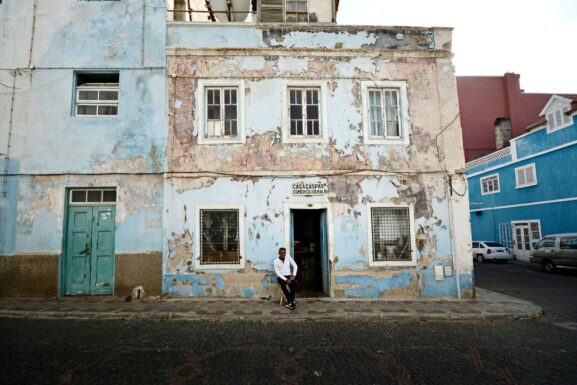
The ruins of Cidade Velha, the “Old City” that was once Ribeira Grande, now stand as a UNESCO World Heritage site. They serve as a hauntingly beautiful reminder of the time when these ten volcanic islands were the center of a global struggle for empire. Today’s Cape Verdeans, with a population of roughly 530,000, look toward a future built on tourism, renewable energy, and international cooperation, while their history remains etched in the stones of the first European settlement in the tropics.
Fast Facts about Cape Verde’s History
- Discovered: Around 1456 by Genoese and Portuguese navigators.
- First Settlement: Ribeira Grande (1462), the first permanent European settlement in the tropics.
- Iberian Union Period: 1580–1640, during which the islands were under the Spanish Habsburgs.
- Independence: Achieved from Portugal on July 5, 1975.
- Modern Status: Ranked among the most democratic and developed countries in Africa.
Image: Pexels – Nico Marín