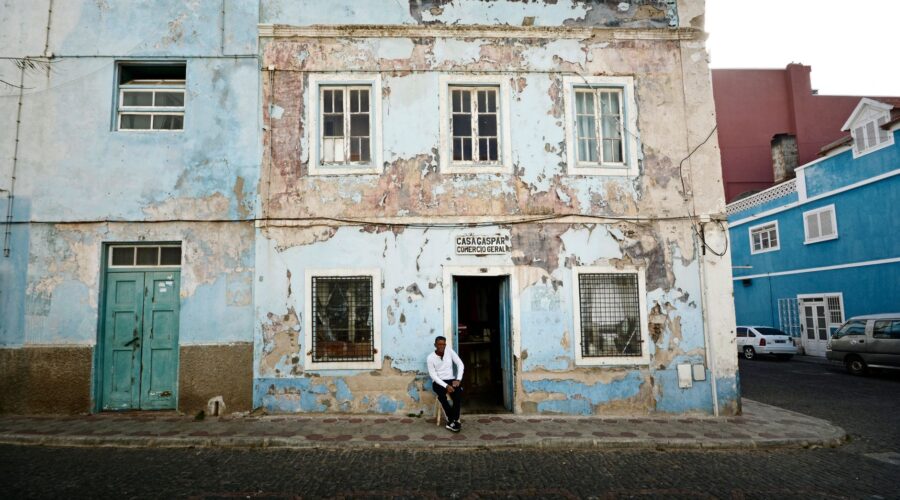
The 1974 Algiers Agreement: Cape Verde’s Path to Freedom
In the quiet rooms of Algiers in late 1974, a diplomatic masterstroke was unfolding. While the world’s attention was often captured by the explosive armed conflicts of the Cold War, the fate of a ten-island archipelago in the central Atlantic was being decided through rigorous negotiation and strategic foresight. The 1974 Algiers Agreement stands today as the pivotal legal and political bridge that transformed Cape Verde (Cabo Verde) from a neglected Portuguese overseas province into a sovereign, democratic nation.
The Road to Algiers: A Century of Discontent
To understand the weight of the Algiers Agreement, one must look at the centuries of colonial rule that preceded it. Discovered by Portuguese and Genoese navigators in 1456, Cape Verde was the first permanent European settlement in the tropics. For centuries, its history was inextricably linked to the transatlantic slave trade and later, its strategic position as a mid-Atlantic refueling station for global shipping.
However, by the mid-20th century, the relationship between Lisbon and the islands had soured. Despite Portugal changing Cape Verde’s status to an “overseas province” in 1951 to curb nationalist sentiments, the reality on the ground was one of economic neglect and a lack of political autonomy. This dissatisfaction birthed the African Party for the Independence of Guinea and Cape Verde (PAIGC) in 1956, led by the visionary intellectual Amílcar Cabral. While the PAIGC engaged in a fierce armed struggle in Portuguese Guinea (now Guinea-Bissau), the strategy for Cape Verde was different—focused on political mobilization and clandestine organizing, awaiting the right moment for a diplomatic breakthrough.
The Catalyst: The Carnation Revolution
The “moment” arrived not in the islands, but in Portugal itself. The Carnation Revolution of April 25, 1974, overthrew the authoritarian Estado Novo regime in Lisbon. The new democratic leadership in Portugal was eager to dismantle the colonial empire that had drained the country’s resources and international standing for decades.
With the collapse of the old regime, the PAIGC emerged from the shadows in Cape Verde, becoming an active and legal political movement. The transition, however, required a formal roadmap. The islands were in a unique position; unlike Guinea-Bissau, which had already declared independence in 1973, Cape Verde’s path remained legally tied to Lisbon until a formal handoff could be engineered. This necessity brought the two sides to the negotiating table in Algiers.
The 1974 Algiers Agreement: The Diplomatic Blueprint
Signed in December 1974, the Algiers Agreement was the definitive document that set the clock for Cape Verdean sovereignty. It was a sophisticated diplomatic instrument that addressed the immediate power vacuum and outlined a peaceful transition. The agreement established three critical pillars:
1. The Transitional Government
The agreement provided for a transitional government composed of both Portuguese officials and Cape Verdean representatives from the PAIGC. This “co-habitation” was designed to ensure that basic services, security, and administrative functions continued without the chaos that had plagued other decolonization efforts in Africa.
2. The Pathway to Elections
Perhaps most importantly, the Algiers Agreement mandated the election of a National Assembly. It shifted the source of power from colonial decree to the will of the Cape Verdean people. This democratic foundation is a legacy that remains visible today, as Cape Verde is consistently ranked as one of Africa’s most stable and democratic nations.
3. The Date of Destiny
The negotiations culminated in the setting of a firm date for independence: July 5, 1975. This gave the transitional government six months to organize the first-ever national elections, which took place on June 30, 1975.
From Algiers to Independence
The Algiers Agreement was remarkably successful in its execution. On June 30, 1975, Cape Verdeans went to the polls to elect their first National Assembly. Just five days later, on July 5, the instruments of independence were officially handed over by Portugal. The new nation, led by President Aristides Pereira and Prime Minister Pedro Pires, took its place on the global stage.
The agreement also avoided the immediate pitfalls of a “union” between Guinea-Bissau and Cape Verde. While the PAIGC initially sought to unite the two territories, the Algiers Agreement allowed Cape Verde to develop its own distinct political identity, eventually leading to the two becoming separate sovereign states.
The Legacy of 1974 Today
Looking back from the perspective of the 21st century, the Algiers Agreement was more than just a ceasefire or a legal transfer of land; it was the birth certificate of a “success story,” as former U.S. President Barack Obama once described the nation.
Today, Cape Verde stands as a model of stability. Lacking significant natural resources, the country has leveraged the political stability established by the 1974 roadmap to build a service-oriented economy centered on tourism and foreign investment. It has become a leader in renewable energy and was recently declared malaria-free in 2024—achievements that find their roots in the orderly transition of power established decades ago in Algiers.
Fast Facts: Cape Verde’s Independence Journey
- Founded by: The African Party for the Independence of Guinea and Cape Verde (PAIGC).
- Key Figures: Amílcar Cabral (intellectual father), Luís Cabral, and Aristides Pereira.
- Independence Date: July 5, 1975.
- Official Language: Portuguese, though Cape Verdean Creole (Crioulo) is the national language of the heart.
- Current Status: Ranked 40th in the world for democracy, a testament to its peaceful transition.
The 1974 Algiers Agreement remains a masterclass in decolonization. It proved that even after five centuries of colonial presence, a roadmap built on negotiation, mutual respect, and clear democratic goals could lead to a stable and prosperous future. For Cape Verde, the road from Algiers led straight to a place of pride among the nations of the world.
Image: Pexels – damien Saillet