Hurricane Fred: The Record-Breaking Storm in Cabo Verde
In the annals of meteorology, certain storms defy the established laws of geography and thermodynamics. Hurricane Fred, which tore through the central Atlantic in late August 2015, was one such anomaly. While the Republic of Cabo Verde (Cape Verde) is world-renowned as the “nursery” for some of the most powerful hurricanes to strike the Americas, it is exceedingly rare for the islands themselves to be struck by a fully formed hurricane. In fact, Fred was the first hurricane to hit the archipelago since 1892, and it earned the title of the easternmost hurricane ever to form in the tropical Atlantic.
The “Cape Verde Type” Phenomenon
To understand the significance of Hurricane Fred, one must first understand the archipelago’s unique relationship with global weather. Cabo Verde is a horseshoe-shaped cluster of ten volcanic islands located approximately 570 kilometers (350 miles) off the coast of West Africa. Its position within the Sahelian semi-arid belt and the Macaronesia ecoregion places it directly in the path of “African Easterly Waves.”
Most major Atlantic hurricanes are “Cape Verde-type” storms. These begin as atmospheric disturbances over the African mainland, move over the warm waters of the Atlantic near the islands, and then spend several days intensifying as they travel westward toward the Caribbean or the United States. Usually, these storms are merely disorganized tropical depressions or weak storms when they pass the islands. However, in 2015, the environmental conditions conspired to create something far more dangerous much earlier than expected.
The Birth of a Record-Breaker
Internalizing the history of the islands, we see a nation defined by its struggle with the elements—from persistent droughts in the 19th century to its modern-day status as one of the most climate-vulnerable nations in Africa. On August 29, 2015, a vigorous tropical wave emerged from the African coast. Unlike most waves that take time to organize, this system found abnormally warm sea surface temperatures and low wind shear immediately.
By August 30, it had strengthened into Tropical Storm Fred. Rapid intensification followed, and by the morning of August 31, Fred reached Category 1 hurricane status with peak winds of 85 mph (140 km/h). At that moment, Fred was located at 22.5°W longitude—shattering the record for the easternmost hurricane formation in the tropical Atlantic. For the residents of the Sotavento (leeward) and Barlavento (windward) islands, this was a historic and terrifying development.
Impact Across the Archipelago
Hurricane Fred didn’t just break records; it brought the full force of the Atlantic to a country that rarely sees such extremes. The storm’s eye passed directly over the island of Boa Vista and moved near São Nicolau, impacting the northern islands with particular ferocity.
The Barlavento Islands: Wind and Waves
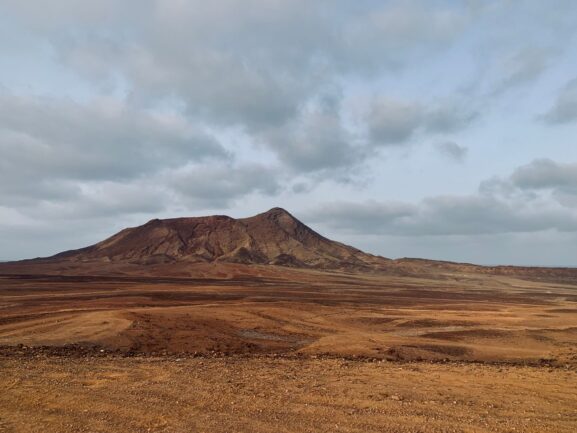
On islands like Sal and Boa Vista, which are generally flat, sandy, and dry, the storm’s surge was particularly damaging. In the city of Espargos (Sal) and across the Deserto de Viana (Boa Vista), the usual arid landscape was transformed by torrential rains. To put this in perspective, Sal typically receives only 145 mm of rain annually; Fred delivered a significant portion of a year’s rainfall in a single day.
The Sotavento Islands: Flooding and Landslides
In the more mountainous islands like Santiago—home to the capital, Praia—and Fogo, the steep volcanic terrain created a different kind of danger. Orographic lifting (where mountains force air upwards) increased rainfall totals. The result was widespread flooding and landslides. In the village of Ribeira Grande and across the agricultural plantations at the base of the mountains, the “green cape” lived up to its name in a destructive way, as mud and debris washed through valleys.
The Sea: A Deadly Toll
Perhaps the most tragic impact was at sea. Cape Verde has a deep maritime history, from its 16th-century role in transatlantic trade to its modern-day reliance on fishing and inter-island shipping. During Fred, a Spanish Moroccan fishing freighter disappeared with its crew of seven. Despite the best efforts of the Cape Verdean Coast Guard, the power of the easternmost Atlantic hurricane proved too great.
Why Was Fred So Unusual?
Meteorologists point to several factors that made Fred an outlier:
- SST (Sea Surface Temperatures): In 2015, the waters surrounding Cabo Verde were about 1°C warmer than the historical average, providing the “fuel” necessary for a hurricane to form so far east.
- Moisture Levels: The Saharan Air Layer—a mass of dry, dusty air from the desert—usually chokes developing storms near the islands. Fred managed to stay south of the driest air, maintaining its core.
- Historical Context: Since 1851, the islands had only been struck by a hurricane once before. Fred ended a 123-year “hurricane drought” for the nation.
Resilience and the Future of Cabo Verde
The aftermath of Hurricane Fred served as a wake-up call for the international community. While Cabo Verde is a “success story” in terms of African democracy and development—boasting stable governance and a growing tourism sector—it remains on the front lines of the “existential crisis” posed by climate change, as noted by UN Secretary-General António Guterres.
The country is fighting back with innovation. Today, Cabo Verde is a leader in renewable energy, aiming for 50% of its power to come from green sources by 2030. Furthermore, the 2023 “debt-for-nature” swap with Portugal—where €140 million of debt was forgiven in exchange for environmental investment—shows how the islands are leveraging their international standing to protect their unique biodiversity and volcanic landscapes from future Freds.
Conclusion: A Warning from the Central Atlantic
Hurricane Fred was more than just a meteorological curiosity; it was a reminder of the shifting patterns of our global climate. For the 530,000 residents of Cabo Verde, from the bustling streets of Praia to the quiet slopes of Pico do Fogo, the storm is a part of a wider narrative of resilience. As the easternmost hurricane ever recorded, Fred stands as a testament to the power of the Atlantic and the vulnerability of the beautiful, volcanic “Green Cape” that sits at its heart.
Image: Pexels – Lorna Pauli