Exploring Ilha da Selva: The Lost Forest History of Brava
In the horseshoe-shaped archipelago of Cape Verde, every island tells a distinct geological and cultural story. Sal is the land of salt and sun; Fogo is the realm of the fire-breathing volcano; Santo Antão is the cathedral of mountains. But Brava, the smallest inhabited island in the chain, holds a title that feels almost paradoxical given its rugged Atlantic isolation: Ilha da Selva, or the Island of the Wild Forest.
Known today as the “Island of Flowers,” Brava’s reputation for lushness is often attributed to its persistent morning mists and the colorful hibiscus that line the cobblestone streets of Vila Nova Sintra. However, beneath the manicured gardens lies a deeper, more mysterious ecological history. Local legends and historical fragments suggest that Brava was once a dense, prehistoric botanical sanctuary—a “Lost World” of the Atlantic that was significantly more diverse and forested than it appears today. Exploring the ‘Ilha da Selva’ legend reveals a fascinating intersection of colonial history, microclimatology, and a forgotten wilderness.
The Origins of the ‘Ilha da Selva’ Legend
The term Ilha da Selva traces back to early Portuguese explorers and the mariners of the 15th and 16th centuries. Unlike the flat, desert-like eastern islands, Brava loomed out of the Atlantic as a vertical fortress of green. Because of its extreme elevation—rising sharply to over 900 meters from a relatively small landmass—Brava acts as a giant “cloud catcher.”
Historical accounts from early settlers describe the interior plateaus and riven valleys (the ribeiras) as being impenetrable curtains of greenery. Before intensive human settlement, the island was a sanctuary for Macaronesian flora that had drifted from the African mainland and evolved in total isolation. The legend of the “Wild Forest” isn’t just about the quantity of trees, but the strange, prehistoric nature of the vegetation. Visitors spoke of giant dragon trees (Dracaena draco) and endemic shrubs that grew to the size of oaks, fed by the constant moisture of the ‘Nortada’ winds.
The Vertical Ecosystem: How Brava Defies the Desert
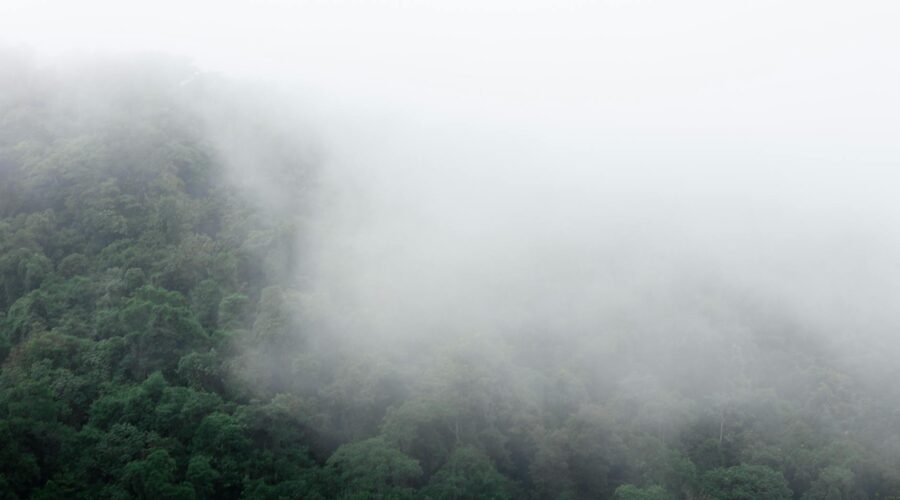
To understand why Brava was once considered a “jungle” in the middle of a semi-arid region, one must look at the phenomenon of occult precipitation. While Brava receives relatively little actual rainfall compared to tropical rainforests, it is perpetually bathed in the nevoeiro—a thick, humid sea fog.
In high-altitude areas like Monte Fontainhas, the highest point on the island, the vegetation performs “fog dripping.” The leaves of the endemic plants trap moisture from the passing clouds, which then drips into the soil, creating a self-sustaining irrigation system. In the centuries before deforestation for agriculture, this process supported a dense canopy of Laurisilva-type forests, similar to those found in Madeira or the Azores, but with a unique Cape Verdean heat-resistant twist.
Lost Giants: The Forgotten Flora
Many of the botanical wonders that earned Brava its “Selva” moniker have vanished or are now critically endangered. Chief among these was the Cape Verdean Dragon Tree. Once abundant across the highest ridges, these ancient, slow-growing trees with blood-red sap were prized by early explorers for medicinal and dyeing purposes. Today, only scattered individuals remain, clinging to the most inaccessible cliffs of the island.
Other lost wonders include the Tortolho (Euphorbia tuckeyana) and various species of endemic sea squill and giant lavender. These weren’t just plants; they were part of a complex forest architecture that regulated the island’s temperature and water table. When the “Wild Forest” was at its peak, Brava was said to have perennial springs that never ran dry—a luxury in an archipelago often plagued by drought.
The Human Impact: From Selva to Garden
The transition from Ilha da Selva to the modern “Island of Flowers” is a story of human survival and colonial transformation. As the population of Brava grew, particularly during the 18th and 19th centuries, the primary forest was cleared to make way for terraced agriculture. Corn, beans, and coffee became the dominant staples.
The “forgotten forest history” of the island is physically carved into the mountainsides. If you hike the trails between Fajã d’Água and Nossa Senhora do Monte, you can see the remnants of the ancient forest floor beneath the modern terraces. The Portuguese settlers brought with them plants from across the empire—bougainvillea from Brazil, roses from Europe, and fruit trees from the East. While these created the charming, floral aesthetic Brava is famous for today, they largely displaced the wild, chaotic botanical diversity that the first explorers encountered.
The American Connection and the Whaler’s Influence
An interesting turn in Brava’s history occurred in the 19th century when the island became a major hub for American whaling ships from New Bedford and Nantucket. Brava’s men were world-renowned sailors, and many emigrated to New England. This connection brought new botanical species to the island, as returning sailors brought seeds and saplings from across the Atlantic.
This period further altered the “Wild Forest.” The lushness of the island became more managed and “civilized.” The wild, tangled Selva was replaced by orchards and decorated patios. For the diaspora living in the United States, the memory of the “Emerald Island” became a poetic legend, often exaggerated in the morna songs of the time, blending the reality of the floral gardens with the mythic memory of the ancient forests.
Modern Conservation: Can the Forest Return?
Today, there is a growing movement to reclaim the lost botanical heritage of Brava. Conservationists are working to protect the remaining pockets of endemic vegetation around Monte Fontainhas and the high plateaus. These areas are now recognized as critical “biodiversity hotspots” within the Macaronesian region.
Practical Information for Eco-Travelers
For those looking to experience the remnants of the ‘Ilha da Selva,’ Brava offers some of the most rewarding hiking in West Africa. However, it is not an island for the casual tourist; it requires effort to reach and explore.
- Getting There: Brava is only accessible by ferry from the neighboring island of Fogo. The crossing can be rough, adding to the island’s sense of isolation.
- The Best Trails: The hike from Vila Nova Sintra to the peak of Monte Fontainhas offers the best view of the island’s varied microclimates. As you ascend, the temperature drops and the air turns damp, giving you a taste of the prehistoric mist-forest.
- When to Visit: The months of August through November (the rainy season) offer the most vibrant greens, though the “foggy” atmosphere remains year-round at high altitudes.
Conclusion: The Ghost of the Green Island
The legend of the Ilha da Selva serves as a reminder of the fragility of island ecosystems. While Brava remains a stunningly beautiful destination, its “Lost World” of giant dragon trees and impenetrable thickets lives on primarily in the names of its valleys and the deep-seated lore of its inhabitants. By exploring these high-altitude wonders, modern travelers aren’t just seeing a garden—they are walking through the ghost of a great Atlantic forest, a botanical masterpiece that nature took millennia to craft and history took centuries to transform.
Whether you are a botanist, a hiker, or a lover of history, Brava’s hidden green past offers a unique lens through which to view Cape Verde—not just as a dry volcanic archipelago, but as a place where the clouds once fed a wild, prehistoric garden of the sea.
Image: Pexels – Dante Muñoz