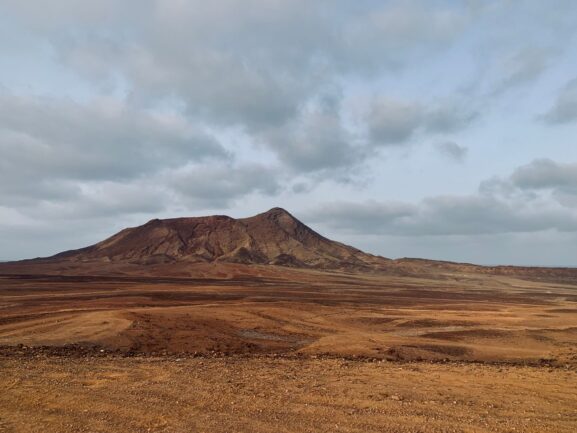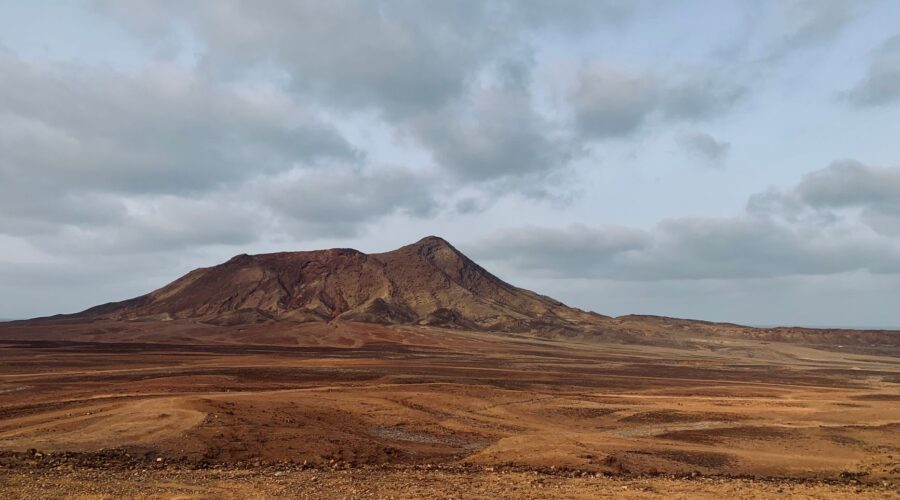
Cape Verde’s Unique Soda-Alkaline Volcanic Geology
Rising dramatically from the central Atlantic Ocean, the archipelago of Cape Verde (Cabo Verde) is more than just a tropical paradise of music and sandy beaches. For geologists and petrologists, these ten volcanic islands represent a “natural laboratory” showcasing a rare and fascinating geochemical phenomenon: the Soda-Alkaline Petrographic Province.
While most oceanic islands, such as those in Hawaii, are formed primarily from tholeiitic basalts, Cape Verde stands apart due to the unique chemical signature of its rocks. The archipelago is characterized by an abundance of soda-alkaline igneous rocks—compositions rich in sodium (Na) and potassium (K) while being relatively low in silica. This specific classification places Cape Verde in an elite group of volcanic provinces that offer deep insights into the composition of the Earth’s mantle and the plumbing systems of “hotspot” volcanoes.
The Geological Foundation: 50 Million Years in the Making
The Cape Verde islands are situated on the Cape Verde Rise, a massive bathymetric swell that represents one of the largest ocean-floor protuberances in the world. This rise lifts the seabed by 2.2 kilometers across a semi-circular region of 1,200 square kilometers. The history of this province began approximately 40 to 50 million years ago during the Eocene epoch, though the islands we see today are much younger.
The chronological spread of the islands is striking. To the east, islands like Sal and Maio are roughly 20 million years old, exhibiting the weathered, flat remains of ancient volcanic activity. To the west, the islands are younger, with Santo Antão and Fogo dating back roughly 8 million years. This age progression is a classic hallmark of a tectonic plate moving over a stationary mantle plume, or “hotspot.”
Defining the Soda-Alkaline Composition
What makes Cape Verde a “Soda-Alkaline Petrographic Province”? In petrography (the branch of geology that deals with the description and classification of rocks), the term “alkaline” refers to rocks that have a high ratio of alkalis (sodium and potassium oxide) to silica.
The rocks in Cape Verde are distinctly “basic” (low in silica) and dominated by minerals like nepheline and sodalite. The petrologic succession in the archipelago includes a variety of rare rock types, such as:
- Basanites and Tephrites: Strongly alkaline volcanic rocks.
- Phonolites: Fine-grained rocks rich in alkali feldspar.
- Carbonatites: An extremely rare type of igneous rock composed of more than 50% carbonate minerals. Cape Verde is one of the few places on Earth where these “lava-carbonates” can be studied in an oceanic setting.
This “soda-rich” (sodium-dominant) chemistry is a result of low-degree partial melting of the mantle at great depths. Because the Cape Verde islands are located on the African Plate, which moves very slowly compared to the Pacific Plate, the magma has more time to interact with the lithosphere and evolve into these unique alkaline compositions.
The Power of Pico do Fogo
While the eastern islands have long since surrendered their volcanic heat to erosion, the island of Fogo remains intensely active. Pico do Fogo serves as the crown jewel of the province’s ongoing volcanic narrative. Standing at 2,829 meters (9,281 feet) above sea level, it is the highest peak in the archipelago and the most active volcano in the Macaronesia region.
The most recent eruption in 2014 provided a vivid demonstration of the province’s power. The eruption occurred within the Chã das Caldeiras, an eight-kilometer-wide caldera formed by the subsidence of an ancient magma chamber. The lavas produced during these eruptions continue to confirm the soda-alkaline nature of the province, providing fresh samples for scientists to analyze the current state of the mantle plume beneath the islands.
A Link to Macaronesia
Cape Verde is part of the Macaronesia ecoregion, a collection of four archipelagos (including the Azores, Canary Islands, and Madeira) that share similar volcanic origins. However, Cape Verde’s position further south and its specific tectonic environment result in a petrographic signature that is more consistently alkaline than its northern neighbors. While the Canary Islands also feature alkaline rocks, the sheer dominance of soda-alkaline types in Cape Verde makes it a textbook example for geological study.
Practical Implications: Landscape and Economy
The unique rock composition of Cape Verde does not just interest scientists; it dictates the lives of the 530,000 people who inhabit the islands. The alkaline nature of the rocks, combined with the arid climate, influences soil fertility and water retention.
Agriculture and Soil
In islands like Santiago and Santo Antão, the weathering of volcanic rocks creates fertile, mineral-rich soils. However, because these rocks are often porous and the rainfall is irregular (the islands fall within the Sahelian semi-arid belt), agriculture is a constant challenge. Farmers utilize the steep, orographically drenched slopes to grow sugarcane, bananas, and coffee, relying on the condensed ocean mist that the volcanic peaks “trap” from the atmosphere.
The Salt of the Earth
The geological history of the province has also left behind significant salt deposits. On the islands of Sal and Maio, extensive salt flats (salinas) formed in the craters of extinct volcanoes or in low-lying coastal basins. For centuries, “white gold” was a primary export for Cape Verde, fueling a trade that spanned the Atlantic.
The Future of Geological Research in Cabo Verde
As the Republic of Cabo Verde moves toward a greener future—aiming for 50% renewable energy by 2030—its volcanic heritage remains relevant. The “hot” nature of the islands suggests potential for geothermal energy, a resource that could further stabilize the nation’s service-oriented economy.
Furthermore, the archipelago’s status as a Soda-Alkaline Petrographic Province ensures its place in the global scientific community. From the 128-million-year-old pillow lavas found on Maio (some of the oldest exposed oceanic crust in the Atlantic) to the fresh flows of Fogo, Cape Verde offers a complete timeline of how our planet’s interior expresses itself on the surface.
For the traveler standing on the black sands of Fogo or the salt flats of Sal, the ground beneath their feet is a testament to 50 million years of geochemical evolution—a unique soda-alkaline legacy that continues to shape the heart of the Atlantic.
Image: Pexels – Bibi Kiekens