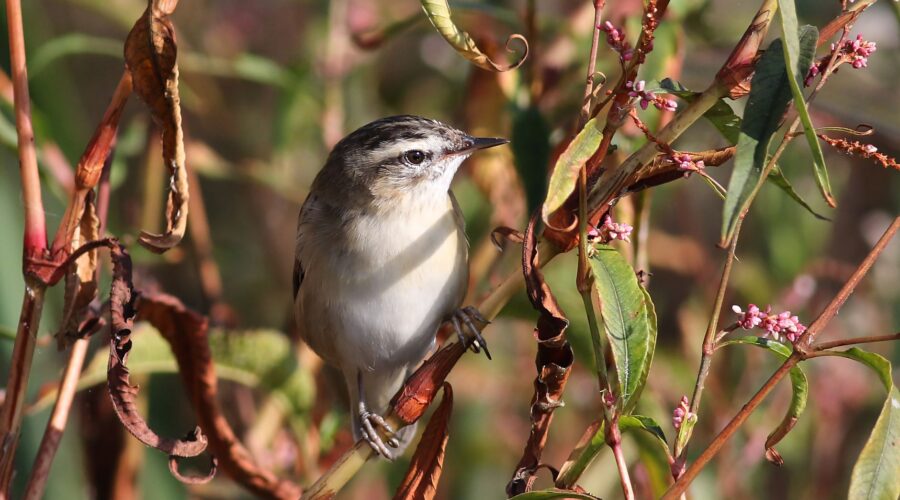
Cape Verde Warbler: Ecology of an Endemic Songbird
Deep within the verdant valleys and rugged highlands of the Cabo Verde archipelago lives a small, unassuming songbird that carries the weight of an entire nation’s biodiversity on its wings. The Cape Verde Warbler (Acrocephalus brevipennis), known locally as the tchota-de-cana, is more than just a bird; it is a biological treasure and a symbol of the unique evolutionary history of this mid-Atlantic island nation.
As an endemic species, the Cape Verde Warbler is found nowhere else on Earth. Its journey from a vulnerable inhabitant of a few isolated valleys to a focus of international conservation efforts offers a fascinating glimpse into the ecology of Macaronesia and the challenges of protecting wildlife in a changing climate.
Taxonomy and Physical Characteristics
The Cape Verde Warbler belongs to the genus Acrocephalus, a group of birds commonly known as “reed warblers.” While many of its relatives are migratory, traversing vast distances between Europe and Africa, the Cape Verde Warbler is a sedentary resident of the islands. This isolation led to its evolution into a distinct species, perfectly adapted to the volcanic terrain of the archipelago.
Measuring approximately 13 to 14 centimeters in length, the warbler is characterized by its modest yet elegant plumage. It possesses a grayish-brown back, a creamy-white underside, and a distinctive long, slender beak adapted for picking insects off vegetation. Its most striking feature, however, is not its appearance but its song—a rich, liquid series of warbles and whistles that echoes through the mountain ravines of Santiago, Fogo, and São Nicolau.
Habitat and Distribution: A Tale of Three Islands
Cabo Verde is a country of stark contrasts. While islands like Sal and Boa Vista are flat, sandy, and desert-like, the “mountain islands” offer high-altitude microclimates where humid air condenses against volcanic peaks. It is here, in the sub-humid and humid zones, that the Cape Verde Warbler makes its home.
Historically, the bird was found on five islands. Today, its distribution is more restricted:
- Santiago: The largest and most populous island remains the species’ stronghold. Here, the warbler thrives in the lush, interior valleys where traditional agriculture—such as sugarcane and banana plantations—provides a canopy of vegetation.
- Fogo: On the slopes of the massive Pico do Fogo volcano (which most recently erupted in 2014), the warbler inhabits coffee plantations and fruit orchards.
- São Nicolau: This island hosts a smaller, more vulnerable population that requires careful monitoring.
The species was once found on Brava and Santo Antão, but it is now considered extinct on those islands, highlighting the precarious nature of its existence.
Ecology and Behavior
Unlike its reed-dwelling cousins in Europe, the Cape Verde Warbler has adapted to a “dry forest” ecoregion. In the absence of extensive wetlands, it has become a generalist in terms of habitat. It is frequently found in “ribeiras” (dry riverbeds that turn green during the rainy season) and steep-sided valleys where moisture is trapped.
Diet and Foraging
The warbler is primarily insectivorous. It spends its days flitting through the dense foliage of Lantana camara, orange trees, and eucalyptus, searching for small invertebrates. This role makes it an important part of the islands’ ecosystem, helping to control insect populations in agricultural areas.
Breeding Season
The breeding cycle is closely tied to the islands’ erratic rainfall. Nesting typically occurs between August and November, following the arrival of the West African monsoon rains. They build cup-shaped nests, often suspended in the forks of trees or tucked into giant reed beds (Arundo donax). Due to the limited available habitat, the warbler is highly territorial during this period.
Conservation Challenges: Why the Warbler is at Risk
For decades, the Cape Verde Warbler was classified as “Endangered” by the IUCN. While its status has recently been downgraded to “Vulnerable” due to the discovery of new populations and successful conservation efforts, it remains under constant threat. Several factors contribute to its fragility:
1. Habitat Loss and Degradation
Cabo Verde’s landscape has been significantly altered since Portuguese explorers first settled the islands in the 15th century. Deforestation for firewood and the clearing of land for subsistence farming have reduced the warbler’s natural cover. Furthermore, the invasion of non-native plant species can displace the native flora the birds rely on for nesting.
2. Severe Droughts and Climate Change
As part of the Sahelian semi-arid belt, Cabo Verde is prone to persistent, multi-year droughts. Because the warbler relies on humid microclimates, prolonged dry spells can lead to reproductive failure. As global temperatures rise, the “mist forests” that provide moisture through condensation are under threat, potentially pushing the birds higher up the mountains until they have nowhere left to go.
3. Predation
The introduction of invasive mammals, particularly rats and feral cats, poses a significant threat to ground-nesting and low-nesting birds. These predators can decimate local populations by raiding nests for eggs and fledglings.
Protection Efforts and Success Stories
The conservation of the Cape Verde Warbler is a point of pride for the Cape Verdean government and local environmental NGOs like Associação Projecto Vitó and Biosfera. Recent efforts have focused on:
- Reforestation: Extensive planting of native species to restore the bird’s natural habitat.
- Community Involvement: Educating local farmers about the importance of the warbler. Since the bird thrives in plantations, sustainable farming practices are key to its survival.
- Debt-for-Nature Swaps: In 2023, Portugal and Cabo Verde signed a historic agreement to swap debt for environmental investment. Such funds are crucial for protecting the biodiversity of the Macaronesia ecoregion.
Conclusion: The Future of the Tchota-de-cana
The Cape Verde Warbler is a testament to the resilience of island life. Having survived volcanic eruptions, centuries of human settlement, and the harsh realities of the Sahelian climate, it remains a vibrant part of the country’s natural heritage. However, as Cabo Verde continues to develop its tourism-oriented economy, the balance between human progress and ecological preservation must be carefully maintained.
For birdwatchers and eco-tourists visiting the verdant peaks of Santiago or the dramatic slopes of Fogo, hearing the song of the tchota-de-cana is a reminder of the islands’ hidden wonders. Protecting this endemic songbird is not just about saving a species; it is about preserving the unique biological identity of the Republic of Cabo Verde for generations to come.
Image: Pexels – Derek Keats