Angola and Timor-Leste Face Alarming Vaccination Declines
Angola and Timor-Leste are facing critical setbacks in child immunization, according to the latest 2025 estimates released by the World Health Organization (WHO) and UNICEF. While some nations within the Community of Portuguese Language Countries (CPLP) are showing signs of recovery, others are falling dangerously behind, leaving hundreds of thousands of children vulnerable to preventable diseases.
Angola Faces a Growing Health Crisis
Angola currently ranks as the fourth African nation with the highest number of unvaccinated children. The country’s coverage for the first dose of the diphtheria, tetanus, and pertussis vaccine (DTP1) has plummeted to just 67%, one of the lowest rates in the region. This translates to approximately 454,000 Angolan children who possess no immunity against these life-threatening illnesses.
For the critical third dose (DTP3), Angola’s coverage remains alarmingly low, stagnating between 50% and 60%. These figures place the nation in a high-risk category alongside Mozambique and Timor-Leste, which also struggle with low DTP3 uptake.
Alarming Declines in Timor-Leste and São Tomé
In the Asia and Pacific region, Timor-Leste recorded the most significant drop in measles vaccine (MCV1) coverage, falling from 72% to 61%. Even more concerning is the “dropout rate”: 31% of children who received their initial DTP1 injection failed to return for their measles shot. Overall, Timor-Leste reported that only 8% of its required vaccines reached the 90% coverage target—a figure lower than its 2019 performance.
Meanwhile, São Tomé and Príncipe, once a strong performer in the region, is now “in decline.” Its vaccination rates have slipped from a near-perfect 95% in 2010 to below 90% in 2025.
Pockets of Progress: Cape Verde and Brazil
In contrast to the regional struggles, Cape Verde remains a model for the Portuguese-speaking African Countries (PALOP), maintaining “high and stable” coverage rates consistently above 90%. Brazil is also on an upward trajectory, nearing the 90% threshold, though officials note that 50,000 Brazilian children remain unvaccinated and 250,000 have yet to receive their measles shots.
Guinea-Bissau and Mozambique are showing “partial recovery.” Guinea-Bissau is trending toward an 80%-85% coverage range for DTP3, despite currently being suspended from the CPLP following a coup d’état. Mozambique, however, still faces a steep climb; it ranks 5th worst in Africa for measles vaccine numbers, with 439,000 children still unprotected.
The Fight Against Cervical Cancer
Progress in preventing cervical cancer via the Human Papillomavirus (HPV) vaccine remains uneven. While Mozambique, Angola, Cape Verde, and São Tomé and Príncipe have successfully integrated the HPV vaccine into their national schedules, Guinea-Bissau has yet to introduce it.
A Call for Global Action
UNICEF Director Catherine Russell acknowledged that while global vaccination rates have improved since the COVID-19 pandemic, the job is far from over. “Millions of vulnerable children remain unprotected due to conflict, displacement, and poverty,” Russell said, emphasizing that no child should suffer from a disease that a simple vaccine can prevent.
The CPLP is a multilateral organization comprising Angola, Brazil, Cape Verde, Guinea-Bissau, Equatorial Guinea, Mozambique, Portugal, São Tomé and Príncipe, and Timor-Leste.
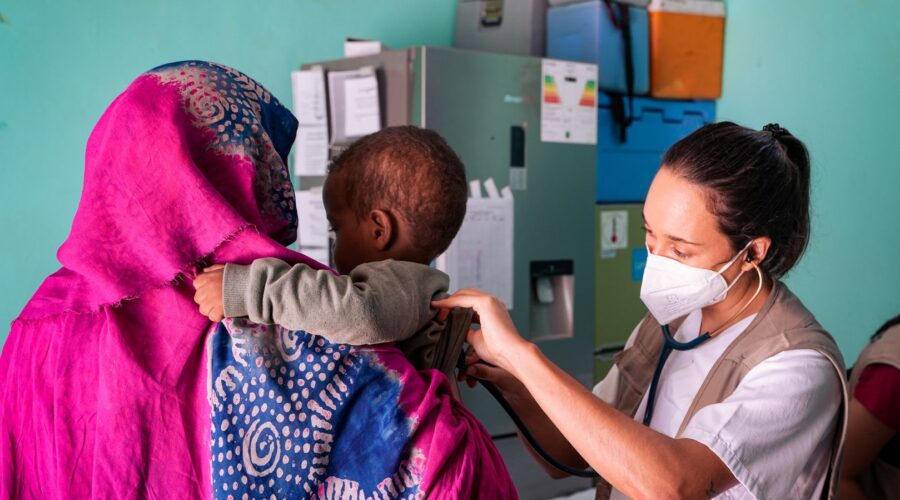
Image: Pexels – Mahyub Hamida