CPLP at 30: Why the Lusophone Bloc is Unknown to China
As the Community of Portuguese Language Countries (CPLP) prepares to celebrate its 30th anniversary on July 17, experts warn that the organization remains a “stranger” to one of the world’s most critical superpowers: China. Despite decades of diplomacy, the CPLP has struggled to assert its collective identity in Beijing, even as China’s influence within individual Lusophone nations continues to skyrocket.
A Missing Seat at the Table
“China does not know the CPLP,” said Luís Bernardino, a professor at the Autonomous University of Lisbon and a retired Portuguese Army colonel. Speaking after a series of high-level conferences in Beijing, Bernardino noted that this lack of recognition prevents the organization from leveraging its potential. “If something is not known, people don’t know how to take advantage of that relationship.”
According to Bernardino, the CPLP has failed to position itself effectively in the East. While China maintains robust ties with Portuguese-speaking nations, it does so through its own mechanisms—most notably the Macau Forum. Established by Beijing in 2003, the forum operates independently of the CPLP’s institutional structure. “The CPLP is out of this game for now,” Bernardino remarked.
The ‘Bi-Multilateral’ Strategy
China’s approach to the Lusophone world is a masterclass in pragmatism, which Bernardino describes as “bi-multilateral” cooperation. Beijing engages with each country individually while simultaneously building multilateral forums that reinforce those bilateral ties. This allows China to tailor its strategy to specific regional interests:
- Africa (PALOP): Focuses on infrastructure, trade, and increasingly, defense.
- Brazil: Centered on high-level geopolitics through the BRICS bloc and Global South cooperation.
- Timor-Leste: Viewed as a strategic Indo-Pacific partner, vital for maritime routes and its future role in ASEAN.
Beyond Economics: The Rise of Defense
The relationship is shifting from purely economic deals to strategic security partnerships. In Africa, Chinese cooperation now includes military training, equipment sales, and the modernization of ports. “China does what a global power must do,” Bernardino explained. “It is an economic power, but it knows it also needs to assert a military dimension.”
However, this growing influence brings risks. Many Lusophone nations, particularly in Africa, are facing increased financial dependency on Beijing. Bernardino argues that these countries must learn to negotiate more effectively to ensure partnerships are truly strategic rather than lopsided.
A Crisis of Visibility
As the CPLP enters its fourth decade, its biggest hurdle remains its own internal cohesion and external branding. The organization currently comprises Angola, Brazil, Cape Verde, Equatorial Guinea, Mozambique, Portugal, São Tomé and Príncipe, and Timor-Leste (with Guinea-Bissau currently suspended).
“The CPLP is whatever the member states want it to be,” Bernardino concluded. “If the countries themselves do not value it in international forums, it is unlikely that other global actors will.”
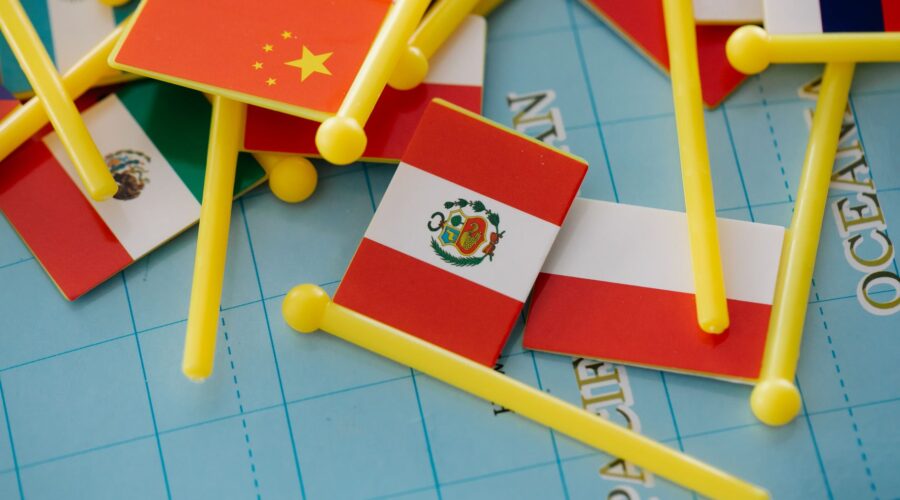
Image: Pexels – Lara Jameson