
Cape Verde Tomato Prices Hit Record Highs Due to Heatwave
PRAIA, Cape Verde — In the bustling markets of Cape Verde, the vibrant red of the tomato—a staple of the national diet—is becoming a rare and luxury sight. Once sold for a few dozen escudos, the fruit is now being referred to as “red gold” as prices skyrocket to a record 800 escudos (€7.24) per kilogram.
The price surge, driven by extreme heat and crop failures, is forcing families to choose between their culinary traditions and their budgets. For farmers like José Almeida, who has worked the fields of Santiago Island for 15 years, the situation is dire. “Tomatoes are gold now; there aren’t any, everyone is looking for them, and they are expensive,” he told Lusa.
Climate Change Hits the Harvest
Farmers in the region say the traditional growing season, typically spanning February to July, has been upended by rising temperatures. “Too much sun mistreats the tomato, making it wither and fail to bear fruit,” Almeida explained. He recently replanted, but he doesn’t expect a harvest until February 2027.
The agricultural struggle is compounded by high overhead costs. A single plantation can cost 100,000 escudos (€906) to start, excluding the rising costs of water, fertilizers, and pesticides. Furthermore, a growing labor shortage is hampering production as young people increasingly emigrate in search of better opportunities.
In the nearby Capela area, Jeremias Moreira has been waiting five months for a harvest that usually takes three. “Tomatoes don’t like heat,” Moreira said, noting that many of his peers lost their entire crops this season. “If I had sown something else, I would have already had two harvests.”
Market Stalls Lose Their Color
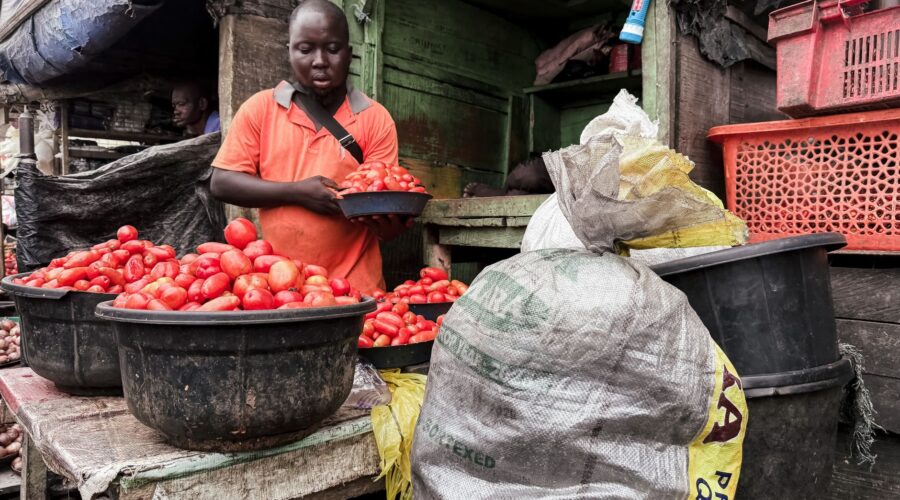
At the historic Plateau market in Praia, the impact is visual. Vendors say the absence of tomatoes has robbed their stalls of the bright colors that attract customers. Vitalina Moreno, a vendor for over 30 years, said she briefly tried reselling tomatoes at 900 escudos a kilo but stopped when they began to rot on the shelf because no one could afford them.
“The color gives the stall life,” Moreno lamented. Now, customers who used to buy kilos at a time are purchasing single fruits, small fractions of a kilo, or turning to canned tomato paste.
For shoppers like Maria do Carmo Mendes, 61, the math no longer adds up. “Before, I would buy a kilo for the pot and another for salad. Now I only buy half a kilo,” she said. Others, like cleaning worker Maria Barreto, say they can only afford the vegetable on the day they receive their salaries.
A Call for Innovation
Agronomists warn that this is not a one-off crisis but a sign of a warming climate. Adilson Melício, an agronomist and delegate for the Ministry of Agriculture, noted that when temperatures exceed 30°C (86°F), tomato plants suffer a sharp drop in flowering and fruit formation.
Melício is calling for a radical modernization of Cape Verdean agriculture. He advocates for the use of ventilated greenhouses, shading, and misting systems to combat the heat, but admits most farmers lack the capital for such investments.
“If we do not innovate and modernize agriculture, the situation in the coming years will be much more serious,” Melício warned. He urged the state to provide better access to water and low-interest financing to help farmers survive the changing climate.
While prices are expected to stabilize slightly in February as new crops mature, experts and farmers agree that without significant intervention, the “gold” status of the humble tomato may become the new normal during the increasingly hot summer months.
Image: Pexels – Tosin Ayano