Lombo Branco: Hiking the ‘Stairway to Heaven’ in Santo Antão
For those who have traversed the rugged terrain of the Macaronesian islands, there is a lingering sentiment that Santo Antão is the crowning jewel of the Atlantic. It is an island of impossible verticality, where emerald-green ribeiras (valleys) plunge into deep sapphire waters, and where the human spirit has quite literally carved a life out of stone. At the heart of this dramatic landscape lies one of the most breathtaking engineering feats of the 20th century: the stone stairways of Lombo Branco.
The Vertical Architecture of Survival
To understand the “Stairway to Heaven” at Lombo Branco, one must first understand the isolation of Santo Antão. Before the arrival of modern roads and tunnels, the interior communities of the island were effectively cut off by towering basaltic cliffs and jagged volcanic peaks. For centuries, the only way to move goods—coffee, grogue (local rum), and staples—was via the caminhos de burro (donkey trails).
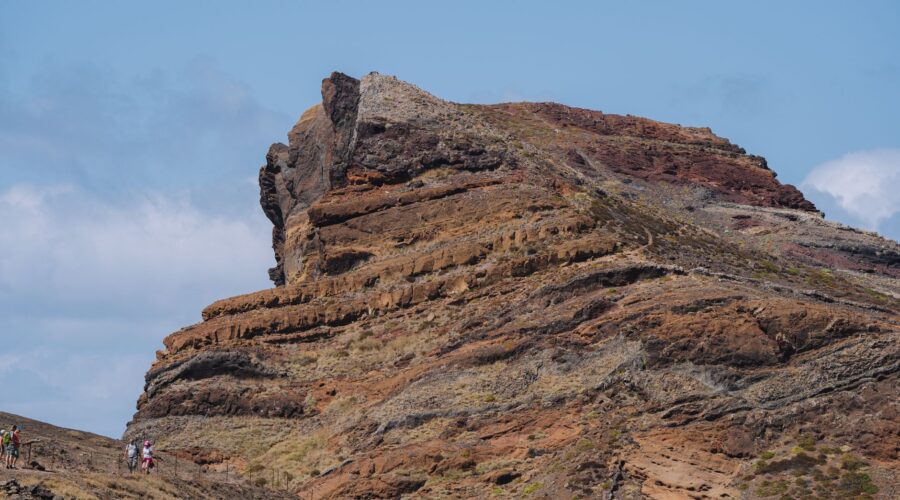
The Lombo Branco trail is not just a path; it is a masterpiece of dry-stone masonry. These trails were constructed by hand, stone by painstaking stone, to create a zigzagging artery that defies gravity. The Lombo Branco section, specifically the descent from the high plateau of Cova down toward the coastal fringes of Ribeira Grande and Pombas, is widely considered the most visually stunning and vertigo-inducing stretch of these ancient postal trails.
Walking the Zig-Zags: The Hiker’s Experience
Starting at the edge of the Cova de Paul crater—a dormant volcanic caldera now filled with lush agricultural plots—the trail begins its descent into the abyss. As you round the first bend, the world drops away. Below you, the Lombo Branco ridge stretches out like a serrated knife-edge, with the legendary stone zig-zags etched into its flank.
The path is remarkably wide, built to accommodate heavily laden donkeys. However, the sheer drop-offs on either side are enough to test the mettle of even seasoned hikers. The stones underfoot are polished smooth by decades of use, reflecting the Atlantic sun. As you descend, the microclimates shift rapidly. You start in the cool, mist-shrouded pine forests of the highlands and descend into the tropical heat of the valley floor, passing terraced farms where sugarcane and banana trees cling to the hillsides.
The “Postal Trail” Legacy
Historically, these paths were known as postal trails. Before telecommunications, “postmen” would traverse these harrowing inclines daily, carrying messages and supplies between the remote mountain hamlets and the coastal ports. The Lombo Branco section served as a vital link, ensuring that the inhabitants of the high “lombos” (ridges) remained connected to the rest of Cape Verde. Today, while many villagers use the newer asphalt roads, the stone stairs remain the primary commute for many local farmers and their livestock.
Cultural Significance and the Morabeza Spirit
A journey through Lombo Branco is as much a cultural immersion as it is a physical challenge. Along the trail, you will encounter the famed Morabeza—the unique Cape Verdean brand of hospitality. You might pass a farmer herding goats up a 40-degree incline or see women carrying immense baskets of fruit on their heads with effortless grace. A simple “Bom dia” or “Tudo dretu?” (Is everything good?) usually results in a wide smile and an invitation to rest.
The architecture of the homes tucked into the Lombo Branco cliffs is equally fascinating. Stone houses with thatched roofs, known as casas de colmo, dot the landscape, looking like natural extensions of the mountain itself. These communities represent a sustainable way of life that has remained unchanged for generations, centered around the gravity-fed irrigation systems (levadas) that bring water from the peaks to the valley floor.
Practical Information for the Modern Explorer
If you are planning to tackle the Stairway to Heaven, preparation is key. This is not a casual stroll; it is a demanding trek that requires physical fitness and a lack of vertigo.
Best Time to Visit
The ideal time to hike in Santo Antão is between November and June. During these months, the weather is stable, and the visibility is clear. After the rainy season (September-October), the landscape is at its most vibrant green, making the contrast between the dark volcanic stone and the foliage spectacular.
Getting There
To reach Lombo Branco, you must first take a ferry from Mindelo on the island of São Vicente to Porto Novo on Santo Antão. From Porto Novo, you can hire an aluguer (shared taxi) to take you to the starting point at Cova or the village of Lombo Branco itself. Many hikers prefer to walk downhill (from Cova to Ribeira Grande) to save their lungs, though the descent can be taxing on the knees.
Essential Gear
- Sturdy Hiking Boots: The stone paths can be slippery, especially if there is mist. Good traction is non-negotiable.
- Trekking Poles: Highly recommended to alleviate the impact on your joints during the steep descent.
- Sun Protection: The Atlantic sun is powerful, and there is little shade on the exposed ridges of Lombo Branco.
- Water and Snacks: While there are small villages along the way, you should carry at least 2 liters of water.
Why Lombo Branco Remains Unforgettable
There are many beautiful trails in Cape Verde—the coastal path from Ponta do Sol to Cruzinha or the ascent of Pico do Fogo come to mind—but Lombo Branco offers something unique. It is the purest expression of the relationship between the Cape Verdean people and their environment. It is a monument to human persistence, a staircase built not for glory, but for survival.
Standing on the zig-zags of Lombo Branco, with the wind whipping up from the Atlantic and the clouds drifting below your feet, you realize that you aren’t just walking a trail; you are walking through history. It is a place where the earth meets the sky, and every stone tells a story of a people who refused to be limited by the verticality of their home.
Conclusion
The Stairway to Heaven at Lombo Branco is more than just a highlight for a hiking holiday; it is the soul of Santo Antão. For the intrepid traveler looking to escape the mass tourism of the beach resorts, this ancient stone path offers a journey into the heart of the Atlantic. It is a reminder that the most beautiful views are often those we have to work the hardest to reach.
Image: Pexels – Diogo Miranda