Azores Island Revealed as Rare Global Whale Fossil Site
Santa Maria Island in the Azores has emerged as a global paleontological powerhouse, officially recognized as one of only five islands in the world to possess a fossil record of whales. According to leading researcher Sérgio Ávila, this makes the island’s heritage “practically unrivaled” on the international stage.
While fossilized remains of these giant marine mammals are rare on islands, Santa Maria stands out for the sheer volume of its discoveries. “There are only five islands in the entire world that have a fossil record of whales,” explained Ávila, a lead researcher at the Research Center in Biodiversity and Genetic Resources (CIBIO-Azores). He noted that while other islands might yield a single tooth or vertebra fragment, Santa Maria boasts at least five or six distinct locations featuring well-preserved vertebrae from ancient cetaceans.
A Fossil Treasure Trove in the North Atlantic
As the oldest of the nine islands in the Azorean archipelago, Santa Maria is home to the largest open-air fossil site in the North Atlantic. For the past two decades, a multidisciplinary team of over 80 researchers—ranging from biologists and geologists to filmmakers and artists—has been documenting the island’s unique history.
Ávila suggests that the best is yet to come. With 10 to 20 scientific articles currently in preparation, he predicts that upcoming publications will have a “global impact” on our understanding of marine evolution. “It is a truly unique island,” he said. “It has a geological history and a paleontological heritage that has virtually no rival worldwide.”
The World’s First Entire-Island Paleopark
To safeguard these ancient treasures, the Azores established the Santa Maria Paleopark in 2018. It is the first park of its kind in the world to protect the paleontological heritage of an entire island under the force of law. This pioneering model—developed alongside the International Palaeontological Association and the Azores Geopark—has already caught the attention of international governments.
“The Santa Maria Paleopark has the force of law,” Ávila emphasized, noting that the legal framework allows for both restricted-access and fully protected zones. Government officials in the Canary Islands and Cape Verde are reportedly looking to Santa Maria as a blueprint for their own conservation efforts.
Bringing History to Life
For the public, this history is on display at the Casa dos Fósseis (House of Fossils) in Vila do Porto. Part of the Dalberto Pombo Environmental Interpretation Center, the facility houses the collection of its namesake naturalist, a pioneer who first recognized the island’s biological and geological significance. Through dynamic and interactive exhibits, the center aims to educate visitors on why this small Portuguese island is a giant in the world of paleo-science.
With at least four to five more years of research material queued for publication, Santa Maria is firmly cementing its status as one of the best-documented islands for marine and terrestrial fauna in existence.
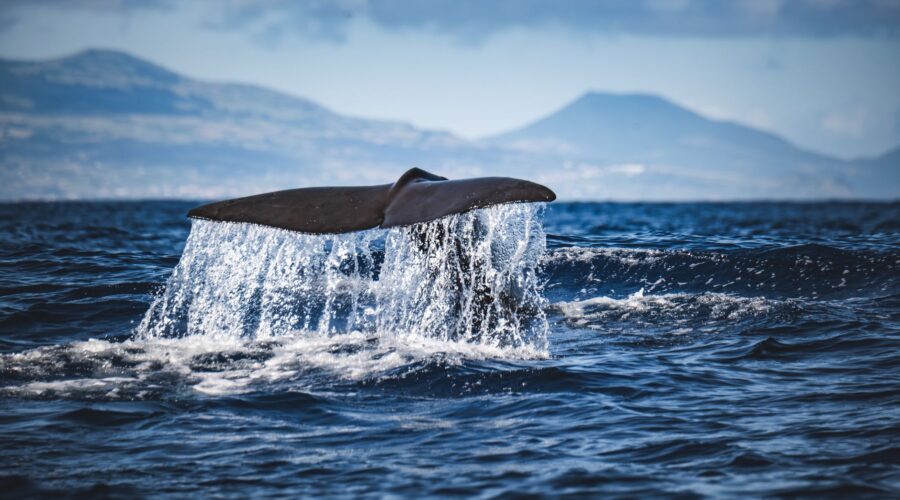
Image: Pexels – Francesco Ungaro