Cape Verde Social Structure: African & Portuguese Roots
In the middle of the Atlantic Ocean, approximately 570 kilometers off the coast of Senegal, lies an archipelago that serves as a living bridge between two continents. Cape Verde (officially Cabo Verde) is more than just a cluster of ten volcanic islands; it is the site of one of the world’s most distinct experiments in human sociology. Uninhabited until the 15th century, the islands became a melting pot where West African pulses met Portuguese traditions, forging a unique social structure and a resilient national identity.
The Genesis of a Creole Nation
Unlike many African nations with ancient indigenous histories, Cape Verde’s story begins with an empty canvas. When Portuguese explorers, led by the Genoese navigator António de Noli, arrived around 1456, they found a pristine, volcanic landscape. In 1462, the first permanent European settlement in the tropics, Ribeira Grande (now Cidade Velha), was established on the island of Santiago.
The archipelago’s strategic location quickly transformed it into a vital hub for the transatlantic slave trade. This dark chapter of history was the primary engine of the islands’ demographic development. For centuries, the social structure was defined by the interaction between Portuguese settlers—administrators, soldiers, and exiles—and enslaved people brought primarily from the West African coast (modern-day Senegal, Gambia, and Guinea-Bissau). This forced proximity led to a process of “miscegenation” or mestiçagem, creating a population that, over generations, became neither fully European nor fully African, but distinctly Cape Verdean.
The Social Hierarchy: From Colonialism to Independence
Historically, Cape Verdean society was structured around the plantation and trade economy. At the top were the Portuguese elite, followed by the mestiços (people of mixed ancestry) who often filled administrative and intermediary roles, and finally, the enslaved African population. However, the harsh climate of the islands—frequent droughts and limited arable land—prevented the long-term success of large-scale plantation systems seen in the Caribbean. This economic reality forced a more integrated social existence compared to other colonial territories.
As the slave trade declined in the 19th century, Cape Verde’s economy shifted toward maritime services. The port of Mindelo on São Vicente became a global crossroads. This period saw the rise of a Cape Verdean intellectual class. Despite the colonial status, many Cape Verdeans had access to education, leading to a growing sense of nationalism. This culminated in the mid-20th century with the leadership of Amílcar Cabral, who founded the PAIGC (African Party for the Independence of Guinea and Cape Verde). Cabral’s vision was rooted in the shared African heritage of the islands, eventually leading to independence in 1975.
Ancestry and Identity: The West African and Portuguese Bond
Today, the Cape Verdean people are a profound example of a “Creole” identity. While the official language remains Portuguese, the heart of the nation beats to the rhythm of Cape Verdean Creole (Crioulo). This Portuguese-based creole language incorporates West African grammatical structures and vocabulary, serving as the primary vehicle for the country’s rich oral traditions, music, and daily communication.
The West African Influence
The African roots of Cape Verde are most visible in its cultural expressions. The Batuque and Finançon musical styles of Santiago, characterized by call-and-response and rhythmic drumming on cloth bundles, trace their lineage directly to West African traditions. The culinary staple cachupa—a slow-cooked stew of corn, beans, and meat—reflects the agricultural heritage of the African mainland. Furthermore, the strong sense of community and the concept of Morabeza (the legendary Cape Verdean hospitality) are deeply rooted in African social values.
The Portuguese Legacy
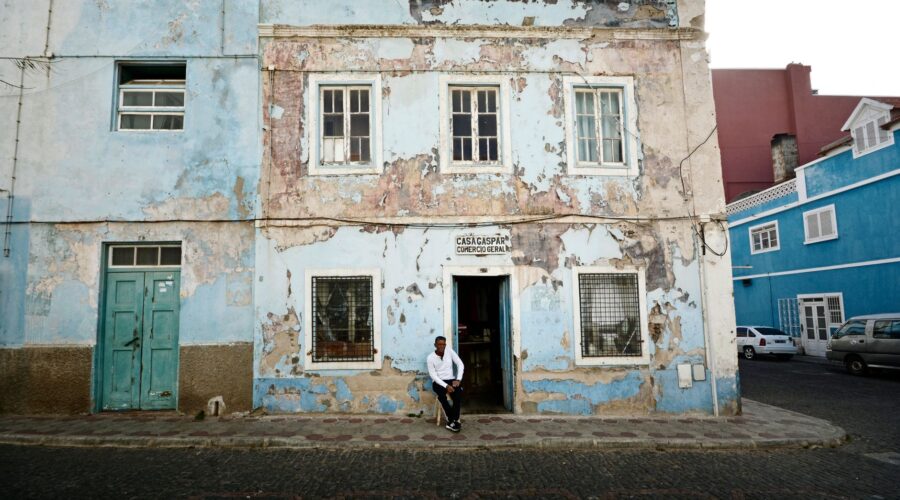
The Portuguese influence is evident in the islands’ architecture, legal systems, and religious life. Catholicism is the dominant religion, and the cobblestone streets of Cidade Velha or the colorful colonial houses of Mindelo reflect Mediterranean aesthetics. The Portuguese language serves as the gateway to the “Lusophone Commonwealth,” connecting Cape Verde to Brazil, Angola, and Mozambique.
Modern Social Dynamics: Stability and Democracy
Since the early 1990s, Cape Verde has emerged as one of Africa’s most stable and democratic nations. It is a semi-presidential republic where political power is peacefully contested between two main parties: the PAICV and the MpD. Unlike many post-colonial nations, Cape Verde has avoided major civil strife, a feat often attributed to its cohesive social structure. The lack of deep-seated ethnic divisions—given that almost all citizens share the same mixed heritage—has allowed for a unified national focus on development.
Currently, the population of approximately 530,000 is distributed across the islands, with Santiago hosting over half the residents. The social structure is increasingly urban, with the capital city, Praia, and the cultural hub, Mindelo, serving as the centers of modern Cape Verdean life. Education and service-oriented sectors like tourism are the new pillars of social mobility.
The Global Diaspora: A “Nation Without Borders”
One cannot discuss the Cape Verdean social structure without mentioning the diaspora. Due to historical droughts and economic challenges, Cape Verdeans have been emigrating for centuries. Today, there are more Cape Verdeans living abroad—largely in the United States (particularly New England), Portugal, France, and the Netherlands—than on the islands themselves.
This diaspora is an integral part of the social fabric. Remittances provide a significant boost to the local economy, and many “expats” return to the islands to invest in businesses or retirement homes. This global network keeps the Cape Verdean identity fluid, constantly incorporating new influences from the West while maintaining a fierce pride in their Atlantic roots.
Conclusion: The Strength of the Middle Way
Cape Verde stands as a testament to the resilience of the human spirit. From an uninhabited volcanic outpost to a thriving, democratic “success story,” the archipelago has navigated the complexities of its dual ancestry with grace. By embracing both its West African soul and its Portuguese heritage, Cape Verde has built a social structure that is not defined by what divides its people, but by the unique, vibrant culture that unites them.
Image: Pexels – damien Saillet