1444 Discovery: The History Behind the Name Cabo Verde
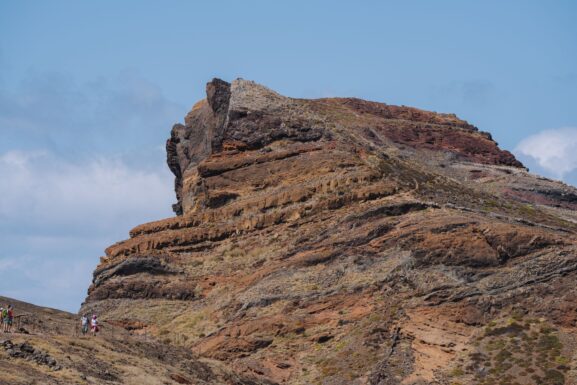
In the vast expanse of the eastern Atlantic, where volcanic peaks rise dramatically from the azure waters, lies the Republic of Cabo Verde. While the nation today is celebrated as one of Africa’s most stable democracies and a burgeoning tourist destination, its very name holds a geographical secret. The “Green Cape” (Cabo Verde) is not actually located on the islands themselves—which are often characterized by arid, lunar landscapes—but on the African mainland, over 600 kilometers to the east.
The 1444 Landmark: Discovery of the Peninsula
The story of the name begins in 1444, during the height of the Portuguese Age of Discovery. Under the patronage of Prince Henry the Navigator, Portuguese explorers were pushing ever further south along the West African coastline, seeking a sea route to the riches of India and searching for the legendary Prester John.
In that year, the explorer Dinis Dias reached the westernmost point of continental Africa, located in present-day Senegal. After sailing past the desolate, sandy stretches of the Sahara and the Sahel, the sight of a lush, verdant headland jutting into the Atlantic was a revelation. Dias named this peninsula Cabo Verde (“Green Cape”) because of the striking contrast its vegetation provided against the desert landscape he had left behind.
For the Portuguese crown, this discovery was a psychological and navigational milestone. It proved that the inhospitable sands of the north eventually gave way to fertile tropical lands. Little did Dias know that this name would eventually be bestowed upon an uninhabited archipelago hundreds of miles out at sea.
From Peninsula to Archipelago: The 1456 Discovery
The islands we now know as Cabo Verde remained hidden from European charts for another twelve years. It wasn’t until around 1456 that navigators—including the Genoese António de Noli and the Portuguese Diogo Gomes—stumbled upon the volcanic chain. They found the islands completely uninhabited, a rarity for such a large landmass so close to a continent.
Because the islands were situated directly west of the Cap-Vert peninsula, they were naturally named after the nearest significant landmark on the mainland. Thus, the “Islands of the Green Cape” (Ilhas de Cabo Verde) became the official designation. In 1462, the Portuguese began the first permanent European settlement in the tropics at Ribeira Grande (now Cidade Velha) on the island of Santiago.
A Note on Official Terminology
While the name has been anglicized as “Cape Verde” for centuries, the nation’s government took a decisive step in 2013. They requested that the United Nations and all international bodies use the Portuguese name Cabo Verde for official purposes. This move was intended to preserve the linguistic heritage and the specific historical origin of the name given by those 15th-century explorers.
The Strategic Crossroads of the Atlantic
Once settled, the islands’ strategic position became their greatest asset—and their greatest tragedy. During the 16th and 17th centuries, Cabo Verde served as a vital hub for the transatlantic slave trade. The islands became a clearinghouse for manufactured goods, rum, and cloth, which were traded for gold, ivory, and enslaved people from the African coast.
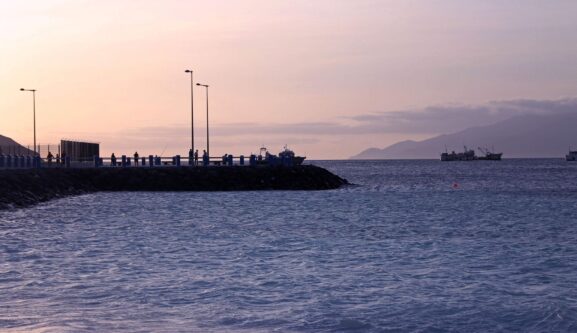
The wealth generated during this period made the islands a target for famous privateers, including Sir Francis Drake, who sacked Ribeira Grande in 1585. However, as the slave trade declined in the 19th century and persistent droughts plagued the archipelago, the economy shifted. The port of Mindelo on the island of São Vicente emerged as a crucial refueling station for Atlantic shipping routes. Even Charles Darwin made the islands his first stop during the famous voyage of HMS Beagle in 1832.
Geography: A Land of Contrast
Despite the name “Green Cape,” the archipelago is a study in geographical diversity. The ten volcanic islands are divided into two distinct groups:
- The Barlavento (Windward) Islands: Including Sal and Boa Vista, which are flat, sandy, and resemble the deserts of the mainland.
- The Sotavento (Leeward) Islands: Including Santiago and Fogo, which feature towering mountains and, in certain high-altitude zones, the “green” promised by their name through orographically induced precipitation.
Fogo, home to the massive Pico do Fogo, remains volcanically active, with its most recent eruption occurring in 2014. The archipelago’s isolation has also created a unique biosphere, hosting endemic species like Alexander’s swift and the Iago sparrow.
A Modern Success Story
Since gaining independence in 1975, following a long struggle led by the PAIGC and the visionary Amílcar Cabral, Cabo Verde has transformed itself. Today, it stands as a “real success story,” according to international leaders like Barack Obama. It is ranked as one of the most democratic nations in Africa, boasting high levels of stability and a service-oriented economy driven by tourism.
The country is also a pioneer in environmental preservation. In 2023, Cabo Verde entered a historic “debt-for-nature” swap with Portugal, forgiving millions in debt in exchange for investment in environmental projects. As a nation on the frontlines of climate change, Cabo Verde aims to generate 50% of its energy from renewable sources by 2030.
Fast Facts for the Modern Traveler
- Capital: Praia (on the island of Santiago).
- Language: Portuguese (official), Cape Verdean Creole (national).
- Population: Approximately 530,000, with a massive diaspora in the US and Portugal.
- Climate: Sahelian semi-arid, moderated by the Atlantic.
Conclusion
The name Cabo Verde is more than just a label on a map; it is a linguistic bridge between the African continent and a resilient island nation. From Dinis Dias’s first glimpse of a green headland in 1444 to the modern-day republic’s leadership in renewable energy, the “Green Cape” remains a symbol of hope, discovery, and enduring cultural fusion in the heart of the Atlantic.
Image: Pexels – Thomas Schwaak