The 1585 Sacking of Ribeira Grande: Sir Francis Drake & Cape Verde
In the late 16th century, the rolling hills and cobblestone streets of Ribeira Grande, on the island of Santiago, represented the pinnacle of European colonial ambition in the tropics. As the first permanent European settlement in the equatorial regions, it was a gemstone of the Portuguese Empire—and a tempting target for England’s most notorious sea dog, Sir Francis Drake.
The Gateway to the Atlantic: Ribeira Grande’s Strategic Value
Founded in 1462, Ribeira Grande (known today as Cidade Velha) was the heart of the Cape Verde archipelago. Located roughly 600 kilometers off the West African coast, the city served as a vital laboratory for the Atlantic era. It was here that the Portuguese perfected the systems of the transatlantic slave trade, exchanging manufactured goods and rum for gold, ivory, and human beings.
By 1585, the geopolitical landscape had shifted. Portugal had fallen under the control of the Spanish Crown during the Iberian Union (1580–1640), making all Portuguese territories legitimate targets for England, Spain’s Protestant rival. Sir Francis Drake, acting as an Admiral for Queen Elizabeth I, saw Cape Verde not just as a source of plunder, but as a strategic waypoint on his “Great Expedition” to the West Indies.
November 17, 1585: The Sacking of Ribeira Grande
The attack on Cape Verde was the opening gambit of Drake’s 1585 expedition. Commanding a massive fleet of 21 ships and over 2,000 soldiers and sailors, Drake arrived at the Santiago coast in mid-November. The English goal was simple: resupply the fleet, seize Portuguese wealth, and dealt a humiliating blow to the Iberian Union.
On November 17, as the Portuguese celebrated the anniversary of Queen Elizabeth’s coronation (a calculated irony on Drake’s part), 600 English troops landed at Praia and marched overland to Ribeira Grande. The Portuguese, realizing they were outmatched by Drake’s superior firepower and disciplined infantry, abandoned the city, fleeing into the rugged interior mountains.
Ten Days of Occupation
For ten days, Drake’s forces occupied Ribeira Grande. The English expected to find a treasury overflowing with gold and silver from the African trade. To their disappointment, much of the portable wealth had been carried away by the fleeing inhabitants. In frustration, Drake’s men stripped the city of its bells, cannons, and food supplies.
The occupation was brutal. Drake ordered the systematic burning of the town after the Portuguese refused to negotiate or pay a ransom. Almost every building—including the cathedral and the governor’s residence—was torched. Only the hospital and a few isolated structures were spared.
The High Cost of Victory: Disease and Death
While the sacking was a tactical success, it proved to be a pyrrhic victory for Drake. Cape Verde, known for its arid climate and volcanic terrain, was also a breeding ground for tropical diseases. During their stay, a mysterious fever (likely yellow fever or typhus) began to sweep through the English ranks.
By the time the fleet weighed anchor for the Caribbean, hundreds of men were incapacitated. It is estimated that nearly 300 sailors died shortly after leaving the islands, a loss of manpower that would haunt Drake for the remainder of his expedition. The “Cape Verde fever” became a cautionary tale for future privateers about the hidden dangers of the West African coast.
The Long-Term Impact on Cape Verde
The 1585 attack was the first of two times Drake would strike the settlement, and it signaled the beginning of a long period of vulnerability for Ribeira Grande. The raid exposed the weaknesses of the island’s defenses and encouraged other pirates and privateers—including the French—to follow suit.
The constant threat of piracy, combined with the island’s limited natural resources and periodic droughts, eventually led to the decline of Ribeira Grande. In 1712, after a devastating French attack, the settlement lost its prominence. By 1770, the capital was moved to the more defensible nearby Plateau of Praia, where it remains today.
Visiting the Site Today: From Ribeira Grande to Cidade Velha
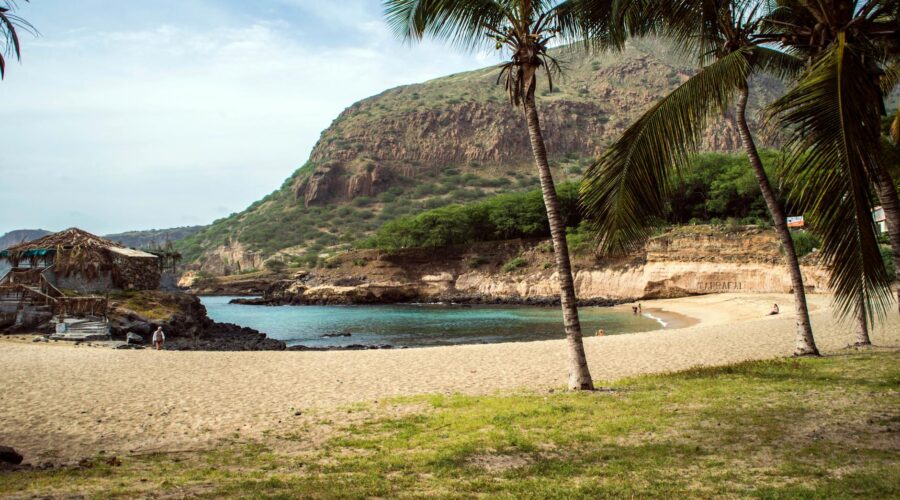
Today, the site of Drake’s raid is known as Cidade Velha, and it holds the prestigious title of a UNESCO World Heritage site. Visitors can walk through the ruins of the 16th-century Cathedral (Sé Catedral), which Drake’s men helped destroy, and look out over the Atlantic from the Fortress of São Filipe.
The fortress was actually constructed shortly after Drake’s 1585 attack as a direct response to the English privateer’s ease of conquest. It stands today as a silent monument to an era when these volcanic islands were the epicenter of a global struggle for empire.
Fast Facts for History Buffs:
- The Fleet: Drake’s 1585 fleet was his largest to date, featuring his flagship, the Elizabeth Bonaventure.
- The Legacy: Cape Verde today (Cabo Verde) is a stable democracy, far removed from its violent pirate-era past, but the ruins at Cidade Velha remain the most important historical site in the archipelago.
- Strategic Location: Cape Verde’s position as a “Cape Verde-type” hurricane nursery influenced maritime history, as sailors had to time their voyages to avoid the same storms that form near the islands today.
The sacking of Ribeira Grande remains a pivotal chapter in the history of Cape Verde. It serves as a reminder of the archipelago’s central role in the Atlantic world—a place where the cultures of Africa and Europe collided, often with fiery consequences.
Image: Pexels – Sandro Lopes Art