Noite de São João: Fire-Jumping Rituals in Cape Verde
As the sun dips below the horizon on the evening of June 23rd, the dry Atlantic breeze across the Cape Verdean archipelago carries a different scent than usual. The salt spray of the ocean is replaced by the pungent aroma of burning acacia wood and dried palm fronds. From the rugged mountains of Santo Antão to the cobblestone streets of Mindelo, thousands of small blazes begin to dot the landscape. This is the Noite de São João (Saint John’s Eve), a night where the ancient element of fire bridges the gap between the sacred and the profane, the past and the future.
In Cape Verde, the festivities of São João Baptista are more than just a religious observation; they are a rhythmic, fiery explosion of culture. At the heart of this celebration lies the enigmatic ritual of Pular a Fogueira—the act of jumping over the bonfire. While it may appear to be a simple feat of bravery or a playful game, for the people of Cabo Verde, it is a deeply symbolic ritual of purification, fertility, and community bonding that has survived centuries of colonial history and Atlantic migration.
The Origins: A Fusion of Faith and Folklore
The cult of São João in Cape Verde is a fascinating case study in syncretism. Historically, the Portuguese settlers brought the Catholic calendar to the islands, placing the feast of Saint John the Baptist at the center of the midsummer period. However, these traditions collided and merged with West African spiritual practices and European pagan midsummer rites that predated Christianity.
The bonfire ritual is fundamentally tied to the summer solstice in the Northern Hemisphere. Historically, fire was used to “give strength” to the sun as it began its retreat, and to ward off evil spirits that were thought to roam freely during the turning of the seasons. In Cape Verde, this merged with the biblical narrative of Saint John, who is described as a “burning and shining light” and whose birth was allegedly announced to the Virgin Mary via a signal fire lit by his mother, Elizabeth.
Sancta Sanctorum: The Spiritual Power of the Flame
In the Cape Verdean psyche, the fire of São João is not destructive; it is regenerative. It is believed that the smoke and heat of the fires have the power to “cleanse” the air of bad vibes (mau olhado) and bad luck. For farmers, the ashes are often seen as a blessing for the upcoming rainy season (the azágua), which is crucial for survival in the archipelago’s arid climate.
Decoding the Ritual: ‘Pular a Fogueira’
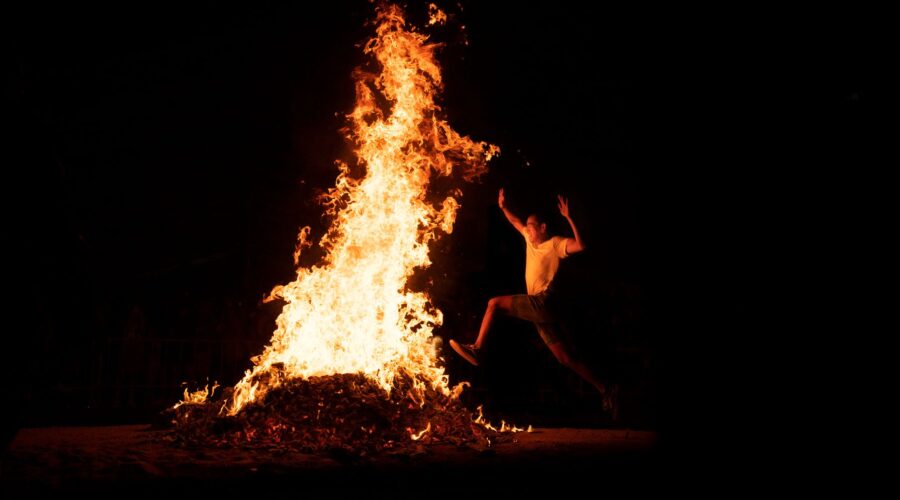
The climax of the night occurs when the bonfires reach a manageable height. Groups of friends, families, and neighbors gather around the lume (fire). The act of Pular a Fogueira involves running toward the flames and leaping across them in a single bound. But this is not done haphazardly; there are layers of meaning behind every jump.
1. Purification and Health
The most common belief is that jumping the fire purifies the body and soul. It is a symbolic way of “burning away” the illnesses, sins, and misfortunes of the previous year. To successfully clear the flames is to emerge on the other side renewed, carrying the protective warmth of the saint through the rest of the year.
2. The Bond of ‘Comadre’ and ‘Compadre’
One of the most unique aspects of the Cape Verdean São João is the formation of spiritual kinships. Two people will often jump the fire together, holding hands or crossing their arms over the flames. By doing so, they become Compadres de Fogueira (Godfathers/Godmothers of the Fire). This bond is considered sacred and creates a lifelong social obligation of mutual respect and aid, effectively strengthening the community’s social fabric.
3. Fertility and Love
For the youth, the fire is a medium for divination. Legend has it that if a couple jumps the fire without letting go of each other’s hands, they are destined to marry. Single women would historically use the morning-after ashes to perform sortes (charms) to discover the name of their future husband.
Regional Variations: Porto Novo and Beyond
While the Noite de São João is celebrated across all ten islands, the epicenter of the tradition is undoubtedly Porto Novo on the island of Santo Antão. The “Festas de São João” here have been elevated to a National Cultural Heritage status.
In Porto Novo, the fire-jumping is preceded by the Kola San Jon—a rhythmic, percussive dance involving a suggestive movement known as the umbigada (bumping of navels). The drumming, played on traditional 15th-century style drums, creates a hypnotic atmosphere that builds tension until the fires are lit. The pilgrimage (romaria) from Ribeira das Patas to the center of Porto Novo involves thousands of people carrying branches and icons, culminating in a night where the entire town seems to be ablaze with light and sound.
In Brava, the “Island of Flowers,” the celebration takes on a more melodic tone with the morna and coladeira, but the fogueiras remain a staple in the streets of Vila Nova Sintra. Even in the diaspora—from Brockton, Massachusetts to Lisbon—Cape Verdeans light small fires in grills or backyards to maintain this vital link to their heritage.
The Sensory Experience: Food and Music
You cannot separate the fire from the feast. As the wood crackles, the smell of traditional foods fills the air. It is customary to share xerém (coarsely ground corn), conchinha, and roasted meat. Home-brewed grogue (cane spirit) and pontche flow freely, fueling the dancers and the jumpers alike.
The music is the heartbeat of the night. The Kola rhythm is distinct; it is raw, urgent, and deeply African. It serves as a reminder that while the name of the saint is Portuguese, the soul of the celebration is profoundly Cape Verdean. The drums serve as a signal, calling the community together to face the fire as one.
Practical Tips for Travelers
If you are planning to visit Cape Verde to witness the Noite de São João, here is what you need to know:
- Timing: The main events happen on the night of June 23rd and the day of June 24th. However, in Santo Antão, the festivities can last for the entire month of June.
- Location: For the most authentic and intense experience, head to Porto Novo, Santo Antão. Mindelo (São Vicente) also offers a vibrant urban version of the festival.
- Safety: If you decide to pular a fogueira, follow the lead of the locals. Wait until the flames have died down to a safe height and ensure you have clear footing.
- Dress Code: Wear comfortable clothes that you don’t mind getting a bit of ash on. In Santo Antão, many people wear traditional straw hats and scarves.
A Resilient Flame
In a globalized world, the Noite de São João stands as a testament to the resilience of Cape Verdean culture. It is a night where the elements of fire, rhythm, and faith converge to remind the people of their history and their shared identity. Whether you are jumping the flames for purification, for a “compadre,” or simply for the thrill of the leap, the ritual offers a profound connection to the “Cabo-verdianidade”—the unique spirit of the islands.
As the last embers fade into the early hours of June 24th, the participants walk home through the smoke-filled streets, believed to be cleansed and ready for the rains to come. The fire may go out, but the warmth of the community remains until the next midsummer night.
Image: Pexels – Maria Fernanda Perez