Hantavirus Outbreak on Antarctic Cruise: 3 Dead from Andes Strain
A hantavirus outbreak aboard the Antarctic cruise ship MV Hondius has claimed three lives, sparking a complex international medical operation as the vessel navigates toward the Canary Islands. While the World Health Organization (WHO) has officially categorized the risk to the global population as “low,” the confirmation of the highly contagious “Andes” strain among the victims has put health authorities on high alert.
The outbreak involves eight flagged cases so far: three confirmed deaths and five suspected or confirmed infections. According to the WHO, the number of cases could rise due to the virus\’s long incubation period, which can last up to six weeks.
Crisis on the High Seas
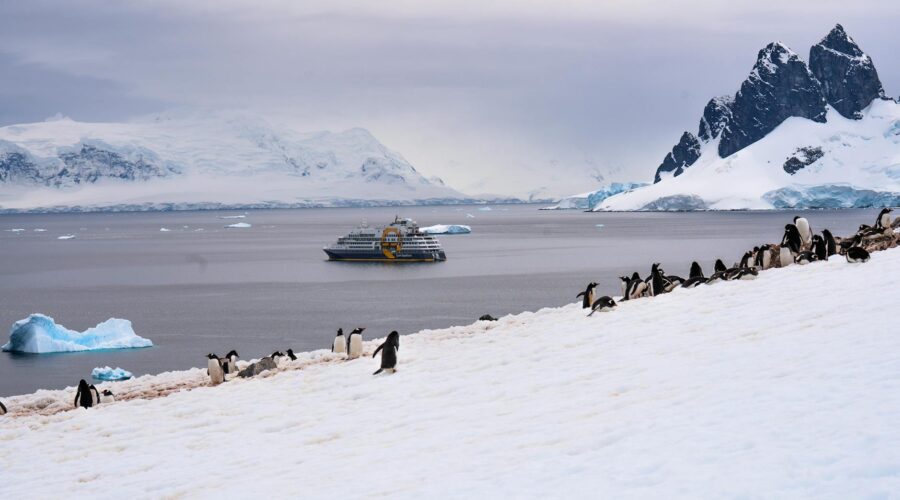
The MV Hondius began its journey on April 1 in Ushuaia, Argentina, carrying 149 people from 23 different countries on an expedition through the South Atlantic and Antarctica. The first sign of trouble appeared on April 11, when a Dutch passenger died in his cabin after exhibiting rapid-onset respiratory distress.
The situation escalated when his wife, who disembarked on the island of Saint Helena to be transferred to South Africa, also died of the virus. Authorities have since confirmed that the strain involved is the Andes virus—the only known hantavirus variant capable of human-to-human transmission. This revelation has triggered a frantic effort to trace over 80 passengers who shared a commercial flight with one of the victims during a medical evacuation to Johannesburg.
International Response and Repatriation
As the “ghost ship” prepares to reach the port of Granadilla in Tenerife, Spanish authorities have clarified that the vessel will remain offshore. Passengers will only be allowed to disembark once repatriation flights are waiting at the airport to minimize local exposure.
The ship’s operator, Oceanwide Expeditions, stated on Thursday that no symptomatic individuals remain on board after two critically ill patients and one asymptomatic passenger were airlifted to the Netherlands via ambulance planes on May 6. However, concerns remain as a Dutch flight attendant was hospitalized in Amsterdam today, showing symptoms after coming into contact with one of the infected passengers.
Chronology of the Outbreak
- April 1: MV Hondius departs Argentina for a voyage through Antarctica and the South Atlantic.
- April 11: First death occurs; a Dutch man dies after rapid respiratory failure.
- April 26: The first victim\’s wife dies in South Africa; hantavirus is confirmed.
- May 2: WHO is officially notified; the death toll rises to three.
- May 4: Cape Verde denies the ship entry due to public safety concerns.
- May 5: South African officials confirm the “Andes” strain. A passenger who returned to Switzerland also tests positive.
- May 6: Critically ill passengers are evacuated to the Netherlands; the ship sails for the Canary Islands.
- May 7: A flight attendant in Amsterdam is hospitalized; Tenerife authorities prepare for a strictly controlled offshore disembarkation.
WHO Director-General Tedros Adhanom Ghebreyesus emphasized that while the situation is contained to specific travel groups, the investigation is ongoing. Argentina is currently tracing the victims\’ movements to determine if the infection originated in South America prior to boarding.
Image: Pexels – Jan Tang