Former CPLP Chief Slams Organization as ‘Futile’ Diplomatic Body
LISBON — Marcolino Moco, the first executive secretary of the Community of Portuguese Language Countries (CPLP), issued a stinging critique of the organization on Tuesday, labeling it a “merely formal” diplomatic body that has failed to uphold its core principles of democracy and the rule of law.
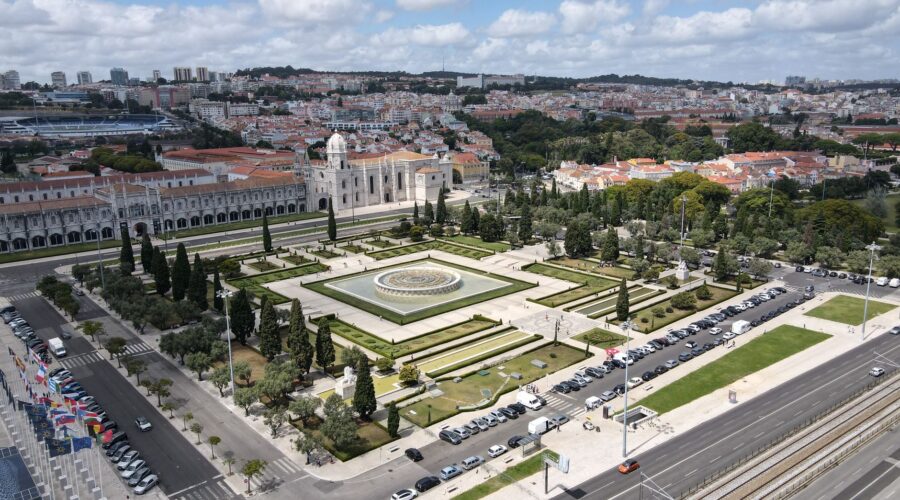
Speaking at a colloquium in Lisbon marking the 30th anniversary of the Lusophone organization, the former Angolan Prime Minister argued that the CPLP has become a hollow shell, prioritizing diplomatic niceties over the material well-being and democratic development of its member states.
A “Futile” Diplomacy
“The CPLP has fulfilled its mission in a merely formal, diplomatic way,” Moco told Lusa on the sidelines of the event at the Belém Cultural Center. “My vision was much more material, linked to the utility of the CPLP as a driver of development for our people.”
Moco, who led the organization from 1996 to 2000, pointed to Angola, Mozambique, and Guinea-Bissau as examples of nations currently “unstructured and disoriented.” He suggested that the lack of a strategic stabilization plan for these countries highlights a “certain material futility” within the intergovernmental body.
Democracy Under Threat in Angola
The veteran politician saved his sharpest criticisms for his home country, Angola. He warned that the state is defined by a “culture of exclusion” where teachers, business leaders, and opposition figures are marginalized if they disagree with the government.
With Angola’s general elections set for 2027 and the ruling MPLA party preparing for a December congress, Moco expressed deep concern over the blurring of lines between party and state. He specifically criticized President João Lourenço for holding the dual roles of MPLA leader and President of the Republic—an arrangement Moco called an “established abnormality.”
“There is a formal declaration of multiple candidacies [within the party], but in practice, it is shamefully prevented,” Moco said. He predicted a coming “struggle to the point of exhaustion” against opposition parties like UNITA, fueled by a state apparatus that lacks transparency.
The CPLP’s “Passive” Stance
Moco accused the Angolan National Electoral Commission (CNE) of being controlled by secret services loyal to the presidency rather than the state. He warned that the courts are being “disciplined” to ensure they favor the incumbent government.
When asked what the CPLP could do to intervene, Moco lamented the organization’s powerlessness. He argued that the “shamelessness” with which electoral mechanisms are manipulated in some member states should not be “passively observed” by a body that claims to champion democratic values.
“What is happening [in Angola] is a disgrace,” Moco said. “I would like the CPLP to play a role—peacefully and without infringing on sovereignty—to ensure that the principles of democracy and the rule of law are actually preserved, not just spoken about.”
Founded in 1996, the CPLP currently comprises nine member states: Angola, Brazil, Cape Verde, Guinea-Bissau, Mozambique, Portugal, São Tomé and Príncipe, Timor-Leste, and Equatorial Guinea.
Image: Pexels – Mylo Kaye