
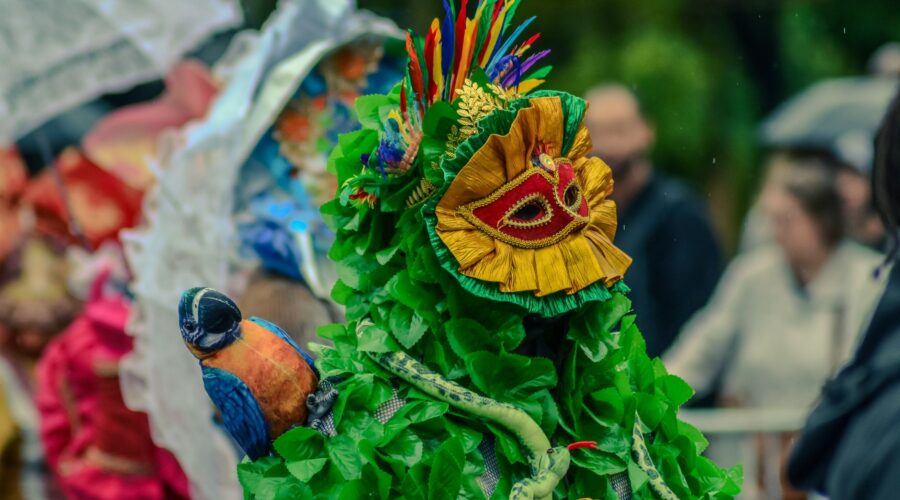
Casamento de Mascarados: Cape Verde’s Satirical Masked Wedding
In the heart of Cape Verde’s rural landscapes, far from the white sand beaches and luxury resorts, lies a tradition that defies the sobriety typically associated with marital vows. This is the Casamento de Mascarados (Masked Wedding), a spectacle of satire, social commentary, and unbridled joy. Deeply rooted in the cultural DNA of islands like Santiago and Fogo, this ritual is much more than a costume party; it is a profound expression of “Morabeza” mixed with the sharp, rebellious wit of the Cape Verdean spirit.
To the uninitiated, the sight of a mock wedding procession—complete with a makeshift priest, a “bride” who might be a man in a wig, and a “groom” dressed in tattered finery—might seem like mere carnival antics. However, the Casamento de Mascarados serves as a vital social valve, allowing rural communities to critique authority, subvert social norms, and celebrate the complexities of human relationships through the lens of irony and sarcasm.
Origins and Symbolism: The Roots of Masquerade
The origins of masked traditions in Cape Verde are a tapestry of African heritage and European influence. During the colonial era, masks provided a rare opportunity for the marginalized population to mimic and mock the rigid social structures imposed by the Portuguese administration and the Catholic Church. The “Masked Wedding” specifically emerged as a parody of the high-society weddings of the elite.
In these rural mimics, the elegance of the “Pano de Terra” (local woven cloth) and the strict liturgy of the church are replaced by cardboard crowns, charcoal-smeared faces, and “priests” who read nonsensical sermons from empty bottles or scraps of paper. By dressing in disguise, the participants enter a liminal space where the normal rules of society are suspended. In this “upside-down world,” the poor can play the rich, and the oppressed can find their voice through laughter.
The Anatomy of a Mock Wedding
A typical Casamento de Mascarados is a meticulously organized piece of street theater. While it often coincides with the festivities of Carnival (Entrudo) or local patron saint festivals (Tabanka), it can also erupt spontaneously during community gatherings.
The Cast of Characters
The “wedding” features a fixed set of archetypes, each played with exaggerated theatricality:
- The Bride and Groom: Often played by members of the same sex or in mismatched pairings to highlight the absurdity. The “bride” may wear a veil made of fishing nets or curtains, while the “groom” sports a top hat made of cardboard.
- The Priest: Perhaps the most satirical figure, the “priest” delivers “blessings” that are actually humorous critiques of local scandals or political failures.
- The Witnesses (Madrinhas and Padrinhos): They act as the “entourage,” often carrying ridiculous gifts like dry bones or broken household items.
- The Authorities: Figures dressed as mock policemen or government officials often “guard” the procession, parodying the bureaucracy of the state.
The Procession and the “Sermon”
The wedding party moves through the village streets, accompanied by the rhythmic beat of drums or the strumming of a cavaquinho. Along the way, the “priest” stops to perform the ceremony. Instead of traditional vows, the couple might promise to “fight every day” or “never have enough corn for the cachupa.” The sarcasm is sharp, often referencing real-life events or characters in the village, making it an intimate form of communal storytelling.
Social Satire: The Power of the Mask
Why do these communities invest so much energy in a fake wedding? The answer lies in the power of satire. In rural Cape Verde, where social hierarchies were traditionally rigid, the Casamento de Mascarados functioned as a “safe space” for criticism.
The “priest” might mention a neighbor’s greed or a politician’s broken promise, but because it is said behind a mask and within the context of a “joke,” the sting is softened—or at least, the speaker is protected. It is a form of social auditing. Through laughter, the community identifies what it deems acceptable or unacceptable behavior. It is a way of saying, “We see you, we know what is happening, and we are laughing at it.”
Cultural Survival and Modern Challenges
As Cape Verde modernizes and the youth migrate from rural areas to Praia or abroad, traditional rituals like the Casamento de Mascarados face the threat of dilution. The rise of social media and globalized entertainment means that the localized, physical theater of the masked wedding is less common than it was fifty years ago.
However, there is a growing movement toward cultural preservation. Local associations and cultural researchers are documenting these traditions, recognizing them not as “backwards” folklore, but as sophisticated forms of oral literature and performance art. In some municipalities, organized competitions for “Best Table of Masquerades” help keep the creative spirit of the tradition alive, ensuring that the younger generation understands the symbolism behind the masks.
Visiting the Tradition: A Guide for Travelers
For travelers wishing to witness this authentic side of Cape Verdean culture, timing is essential. While the Casamento de Mascarados is not a daily occurrence, your best chances of seeing it are during:
- Carnival: Particularly in the interior of Santiago (regions like Santa Cruz or São Salvador do Mundo) and on the island of Fogo.
- Tabanka Festivals: These vibrant, rhythmic celebrations of Cape Verdean identity often incorporate masked elements and satirical performances.
- Local Saint Days: Every village has its patron saint; these festivals are the heartbeat of rural life and often feature mock weddings as part of the public festivities.
When attending, it is important to remember that you are a guest in a deeply personal community ritual. While the atmosphere is jovial, the themes often touch on local pains and triumphs. Bringing a sense of humor and showing respect for the performers will often earn you a front-row seat to one of the most unique cultural displays in the Atlantic.
Conclusion: The Enduring Legacy of Laughter
The Casamento de Mascarados is a testament to the resilience of the Cape Verdean people. It shows a culture that refuses to be silenced by hardship or gravity. By turning the serious institution of marriage into a stage for satire, the rural communities of Cabo Verde demonstrate a profound psychological truth: that laughter is the most effective way to navigate the complexities of life.
In the end, the masks do not hide the truth; they reveal it. Behind the cardboard crowns and the painted faces lies the real face of Cape Verde—a nation that is clever, critical, deeply connected to its roots, and always ready to find the humor in the human condition.
Image: Pexels – Marvin Hashirama