
Cape Verde’s Strategic International Relations & Global Role
In the vast expanse of the central Atlantic Ocean, the ten volcanic islands that comprise Cabo Verde (Cape Verde) occupy a geopolitical position far more significant than their small landmass suggests. Since gaining independence from Portugal in 1975, this archipelagic nation has transformed itself from a resource-scarce colony into a “model of democracy” and a pivotal bridge between Africa, Europe, and the Americas.
Cape Verde’s international relations are defined by a philosophy of neutrality, pragmatism, and active multilateralism. By leveraging its strategic location and political stability, the country has successfully navigated the complexities of global diplomacy, securing vital development aid and forging unique partnerships that other developing nations often look to with envy.
The Pillars of Cape Verdean Diplomacy
The cornerstone of Cape Verde’s foreign policy is its commitment to democratic values, human rights, and the rule of law. In a region often characterized by political volatility, Cape Verde stands out as one of Africa’s most stable democracies. This reputation is not merely a point of pride; it is a primary diplomatic asset that opens doors to international funding and strategic alliances.
The country follows a policy of “non-alignment,” maintaining friendly relations with a broad spectrum of nations. This allows the archipelago to serve as a neutral ground for international dialogue. Whether hosting peace talks for regional conflicts or serving as a refueling stop for trans-Atlantic flights, Cape Verde utilizes its geography to maximize its global relevance.
The Special Partnership with the European Union
Perhaps the most unique aspect of Cape Verde’s international relations is its “Special Partnership” with the European Union (EU). Established in 2007, this agreement is the only one of its kind between the EU and an African nation. It goes beyond standard development aid, focusing on political cooperation, security, and institutional convergence.
The relationship is rooted in deep historical, cultural, and linguistic ties with Portugal, but it has expanded into a strategic alliance that addresses maritime security and illegal trafficking. Because Cape Verde is part of the “Macaronesia” region (alongside the Azores, Madeira, and the Canary Islands), it shares many ecological and economic concerns with EU territories. For travelers and investors, this partnership has manifested in eased visa processes and increased European investment in the tourism and renewable energy sectors.
Bridging Africa and the World: ECOWAS and the AU
While its eyes are often turned toward the Atlantic and Europe, Cape Verde remains a committed member of the African Union (AU) and the Economic Community of West African States (ECOWAS). However, its relationship with mainland West Africa is nuanced. As an island nation with a “Creole” identity that blends African and European heritage, Cape Verde sometimes feels a sense of physical and cultural distance from the continent.
Despite this, the country plays a vital role in regional maritime security. Given its massive Exclusive Economic Zone (EEZ), Cape Verde is a front-line state in the fight against piracy and narcotics smuggling in the Mid-Atlantic. Cooperative missions with the United States Coast Guard and various European navies often take place in Cape Verdean waters, positioning the country as a security guarantor for the Gulf of Guinea.
The “Eleventh Island”: The Power of the Diaspora
In Cape Verdean diplomacy, the “Eleventh Island” refers to the massive diaspora living abroad—estimated at over 700,000 people, a population larger than that of the islands themselves. Significant communities exist in the United States (particularly in New England), Portugal, France, the Netherlands, and Senegal.
The diaspora is a central pillar of international relations for two reasons. First, remittances historically accounted for a significant portion of the GDP. Second, Cape Verdeans abroad act as “informal ambassadors,” influencing the foreign policy of their host countries toward the archipelago. The United States, for instance, maintains a robust relationship with Cape Verde, largely influenced by the historic Cape Verdean-American community that dates back to the whaling era of the 19th century.
US-Cape Verde Relations: A Partnership for Development
The United States was one of the first countries to recognize Cape Verde’s independence. Today, the relationship is characterized by strong cooperation in law enforcement and economic development. Cape Verde has twice been selected for the Millennium Challenge Corporation (MCC) compacts, a prestigious US federal aid program awarded only to countries that demonstrate a commitment to good governance and economic freedom.
China’s Growing Footprint
Like many African nations, Cape Verde has seen a significant increase in Chinese investment over the last two decades. China has funded major infrastructure projects, including the National Stadium, the Presidential Palace, and the University of Cape Verde’s new campus. For Cape Verde, China represents a partner that can deliver large-scale infrastructure quickly. For China, Cape Verde is a strategic maritime node in the “Belt and Road Initiative,” offering a gateway to Atlantic shipping lanes.
The challenge for Cape Verdean diplomats is to balance this growing Chinese presence with their traditional Western alliances. So far, the country has managed this “balancing act” with remarkable dexterity, ensuring that it remains a friend to all while becoming dependent on none.
Climate Change and Small Island Developing States (SIDS)
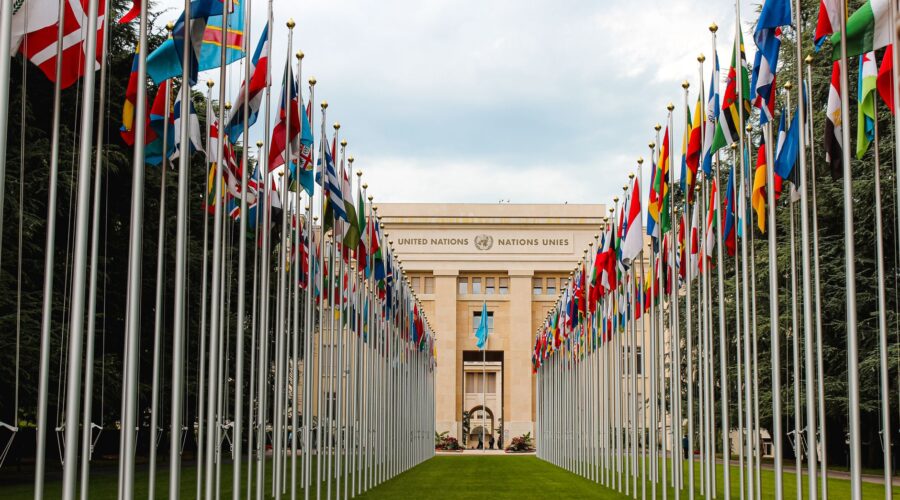
In the halls of the United Nations, Cape Verde is a vocal advocate for the interests of Small Island Developing States (SIDS). International relations for Cape Verde are increasingly focused on “Climate Diplomacy.” As a nation vulnerable to droughts and rising sea levels, Cape Verde uses its international platform to demand climate justice and funding for energy transition.
The country has set ambitious goals to derive the majority of its energy from renewable sources—wind and solar—by 2030. Achieving this goal requires international technology transfers and green financing, making environmental policy a top priority for the Ministry of Foreign Affairs.
Conclusion: The Strategic Atlantic Hub
Cape Verde’s international relations prove that size does not dictate influence. By positioning itself as a stable, democratic, and reliable partner, the archipelago has secured a level of global prestige that far outweighs its population of 500,000. Whether as a bridge between the EU and Africa, a partner in US maritime security, or a leader in climate advocacy, Cape Verde continues to navigate the international waters with sophistication and strategic foresight.
For the international community, Cape Verde remains a rare success story—a nation that has used the tools of diplomacy and good governance to overcome geographic isolation and build a prosperous, interconnected future.
Image: Pexels – Mathias Reding