
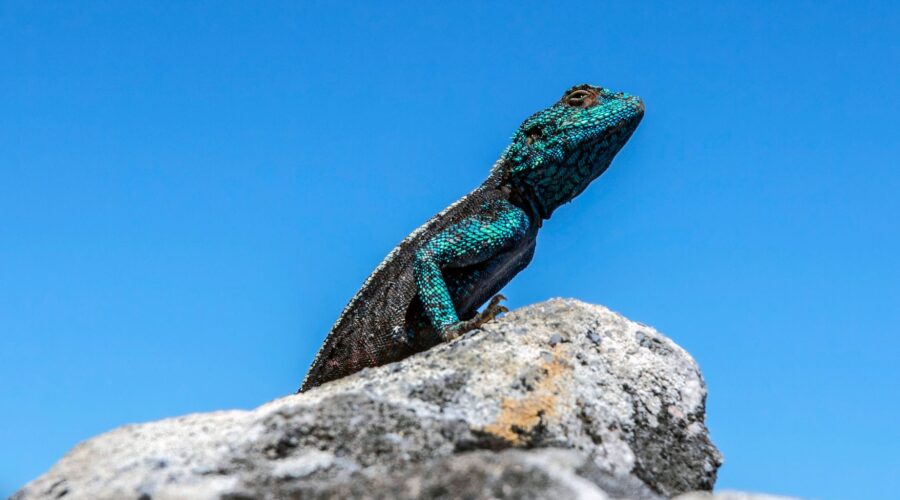
The Cape Verde Giant Gecko: History & Conservation Status
Floating in the central Atlantic Ocean, approximately 570 kilometers off the coast of West Africa, lies the volcanic archipelago of Cape Verde (Cabo Verde). While this nation is internationally recognized for its stable democracy, vibrant Creole culture, and rhythmic Morna music, it is also home to a hidden biological treasure: a unique array of endemic reptiles. Among these, the Cape Verde Giant Gecko (Chioninia coctei) stands as a haunting symbol of both the islands’ unique evolutionary history and the fragile nature of island ecosystems.
An Evolutionary Marvel in Macaronesia
Cape Verde forms part of the Macaronesia ecoregion, sharing botanical and zoological links with the Azores, Madeira, and the Canary Islands. Formed by volcanic activity between 8 and 20 million years ago, these islands were never connected to the African mainland. This isolation allowed for “adaptive radiation,” where colonizing species evolved into unique forms found nowhere else on Earth.
The Cape Verde Giant Gecko, also known as Cocteau’s Skink (historically classified as Macroscincus coctei), was the crown jewel of this process. Unlike the smaller lizards typically found in the Sahelian belt of Africa, this species grew to formidable sizes, reaching up to 60 centimeters (24 inches) in length. It was a bulky, slow-moving reptile with a prehensile tail and a unique herbivorous diet, adapted to the arid, scrubby landscapes of the uninhabited islets of Branco and Raso.
The Ghost of the Islets: A History of Extinction
The story of the Giant Gecko is inextricably linked to the human history of the archipelago. When Portuguese explorers first arrived in 1456, the islands were uninhabited. However, the subsequent establishment of Ribeira Grande (now Cidade Velha) on Santiago in 1462 marked the beginning of significant ecological shifts. The introduction of invasive species—specifically rats, cats, and goats—proved catastrophic for the islands’ native fauna.
For the Giant Gecko, the remote and uninhabited islets of the Barlavento (windward) group were its last refuge. However, even these desolate rocks were not safe. During the 19th and early 20th centuries, Cape Verde suffered from persistent droughts and economic decline following the end of the transatlantic slave trade. During these periods of famine, it is recorded that starving people and sailors would visit the islets to hunt the large, slow-moving geckos for food. Their skins were also occasionally used for leather.
By the time Charles Darwin visited Cape Verde aboard the HMS Beagle in 1832, the species was already under pressure. The last living specimen was seen in the early 20th century. In 1913, the species was officially declared extinct, making it a “ghost species” of the Macaronesian islands.
Current Conservation: Protecting the Living Relatives
While the “Giant” gecko may be lost to history, its extinction serves as a vital lesson for the conservation of Cape Verde’s remaining endemic reptiles. Today, the archipelago is home to several species of the genus Chioninia (skinks) and Tarentola (wall geckos) that are currently facing similar threats.
The Raso Lark and Reptile Synergy
Conservation efforts on the islet of Raso—one of the last homes of the Giant Gecko—now focus on the critically endangered Raso Lark (Alauda razae). Interestingly, protecting the habitat for these birds has a “trickle-down” effect on the remaining small endemic geckos and skinks. By restricting human access and preventing the re-introduction of invasive predators, the Cape Verdean government and international NGOs are creating a sanctuary for the archipelago’s remaining reptilian biodiversity.
Combating Climate Change and Habitat Loss
Cape Verde is on the frontlines of the climate crisis. Ranked as one of the most endangered nations due to flooding and rising sea levels, the country is taking bold steps to protect its environment. In 2023, a landmark “debt-for-nature” swap with Portugal allowed Cape Verde to invest €140 million into environmental and climate projects. These funds are crucial for:
- Reforestation: Increasing the humid mountain forests on islands like Santiago and Santo Antão to provide habitats for arboreal reptiles.
- Invasive Species Management: Eradicating rats and feral cats from sensitive nesting sites on the uninhabited islets.
- Legal Protection: Strengthening the laws regarding the trade and collection of endemic species.
Why the Giant Gecko Matters Today
The loss of the Cape Verde Giant Gecko is more than just a footnote in a biology textbook; it is a warning. As Cape Verde shifts its economy toward sustainable tourism and renewable energy—aiming for 50% renewable power by 2030—the preservation of its unique wildlife has become a pillar of national identity.
For travelers visiting the desert-like plains of Sal or the towering volcanic peak of Pico do Fogo, the smaller lizards scurrying across the volcanic rocks are a reminder of the islands’ resilience. These reptiles are the survivors of an evolutionary journey that spans millions of years, navigating volcanic eruptions, extreme aridity, and human intervention.
Practical Information for Eco-Travelers
If you are interested in Cape Verde’s unique biodiversity, here are a few ways to experience it responsibly:
1. Visit Protected Areas
Explore the Serra Malagueta Natural Park on Santiago or the Monte Gordo Natural Park on São Nicolau. These areas offer the best chances to see endemic flora and fauna in their natural sub-humid and humid mountain environments.
2. Support Local NGOs
Organizations like Biosfera I work tirelessly to monitor the uninhabited islets and protect species like the Cape Verde wall gecko and various endemic birds. Supporting their work through donations or eco-tours helps fund the “boots on the ground” conservation needed to prevent another extinction.
3. Practice “Leave No Trace”
The arid ecosystems of islands like Boa Vista and Maio are extremely fragile. Stick to marked paths to avoid crushing the burrows of ground-dwelling reptiles and never disturb or feed the wildlife.
Conclusion
The Cape Verde Giant Gecko may no longer roam the rocky outcrops of Branco and Raso, but its legacy lives on in the country’s aggressive pursuit of environmental preservation. As Cape Verde continues to establish itself as a leader in African democracy and green energy, the memory of its lost giant serves as a powerful motivator to protect the “green cape” and all the unique creatures that call it home.
Image: Pexels – ALEKSANDR EVSTAFEV