
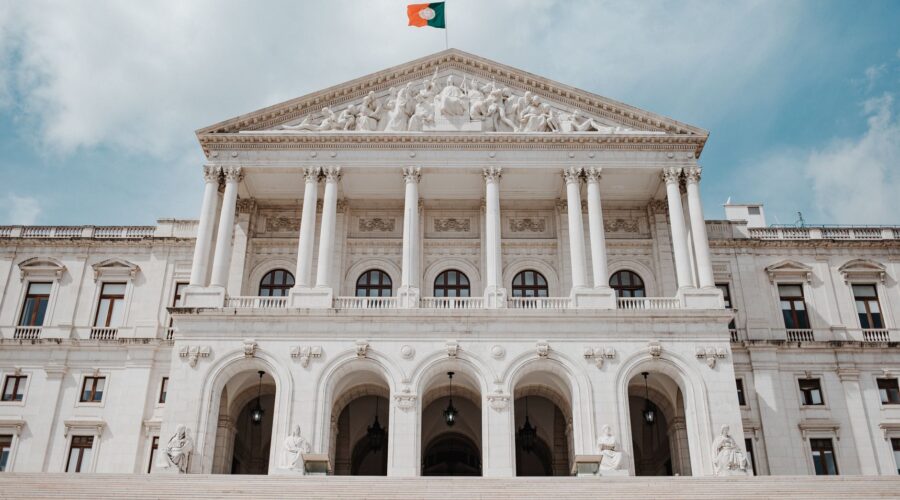
Cape Verde FM Calls for Strategic CPLP Renewal for the Future
Praia, Cape Verde — As the Community of Portuguese Language Countries (CPLP) approaches its 30th anniversary, Cape Verde’s outgoing Foreign Minister, José Luís Livramento, says the organization has successfully met its founding goals but now faces a critical turning point that requires a “renewal” of its strategic mission.
In an interview with Lusa, Livramento praised the CPLP for its historic role in international diplomacy, specifically citing its influence in Timor-Leste’s independence from Indonesia and its mediation during political upheavals in member states. He highlighted the promotion of the Portuguese language and the recent mobility agreement—which eases travel between member nations—as major milestones that have made citizens “feel they are in a community.”
Internal Friction and Business “Wars”
Despite these successes, Livramento did not shy away from the challenges hindering the group’s growth. He raised concerns about members failing to uphold shared commitments, specifically mentioning Equatorial Guinea. He also lamented “institutional participation without momentum,” where some member states fail to contribute actively to the community’s evolution.
One of the most pressing issues is a leadership crisis within the CPLP Business Confederation (CE-CPLP). A years-long legal dispute over the confederation’s presidency has stalled economic cooperation between the nine member nations. “There are uncertainties and ‘wars’ over leadership that do not foster the business climate that should exist within the community,” Livramento stated, urging business leaders to resolve the conflict through diplomacy or internal arbitration.
Funding Gaps and the AI Challenge
The minister also flagged the chronic underfunding of the International Institute of the Portuguese Language (IILP), the Praia-based body responsible for promoting the language globally. He argued that the CPLP must urgently address new frontiers, including the innovation required by the rise of artificial intelligence and the expansion of Portuguese within international organizations.
A Roadmap for the Future
To navigate these hurdles, Livramento proposed a high-level summit themed “The CPLP of the Future.” He suggested that just as the organization’s founding in 1996 marked a new era, the current global landscape requires a fresh evaluation of its objectives and operating methods.
“We need to renew that stage, evaluating the main strategic objectives and the ‘modus operandi’ of the CPLP itself,” he said, noting that such a shift must be mandated by the Heads of State and Government.
As Cape Verde prepares for a transition of power following a decade of Movement for Democracy (MpD) rule, Livramento remains confident that the country’s commitment to the CPLP will remain steadfast. “Cape Verde is a staunch supporter,” he said, describing the organization as a unique “tripod” spanning four continents. He emphasized that Cape Verde will continue to leverage its strategic position as a gateway between the CPLP and the Economic Community of West African States (ECOWAS).
The CPLP, which celebrates its 30th anniversary on July 17, consists of nine member states: Angola, Brazil, Cape Verde, Guinea-Bissau, Equatorial Guinea, Mozambique, Portugal, São Tomé and Príncipe, and Timor-Leste.
Image: Pexels – Max Avans