António de Noli: The Discovery & First Settlement of Cape Verde
In the mid-15th century, the map of the known world was expanding at an unprecedented rate. Among the most pivotal figures of this era of maritime exploration was António de Noli, a Genoese navigator whose journey into the vast Atlantic led to the discovery and first settlement of what we now know as Cabo Verde (Cape Verde). While the archipelago today is celebrated as a stable democracy and a “success story” in Africa, its history begins with a serendipitous arrival that changed the course of Atlantic history forever.
The Genoese Connection: Who Was António de Noli?
António de Noli was born in Genoa, Italy, a city-state renowned for producing some of the finest mariners of the Middle Ages. Like his contemporary Christopher Columbus, de Noli eventually sought the patronage of the Portuguese Crown, which was then the global leader in maritime technology and exploration under the influence of Prince Henry the Navigator.
Working for King Afonso V of Portugal, de Noli set sail to explore the West African coast. While Portuguese records credit him with the discovery, he was not alone; the discovery of the islands between 1456 and 1460 involved a multicultural crew of navigators, including the Venetian Alvise Cadamosto and the Portuguese Diogo Gomes. However, it was de Noli who would become the central administrative figure in the islands’ infancy.
The Discovery of an Uninhabited Paradise
When de Noli and his crew first sighted the islands, they encountered a landscape far different from the one we see today. The islands, formed by volcanic activity 40 to 50 million years ago, were entirely uninhabited. There were no indigenous populations; instead, the explorers found a pristine ecosystem of endemic birds, reptiles, and volcanic peaks.
The archipelago was named after the Cap-Vert peninsula in modern-day Senegal. Portuguese explorers had named that mainland point “Cabo Verde” (Green Cape) in 1444 because of its lush vegetation. When the islands were found some 600 to 850 kilometers to the west, they inherited the name, despite many of the islands being arid and rocky.
The Sotavento and Barlavento Groups
De Noli’s explorations helped map the two distinct island groups:
- The Sotavento (Leeward) Islands: Including Santiago, Fogo, Maio, and Brava.
- The Barlavento (Windward) Islands: Including Santo Antão, São Vicente, Santa Luzia, São Nicolau, Sal, and Boa Vista.
Ribeira Grande: The First European Settlement in the Tropics
The most significant milestone in António de Noli’s career came in 1462. Under his leadership, Portuguese settlers arrived on the island of Santiago and founded the town of Ribeira Grande. This was not just a small outpost; it was the first permanent European settlement in the tropics.
Recognizing de Noli’s contribution, King Afonso V appointed him as the first Governor of Cape Verde. From his base in Santiago, de Noli oversaw the early attempts at agriculture and the establishment of a strategic port. Today, this historic site is known as Cidade Velha (Old City), a UNESCO World Heritage site that serves as a living museum of the era of discovery.
Strategic Importance and the Atlantic Slave Trade
The settlement founded by de Noli quickly grew in strategic importance. Cape Verde’s location made it a vital re-supply point for ships traveling between Europe, Africa, and the Americas. Unfortunately, this strategic position also made it a central hub for the burgeoning transatlantic slave trade in the 16th and 17th centuries.
The islands saw rapid economic growth driven by the exchange of rum, cloth, and manufactured goods for gold, ivory, and enslaved Africans. This period brought immense wealth to the islands but also invited danger. The prosperity of Ribeira Grande attracted famous privateers like Sir Francis Drake, who sacked the city twice in 1585.
The Legacy of the First Settlement
António de Noli’s arrival set in motion a unique cultural blending that defines Cape Verde today. Because the islands were uninhabited, the current population of approximately 530,000 people traces its roots to a mix of West African populations and the early Portuguese and Genoese settlers. This fusion gave birth to Cape Verdean Creole (Crioulo), the oldest Portuguese-based creole language, which remains the heart of the nation’s identity.
Evolution of the Capital
While de Noli’s Ribeira Grande was the original heart of the colony, its vulnerability to pirate attacks and a devastating French raid in 1712 led to its decline. In 1770, the capital was moved to the nearby, more defensible location of Praia, which remains the capital of the Republic of Cabo Verde today.
From Discovery to a Modern Democracy
The history sparked by de Noli’s 15th-century voyage eventually led to a long struggle for autonomy. After centuries of colonial rule, and following the armed rebellion led by the PAIGC (African Party for the Independence of Guinea and Cape Verde), the islands achieved independence on July 5, 1975.
Today, Cape Verde stands as one of Africa’s most developed and democratic nations. It has successfully transitioned from a colonial outpost to a thriving service-oriented economy with a strong focus on tourism and renewable energy. In a full-circle moment of international cooperation, Portugal recently signed a “debt-for-nature” swap with Cape Verde, forgiving €140 million in debt to fund environmental projects—a modern testament to the enduring link between the islands and the European continent first bridged by de Noli.
Practical Information for Travelers
If you are planning to visit the islands that de Noli discovered, here are a few modern facts to keep in mind:
- Language: Portuguese is the official language, but you will hear Crioulo everywhere.
- Climate: Mild and arid. The islands are famous for “Cape Verde-type hurricanes” that form nearby but rarely strike the islands themselves.
- Health: As of 2024, Cape Verde is officially certified as malaria-free.
- Must-Visit: A trip to Cidade Velha on Santiago Island is essential to see the ruins of the original settlement founded by de Noli.
António de Noli may have been seeking new routes for trade and glory for the Portuguese Crown, but his legacy is the creation of a vibrant, resilient nation that serves as a bridge between three continents.
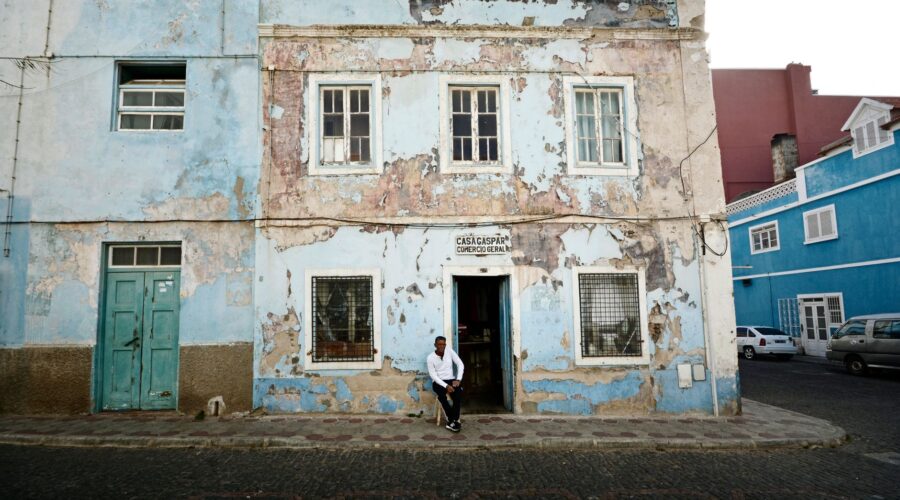
Image: Pexels – damien Saillet