Alexander’s Swift: Cape Verde’s Endemic Aerial Acrobat
In the vast, azure expanse of the eastern Atlantic, the archipelago of Cape Verde (Cabo Verde) serves as a rugged sanctuary for life. While the islands are famous for their vibrant Creole culture, volcanic landscapes like Pico do Fogo, and historical sites like Cidade Velha, there is a quieter, more kinetic marvel inhabiting the skies. Meet Alexander’s Swift (Apus alexandri), a small, soot-colored aerialist that claims these ten volcanic islands as its only home on Earth.
An Island Specialist: The Origins of Alexander’s Swift
Cape Verde is part of the Macaronesia ecoregion, sharing a volcanic lineage with the Azores and the Canary Islands. Formed between 8 and 20 million years ago, these islands provided a blank canvas for evolution. Alexander’s Swift is a testament to this isolation. Named after the British explorer and ornithologist Boyd Alexander, who led expeditions to the archipelago at the turn of the 20th century, this bird has adapted perfectly to the unique Saharan-influenced climate of the islands.
Unlike its cousin, the Common Swift, which migrates thousands of miles between Europe and Africa, Alexander’s Swift is a year-round resident of Cape Verde. It is a “true” endemic, meaning you will not find it nesting anywhere else in the world, from the flat salt plains of Sal to the humid, towering peaks of Santo Antão.
Physical Characteristics: Built for the Wind
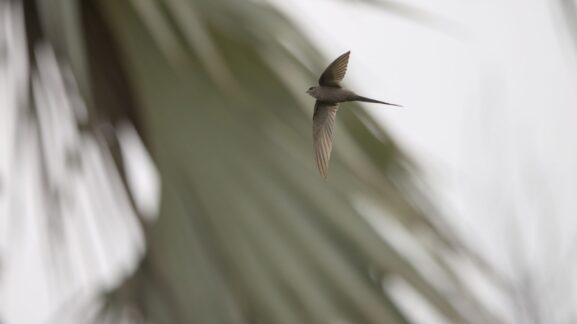
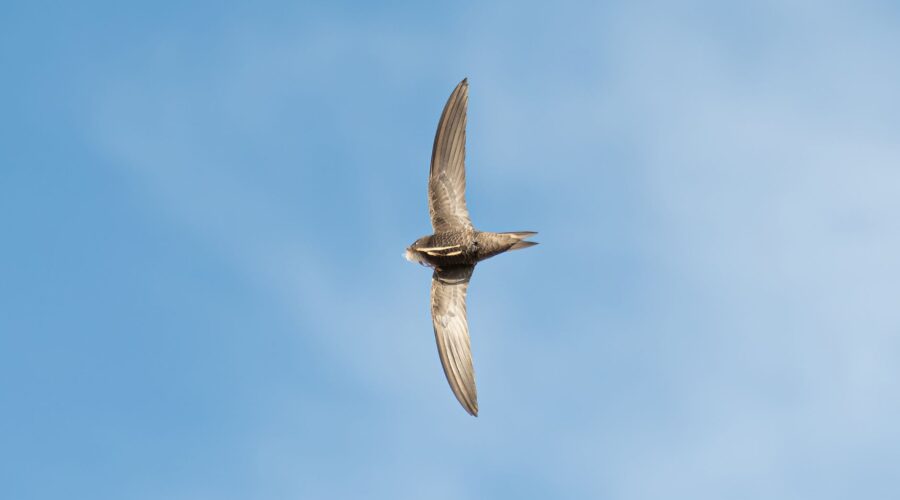
To the untrained eye, Alexander’s Swift might look like a simple dark blur against the clouds. However, closer observation reveals a masterclass in aerodynamic engineering. It is smaller than most European swifts, measuring roughly 13 centimeters in length with a slender, cigar-shaped body.
Key Features:
- Plumage: A uniform dark grey-brown, though it often appears black against the bright Atlantic sun. It features a slightly paler throat patch that is difficult to see unless the bird is banking.
- Wings: Long, scythe-like wings that allow for incredible speeds and the ability to maneuver through the “Harmattan” winds—dusty trade winds that blow from the African mainland.
- Tail: A shallowly forked tail that acts as a rudder during high-speed insect chases.
Life on the Wing: Behavior and Habitat
The defining characteristic of all swifts is their near-total commitment to the sky. Alexander’s Swifts are thought to spend the vast majority of their lives airborne. They feed on “aerial plankton”—tiny insects and spiders lofted into the atmosphere by thermal currents. They drink by skimming the surface of freshwater pools or even catching raindrops mid-air.
In Cape Verde, these birds are not picky about their surroundings, provided there are cliffs or structures for nesting. You can spot them screaming over the colorful rooftops of Praia on Santiago island or circling the dramatic calderas of Fogo. Because Cape Verde is a horseshoe-shaped cluster of islands with varied microclimates, the swifts have adapted to both the arid, desert-like conditions of Maio and the lush, “orographically induced” green valleys of the interior highlands.
Nesting in the Land of Fire
Breeding usually occurs during the rainy season (August to October), though they have been known to nest at other times of the year when food is abundant. Their nests are marvels of opportunistic construction, built in rock crevices, sea cliffs, and increasingly, in the nooks of old colonial buildings and modern apartments.
They use saliva to glue together feathers, grass, and wind-blown debris to create a small cup. In the rugged terrain of islands like Brava or Santo Antão, they often share cliff faces with other endemic species like Bourne’s Heron. For a bird that thrives on the wing, the nesting period is one of the few times they touch a solid surface.
Conservation and the Changing Climate
While Alexander’s Swift is currently listed as a species of “Least Concern” by the IUCN, its status is delicate due to its extremely limited range. As Cape Verde faces the frontline of the climate crisis, the swifts face new challenges. The archipelago is ranked as one of the most endangered nations regarding climate-driven flooding and habitat shifts.
Increased desertification and erratic rainfall—hallmarks of the Sahelian semi-arid belt—could affect the abundance of the insects they rely on. Furthermore, as Cape Verde transitions toward its goal of 50% renewable energy by 2030, conservationists are monitoring how new infrastructure, such as wind farms, might interact with the flight paths of these endemic aerialists.
Practical Tips for Birdwatchers in Cape Verde
If you are traveling to Cabo Verde and hope to add this endemic treasure to your life list, here is how to find them:
Best Locations:
- Santiago: Head to the mountains of Serra Malagueta. The humid air here creates perfect conditions for insects, attracting large flocks of swifts.
- Fogo: The cliffs surrounding the Chã das Caldeiras offer a dramatic backdrop for watching these birds dive into the volcanic depths.
- São Vicente: The urban center of Mindelo is a great place to see them weaving between buildings at dusk.
Observation Tip:
Listen for their call. Like most swifts, Alexander’s Swift is highly vocal. They emit a high-pitched, rasping scream that is often the first sign of their presence before you see them darting overhead.
Conclusion: A Symbol of Resilience
Alexander’s Swift is more than just a bird; it is a symbol of the Cape Verdean spirit. Much like the 530,000 residents of these islands, the swift has learned to thrive in a land of limited resources, volcanic instability, and isolation. It is an enduring resident of the Macaronesian skies, a tiny, feathered acrobat that reminds us of the incredible biodiversity hidden within the Atlantic’s “Green Cape.”
Next time you find yourself wandering the historic streets of Cidade Velha or hiking the ridges of Santo Antão, look up. You might just catch a glimpse of a species that exists nowhere else—a true master of the Cape Verdean wind.
Image: Pexels – Mahmoud Yahyaoui