Cape Verde Shearwater: Breeding & Marine Conservation
Emerging from the deep blue waters of the eastern Atlantic, the Cape Verde archipelago—officially known as Cabo Verde—is a volcanic sanctuary of rugged peaks and vast marine horizons. Located 600 to 850 kilometers west of Senegal, these ten islands form a vital part of the Macaronesia ecoregion. While the islands are famous for their resilient culture and stable democracy, they are also the stage for one of nature’s most remarkable seasonal spectacles: the breeding of the Cape Verde Shearwater (Calonectris edwardsii).
The Ghost of the Atlantic: Understanding the Cape Verde Shearwater
The Cape Verde Shearwater is a medium-sized seabird that is endemic to the archipelago, meaning it breeds nowhere else on Earth. Locally known as the Cagarra, this bird was historically considered a subspecies of the Cory’s Shearwater, but recent genetic and morphological studies have recognized it as a distinct species. With a slimmer bill and more angular wings than its cousins in the Azores or Canary Islands, the Cape Verde Shearwater is perfectly adapted to the tropical winds of the Sotavento and Barlavento island groups.
For most of the year, these birds are true wanderers of the ocean, spending their lives on the wing and feeding on small fish and squid. However, as the northern spring arrives, thousands of shearwaters return to the volcanic cliffs and rocky islets of Cabo Verde to begin their arduous breeding cycle.
Breeding Grounds: From Fogo’s Peaks to Raso’s Rocks
The breeding season typically begins in late February or March. The birds are highly colonial, choosing inaccessible cliffs or remote, uninhabited islets to protect their single-egg clutches from predators. The geography of Cabo Verde, shaped by 40–50 million years of volcanic activity, provides the perfect architecture for these colonies.
Key Nesting Sites
- Raso Islet: A small, uninhabited rock near São Nicolau that serves as a critical refuge for the shearwater and the critically endangered Raso Lark.
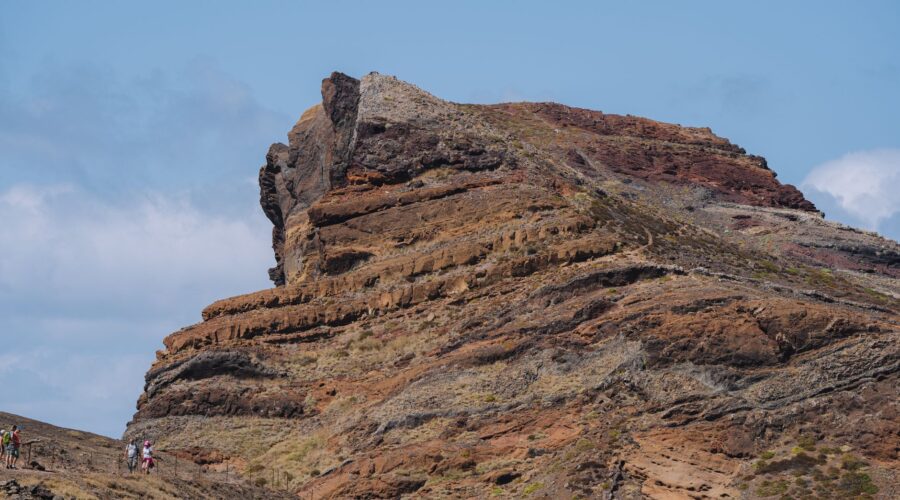
- Brava and Fogo: The steep, dramatic cliffs of these islands, formed by catastrophic debris landslides and volcanic uplift, offer high-altitude nesting sites.
- Sal and Boa Vista: While these islands are flatter and sandier, the surrounding islets host significant populations that take advantage of the rich marine upwellings nearby.
Nesting is a nocturnal affair. To avoid the heat of the day and the eyes of predatory birds like the Alexander’s Swift or Bourne’s Heron, the shearwaters return to their burrows under the cover of darkness. Their haunting, rhythmic calls—often described as ghostly wails—echo across the cliffs, creating a soundscape that is synonymous with the Cape Verdean night.
Marine Conservation Challenges
Despite their resilience, the Cape Verde Shearwater faces a gauntlet of threats. As a country with few natural resources and a growing tourism-based economy, Cabo Verde must balance human development with the preservation of its unique biodiversity.
1. Invasive Species
Historically, Cabo Verde was uninhabited until the 15th century. The arrival of Portuguese settlers brought “hitchhikers” like rats and feral cats. These invasive predators are devastating to ground-nesting seabirds, which have no natural defenses against them. On islands like Santiago and São Nicolau, conservationists work tirelessly to manage predator populations to ensure chick survival.
2. The Threat of Plastic and Overfishing
As the archipelago sits at a strategic maritime crossroads, the surrounding waters are subject to heavy shipping and commercial fishing. Overfishing reduces the availability of the small fish shearwaters rely on, while marine plastic pollution poses a lethal risk through ingestion.
3. Climate Change
Cape Verde is on the frontlines of the climate crisis. Rising sea levels and the increasing intensity of “Cape Verde-type” hurricanes—which are often the most powerful storms in the Atlantic—threaten to destroy coastal nesting habitats. In 2023, UN Secretary-General António Guterres highlighted the archipelago’s vulnerability, praising the nation for its commitment to reaching 50% renewable energy by 2030.
A Success Story in the Making: Debt-for-Nature
Hope for the Cape Verde Shearwater lies in innovative conservation financing. In 2023, Portugal and Cabo Verde signed a landmark agreement to forgive €140 million of debt in exchange for investment in environmental and climate projects. This “debt-for-nature swap” is one of the first in Africa and provides much-needed capital for marine protected areas (MPAs).
Organizations like Projecto Biodiversidade and Biosfera I are actively involved in monitoring shearwater colonies, ringing birds to track their migrations, and educating local communities about the importance of the Cagarra. In many coastal villages, the shearwater is no longer seen just as a potential food source, but as a symbol of the islands’ natural heritage and a draw for eco-conscious tourists.
Practical Information for Eco-Travelers
For those looking to witness the majesty of Cabo Verde’s seabirds, the best time to visit is between June and October, when the colonies are most active.
- Respect the Habitat: Many nesting sites are protected. Always visit with a certified local guide to ensure you do not disturb the burrows.
- Dark Skies: Light pollution can disorient fledgling birds. Many resorts on Sal and Boa Vista are now adopting “bird-friendly” lighting during the fledging season in late autumn.
- Support Local: By staying in locally-owned guesthouses on islands like Fogo or Santo Antão, you contribute to an economy that values its natural landscape over mass industrialization.
Conclusion
The Cape Verde Shearwater is more than just a bird; it is a sentinel of the Atlantic. Its presence speaks to the health of the ocean and the success of conservation efforts in one of Africa’s most stable democracies. As Cabo Verde continues to navigate its path toward sustainable development and renewable energy, the preservation of the Cagarra remains a vital benchmark for the archipelago’s ecological future. In protecting this ghost of the Atlantic, we protect the very essence of these “Green Capes” that have captivated explorers since the 15th century.
Image: Pexels – Diogo Miranda