Bourne’s Heron: The Rare Endemic Bird of Santiago Island
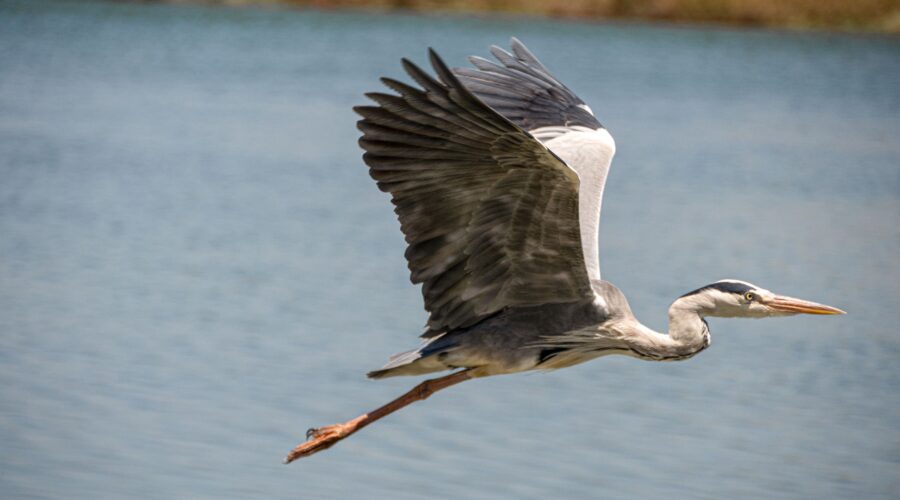
Deep within the rugged interior of Santiago, the largest and most populous island of the Cabo Verde archipelago, lives one of the world’s most elusive and specialized avian residents: Bourne’s Heron (Ardea purpurea bournei). While Santiago is widely known for hosting the nation’s capital, Praia, and serving as the historical heart of the country, it also serves as the final stronghold for this rare, endemic subspecies of the Purple Heron.
The story of Bourne’s Heron is a fascinating intersection of evolutionary isolation, environmental adaptation, and the urgent need for conservation in the Macaronesia ecoregion. As the only heron subspecies endemic to Cabo Verde, its presence highlights the remarkable biodiversity found within this “green cape” in the middle of the Atlantic.
Origins and Evolutionary Isolation
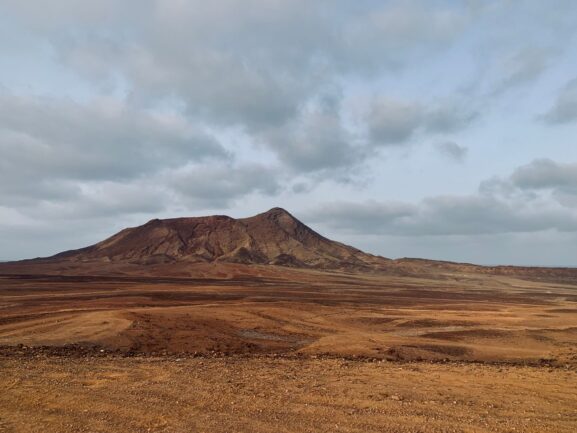
Cabo Verde, located approximately 570 kilometers off the coast of West Africa, formed 40 to 50 million years ago through volcanic activity. Its isolation from the mainland allowed for the development of unique species that differ significantly from their continental ancestors. Bourne’s Heron is a prime example of this phenomenon.
While the common Purple Heron (Ardea purpurea) is a migratory bird found across Africa, Europe, and Asia, the Bourne’s Heron is a sedentary resident of Santiago Island. Named after the British ornithologist W.R.P. Bourne, who first described the distinct characteristics of the population in the 1950s, this subspecies has evolved to survive in an environment far removed from the typical sprawling wetlands of the African mainland.
Distinct Characteristics: How It Differs
To the untrained eye, Ardea purpurea bournei might look identical to its continental cousins, but subtle and significant differences exist. Ornithologists Note several key distinctions:
- Pale Plumage: Bourne’s Heron typically exhibits paler coloration than the mainland Purple Heron. Its plumage is more washed-out, with less intense rufous and purple tones, perhaps an adaptation to the arid and sun-drenched landscapes of Santiago.
- Size and Proportions: While data is limited due to the bird’s rarity, some researchers believe the bird has adapted slightly different bill and limb proportions suited for the specific hunting environments found in the island’s interior.
- Behavioral Shifts: Unlike the mainland species, which is often migratory, Bourne’s Heron does not leave the island. It has become a permanent resident of Santiago’s “dry forest” ecoregion and its limited freshwater pockets.
Habitat and Secrets of the Santiago Interior
While Cabo Verde islands like Sal and Boa Vista are known for their flat, sandy deserts, Santiago is characterized by steep mountains and orographically induced precipitation. This unique climate allows for the growth of lush vegetation and “dry monsoon forests” in the interior valleys, or ribeiras.
Bourne’s Heron is primarily found in the interior of Santiago, particularly around the areas of São Domingos and the mountainous regions near Assomada. Unlike many herons that prefer open marshes, Bourne’s Heron is often found nesting in large, old-growth trees—specifically the Kapok tree (Ceiba pentandra) and various species of Eucalyptus and Mahogany. They are known to nest in small colonies, sometimes high up on cliff faces or in the canopies of trees overlooking fertile valleys where they hunt for lizards, frogs, and small fish in the meager streams.
The Struggle for Survival: Threats and Conservation
The status of Bourne’s Heron is precarious. It is currently classified as “Critically Endangered” on many regional watchlists, with some estimates suggesting the total population may consist of fewer than 40 breeding pairs. Several factors contribute to this fragility:
1. Limited Habitat: Because the subspecies is endemic only to Santiago, there is no “backup” population. If a localized disease or environmental disaster strikes the island, the entire subspecies could vanish. Although Santiago is the wettest island, it still faces persistent droughts, which dry up the essential pools where the herons feed.
2. Human Development: As the most populous island, Santiago faces pressure from agricultural expansion and urban growth. The trees the herons rely on for nesting are sometimes harvested for timber or cleared for farming.
3. Climate Change: Cabo Verde is on the frontlines of the global climate crisis. While the government has become a leader in renewable energy and signed “debt-for-nature” swaps to protect its environment, rising temperatures and shifting rainfall patterns threaten the delicate “cloud forests” and mist-fed ecosystems that Bourne’s Heron calls home.
Future of the Species: Research and Protection
The conservation of Bourne’s Heron has become a point of pride for Cabo Verdean environmentalists. Efforts are underway to monitor nesting sites more closely and to educate local communities about the importance of protecting the large trees the birds use for breeding.
Recent international cooperation has focused on mapping the foraging territories of the herons. By understanding exactly where these birds go to find food during the arid months, conservationists can work to preserve those specific corridors and water sources. Furthermore, the inclusion of Bourne’s Heron in the broader protection of the “Cabo Verde Islands dry forests” ecoregion provides a framework for multi-species conservation that includes other endemics like the Iago Sparrow and Alexander’s Swift.
A Symbol of Santiago’s Wild Heart
For birdwatchers and eco-tourists visiting Cabo Verde, catching a glimpse of a Bourne’s Heron is a “holy grail” experience. It requires venturing away from the beaches of Praia and into the misty, emerald hills of the interior. To see this pale, elegant bird soaring over a deep volcanic ravine is to witness the resilience of life in one of the world’s most isolated archipelagos.
The survival of Bourne’s Heron is not just an ornithological concern; it is a testament to Cabo Verde’s commitment to preserving its unique natural heritage. As the nation continues to grow and modernize, the ghost-like silhouette of the Purple Heron over Santiago remains a vital reminder of the islands’ ancient, volcanic roots and the rare beauty that isolation can produce.
Image: Pexels – Corné Nel