The Cape Verde Escudo: History and Euro Indexing Explained
In the heart of the central Atlantic Ocean lies Cabo Verde, a ten-island archipelago that has transformed from a strategic colonial outpost into one of Africa’s most stable and developed democracies. While the country is famous for its volcanic landscapes and morna music, one of the most fascinating aspects of its modern success is its economy—specifically, the Cape Verdean Escudo (CVE).
As a service-oriented economy lacking significant natural resources, Cabo Verde’s financial stability is an anomaly in the region. Much of this stability is rooted in a unique monetary arrangement: the indexing of the Escudo to the Euro. Here is a deep dive into the history, evolution, and future of the Cape Verdean Escudo.
The Origins: A Legacy of the Portuguese Empire
The history of the Cape Verdean currency is inextricably linked to its colonial past. Discovered by Portuguese and Genoese navigators around 1456, the islands were uninhabited until Portuguese settlers arrived in 1462. For centuries, the islands served as a vital hub for the transatlantic slave trade and later as a re-supplying point for major shipping routes.
During the colonial era, the currency used was the Portuguese Real. However, in 1914, following the trend in Portugal and its other overseas provinces, the Cape Verdean Escudo was introduced. Initially, it was at par with the Portuguese Escudo. Even as several African nations moved toward independent currencies after the mid-20th-century wave of decolonization, Cabo Verde maintained a close monetary relationship with Lisbon.
Following independence on July 5, 1975, led by the African Party for the Independence of Guinea and Cape Verde (PAIGC), the nation faced a choice: create a completely independent floating currency or maintain its traditional ties. While the Escudo remained the national currency, the newly formed Republic of Cabo Verde eventually sought a strategy to protect its developing economy from the hyperinflation and volatility that plagued many of its neighbors.
The 1998 Accord: Pegging to the Portuguese Escudo
The turning point for the Cape Verdean economy occurred in the late 1990s. As a small island nation with a population of roughly 491,000 (as of 2021) and a massive diaspora—particularly in the United States and Portugal—the country relied heavily on remittances and foreign investment. To encourage this flow of capital and ensure price stability, the government decided to “peg” its currency.
In 1998, Cabo Verde signed a strategic agreement with Portugal. This agreement fixed the value of the Cape Verdean Escudo to the Portuguese Escudo. This was not merely a symbolic gesture; it was backed by a credit facility from the Portuguese Treasury, providing a “safety net” that guaranteed the convertibility of the currency.
Transition to the Euro: A Modern Anchor
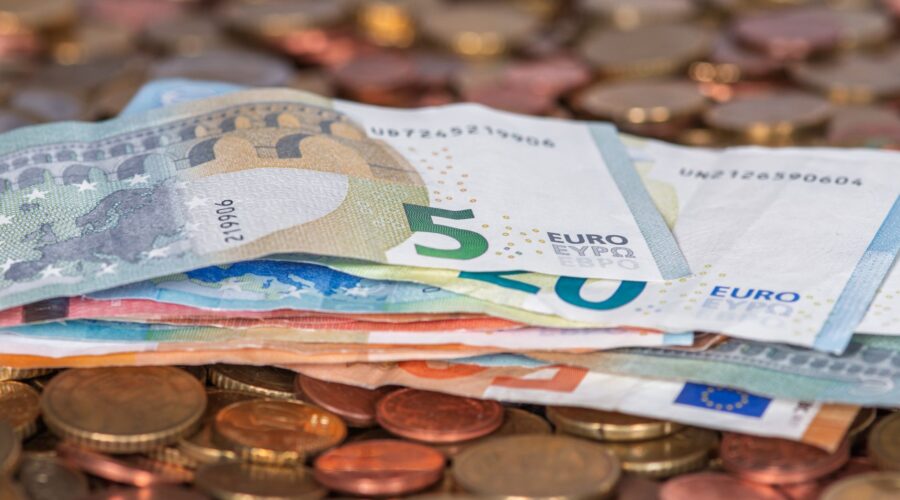
When Portugal joined the Eurozone and adopted the Euro as its official currency in January 1999, Cabo Verde faced a critical decision. Rather than letting the Escudo float on its own, the Cape Verdean government chose to shift the peg from the Portuguese Escudo to the Euro.
This transition was seamless. The exchange rate was set at 1 EUR = 110.265 CVE. This fixed rate has remained unchanged for over two decades, providing a level of macroeconomic predictability that is rare in sub-Saharan Africa.
Why the Euro Peg Works for Cabo Verde
- Inflation Control: By indexing to the Euro, Cabo Verde effectively “imports” the monetary stability of the European Central Bank. This has kept inflation rates significantly lower than those of neighboring West African states.
- Tourism Growth: Cabo Verde’s economy is heavily service-oriented, with tourism being a primary driver. Since a large majority of tourists arrive from Europe (Germany, UK, Italy, and Portugal), the fixed exchange rate eliminates currency risk for travelers and investors.
- Remittance Security: With more Cape Verdeans living abroad than on the islands, remittances are a cornerstone of the GDP. A stable Escudo ensures that the money sent home by the diaspora retains its value.
Recent Developments: Debt-for-Nature Swaps
The stability of the Escudo and Cabo Verde’s reputation as a “success story,” as former U.S. President Barack Obama once called it, has allowed the nation to pioneer innovative financial models. In 2023, Portugal and Cabo Verde signed a landmark agreement to forgive €140 million of debt. In exchange, the Cape Verdean government committed to investing those funds into environmental and climate-related projects.
This “debt-for-nature swap” is one of the first of its kind in Africa. It leverages the country’s unique monetary relationship with Europe to combat the existential threat of climate change—a critical issue for an archipelago on the “frontlines of climate disruptions,” according to UN Secretary-General António Guterres.
Practical Information for Travelers
If you are planning a visit to the volcanic peaks of Fogo or the sandy beaches of Sal, understanding the Escudo is essential:
Official Rate: 1 Euro is approximately 110 CVE. In most tourist areas, shops and restaurants will colloquially accept a 1:100 ratio (1 Euro for 100 Escudos) for ease of math, though you will get a better rate using local currency.
Currency Symbol: The Escudo uses the cifrão (a symbol similar to the dollar sign, but often written with two vertical bars) as a decimal separator. For example, 100 Escudos is written as 100$00.
Usage: While the Euro is widely accepted on islands like Sal and Boa Vista, it is always recommended to carry Cape Verdean Escudos for better pricing in local markets or on more traditional islands like Santo Antão and Brava.
Conclusion: A Pillar of Democracy
The Cape Verdean Escudo is more than just a medium of exchange; it is a symbol of the country’s pragmatic approach to governance. By choosing stability over absolute monetary independence, Cabo Verde has fostered an environment where democracy can flourish. Today, as the most democratic nation in Africa (ranking 45th globally in 2023), Cabo Verde remains a testament to how intelligent fiscal policy and strong international partnerships—like the Euro peg—can transform a resource-scarce archipelago into a global success story.
Image: Pexels – Willfried Wende