
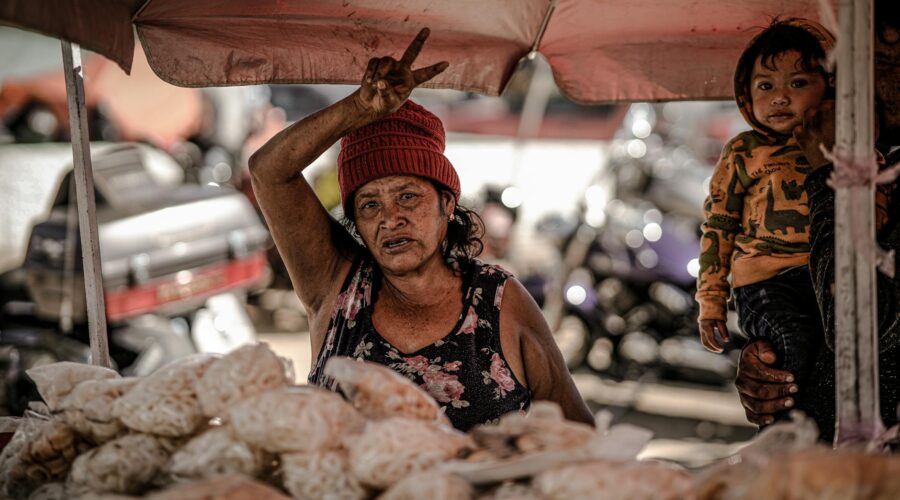
Zandir: The Secret Hand Language of Cape Verdean Markets
In the bustling municipal markets of Praia, Mindelo, and Assomada, a symphony of sounds fills the air. There is the rhythmic chopping of vegetables, the crying of fishmongers announcing the morning’s catch, and the melodic cadence of Cape Verdean Kriolu. However, beneath this auditory layer lies a silent, intricate dialect that is just as vital to the archipelago’s commerce: the language of ‘Zandir’ and the deep-rooted tradition of non-verbal communication.
For an outsider, a Cape Verdean market can feel like a labyrinth of intense social interaction. To the local rabidante (market vendor), however, every tilt of the chin, snap of the fingers, and specific hand orientation conveys a precise meaning. In Cape Verde, silence speaks volumes, and understanding the “Zandir”—a term often associated with subtle signs, beckoning, and signaling—is the key to unlocking the true soul of the islands’ social exchange.
What is ‘Zandir’? The Art of the Subtle Sign
The term ‘Zandir’ (derived from the Portuguese acenar, meaning to beckon or signal) refers to a specific set of non-verbal cues used to draw attention, indicate direction, or finalize a deal without uttering a single word. In the context of Cape Verdean markets, it represents a sophisticated “shorthand” developed over centuries of trade.
Because Cape Verdean culture is deeply communal and oral, communication is rarely limited to speech. The ‘Zandir’ acts as a social lubricant. It allows a vendor to acknowledge a regular customer from forty feet away while simultaneously haggling with another. It allows a buyer to signal interest in a price without alerting nearby competitors. It is a language of efficiency, discretion, and cultural intimacy.
The Lexicon of the Hands: Common Gestures
If you spend an hour sitting in the Sukupira Market in Praia, you will notice several recurring gestures that form the backbone of the market’s non-verbal vocabulary.
The ‘Vem Cá’ (The Palm-Down Beckon)
In many Western cultures, gesturing for someone to come closer involves an upward-facing palm with curling fingers. In Cape Verde, this is reversed. To ‘zandir’ someone toward you, the hand is held out horizontally, palm facing the ground, with the fingers sweeping inward. It is a subtle, grounded gesture that feels less like a command and more like an invitation into a shared space.
The Chin Flick (The Silent Inquiry)
Perhaps the most common non-verbal cue in Cape Verde is the upward flick of the chin, often accompanied by a slight raising of the eyebrows. In a market setting, this replaces the question, “What can I do for you?” or “How much?” It is the universal sign for “Yes?” or “Go on.” If a customer catches a vendor’s eye and performs this flick, the negotiation has officially begun.
The Thumb-to-Index Snap
When discussing prices or the quality of a product, you may see a vendor snap their fingers or rub their thumb against their index and middle fingers rapidly. This isn’t just about money; it’s about ‘sabi’ (sweetness or quality). If a vendor does this while pointing at a pile of papayas, they are signaling that the fruit is at the peak of perfection—so good it vibrates with value.
The ‘Tcheu’ (Width and Quantity)
Cape Verdeans use their hands to describe volume and quantity with extreme precision. Instead of saying “a lot,” a vendor might hold their hand out and vibrate their fingers downward, as if imitating falling rain. To indicate that a price is too high or “stretched,” they might miming pulling a piece of elastic between their two hands.
Cultural Context: Why Non-Verbal Cues Matter
The reliance on gestures like Zandir is not merely a quirk of trade; it is a reflection of Cape Verdean history and the concept of Morabeza. While Morabeza is often translated as “hospitality,” it also encompasses a deep sense of social intuition—knowing how to read a room, a face, and a situation.
Historically, Cape Verde was a melting pot of African and European influences. In the crowded marketplaces where different dialects might have once clashed, the hands became the common bridge. Furthermore, in small island communities where everyone knows everyone else, discretion is highly valued. A subtle ‘Zandir’ allows two people to communicate privately in the middle of a crowd, maintaining a level of social decorum that keeps the peace in the busy praças.
The ‘Rabidantes’: Masters of the Craft
To truly see the Zandir in action, one must watch the rabidantes. These women are the backbone of the Cape Verdean economy, traveling between islands and even internationally to bring goods to the local markets. For a rabidante, non-verbal communication is a survival skill.
When a rabidante is “zandir-ing,” she is performing a complex social dance. She uses her eyes to scan for potential “high-value” buyers, her hands to organize the flow of foot traffic around her stall, and her posture to signal her willingness to bargain. If she turns her body slightly away while you offer a price, she isn’t being rude; she is using a non-verbal “no” to indicate that your offer is far too low to be taken seriously yet. When she finally faces you head-on and leans in, the real deal is about to be struck.
Practical Tips for Travelers and Researchers
If you are visiting a Cape Verdean market and want to engage with this unique form of communication, keep these tips in mind:
- Observation first: Spend ten minutes just watching. Notice how people greet each other without speaking. You’ll see that a slight nod or a hand raised to chest height is the standard greeting.
- Eye Contact: In Cape Verde, eye contact is essential. It validates the presence of the other person. To ‘zandir’ effectively, you must first establish a visual connection.
- Mirror the Pace: Don’t rush. The Zandir is part of a slower, more deliberate way of life. If a vendor uses a gesture you don’t understand, a gentle smile and a tilted head will usually prompt them to explain—often with a laugh and more gestures.
- Respect the Space: Using the palm-down beckon is polite, but pointing with a single finger can be seen as aggressive. Use an open hand whenever possible.
The Future of Silent Communication
As Cape Verde modernizes and digital transactions become more common, some fear that these rich non-verbal traditions might fade. However, the municipal markets remain the heart of Cape Verdean life. As long as there is pexe fresku (fresh fish) to be sold and grogue to be traded, the hands will continue to speak.
The secret language of Zandir is more than just a way to buy tomatoes; it is a living archive of Cape Verdean resilience, creativity, and connection. It reminds us that communication is not just about the words we choose, but about the spirit we convey through the smallest of movements. The next time you find yourself in the vibrant chaos of a Cape Verdean market, look past the noise—there is a whole world being spoken in the silence.
“,title:
Image: Pexels – Luis Becerra Fotógrafo