Whisker Logic: The Folklore of Cape Verde’s Suncats
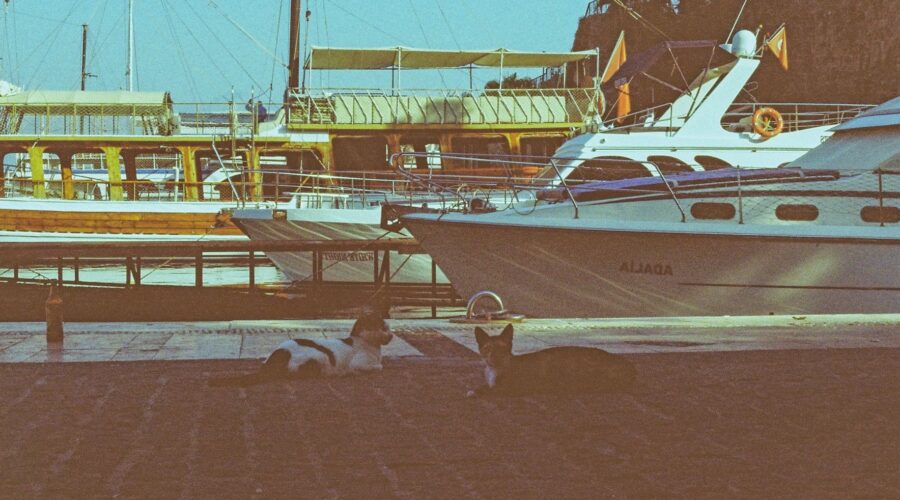
Walking through the cobblestone streets of Mindelo in São Vicente or the bustling harbor of Praia in Santiago, a visitor is immediately struck by a ubiquitous sight: cats. These are not merely stray animals scavenging for scraps; they are the ‘Suncats’ of Cape Verde. Poised on volcanic stone walls, lounging atop colorful fishing boats, or standing guard outside colonial storefronts, these felines are woven into the very fabric of the archipelago’s identity.
In Cape Verdean port towns, the relationship between humans and community cats transcends simple coexistence. It is a complex interplay of maritime history, West African folklore, and a unique social logic—what locals sometimes refer to as “Whisker Logic.” To understand the Suncats is to understand the soul of Cabo Verdean urban life.
The Maritime Guardians: A History Born of Salt and Sails
The presence of cats in Cape Verde is deeply rooted in its history as a vital maritime crossroads. During the era of the Age of Discovery and the height of the Trans-Atlantic trade, Cape Verde served as a mandatory stopping point for ships traveling between Europe, Africa, and the Americas. On these vessels, cats were essential crew members, tasked with protecting precious grain stores and wooden hulls from the ravages of rodents.
As ships docked in ports like Porto Grande, many of these “maritime cats” jumped ship, establishing colonies in the port towns. Over centuries, these animals adapted to the harsh, semi-arid climate of the islands. The cats that roam Mindelo today are the descendants of world travelers, possessing a rugged independence that mirrors the resilient spirit of the Cape Verdean people.
The ‘Suncat’ Phenomenon
The term “Suncat” refers to the specific behavior observed in Cape Verdean community cats—the art of solar navigation. Unlike urban cats in colder climates that seek indoor warmth, Cape Verdean cats have mastered the “movement of shadows.” From the early morning hours, they occupy the precisely angled patches of sunlight on the calçada (cobblestone), moving only when the shadow of a balcony or a Dragoeiro tree encroaches on their warmth. This stillness is often mistaken for laziness, but to the locals, it represents a state of Morabeza—the island’s signature philosophy of relaxed hospitality and presence.
Whisker Logic: The Social Contract of the Port
In many Western cultures, a cat is either a pet or a pest. In Cape Verdean port towns, there is a third category: the Community Resident. This is the essence of “Whisker Logic.” It is a decentralized form of ownership where a cat “belongs” to a street or a specific plaza rather than a single household.
A restaurant owner in the Praça Nova will ensure there is a bowl of water left out; a fisherman returning to the pier will instinctively toss the smallest of his catch (the chicharro) to the ginger tabby waiting by the scales; a grandmother will pause her walk to offer a rhythmic click of the tongue and a gentle pat. There is no formal organization managing this; it is a collective social contract. The cats provide pest control and aesthetic companionship, and in return, the community provides a safety net.
Folklore and Symbolism: The Cat as a Spirit Guide
Cape Verdean culture is a rich tapestry of Portuguese influence and West African traditions. In this cultural melting pot, cats have taken on symbolic roles that border on the supernatural. In local folklore, cats are often seen as mediators between the physical world and the spirit world, particularly the spirits of the sea.
The Weather Diviners
Old sailors in the port of Sal Rei (Boa Vista) often speak of the cat’s ability to predict the Bruma Seca (the dry harmattan haze that blows in from the Sahara). It is said that when the community cats retreat from their usual sunning spots and seek shelter deep within the crevices of the volcanic rock, a dust storm or a change in the Atlantic swells is imminent. This “Whisker Logic” served as a primitive early warning system for generations of fishermen.
The Souls of Departed Sailors
There is a poignant, lingering belief in some coastal communities that certain cats—those who steadfastly remain at the edge of the pier staring out at the horizon—embody the spirits of sailors who never returned from the sea. These cats are treated with a particular reverence; to mistreat one is considered bad luck (azar) that could follow a person onto the water.
The Modern Challenge: Balancing Tradition and Welfare
While the symbolic role of the Suncat remains strong, the reality of growing urban populations presents challenges. In recent years, Cape Verde has moved toward more formal animal welfare practices. Organizations like Bons Amigos in Praia and various international NGOs have worked to introduce Trap-Neuter-Return (TNR) programs.
The goal is not to remove the cats from the streets—which would destroy the cultural landscape—but to ensure the populations are healthy and sustainable. Interestingly, these modern veterinary efforts often rely on the “Whisker Logic” of the neighborhoods. Local “Cat Guardians”—often elderly residents who know every cat’s personality and history—act as the primary liaisons for these welfare groups.
A Tourist’s Guide to the Suncats
For the traveler visiting Cape Verde, the community cats offer a unique window into the local pace of life. Here are a few tips for interacting with the feline residents of the port towns:
- Observation over Interruption: The Suncats value their autonomy. They are most photogenic when left to their “solar navigation.”
- Supporting Local Initiatives: Many cafes that host community cats have small donation jars for local animal clinics. Contributing here helps maintain the health of the entire street colony.
- The Seafood Rule: If you are dining al fresco near a port, expect a silent companion. While feeding is common, locals appreciate it if you stick to small pieces of plain fish rather than processed human foods.
Conclusion: The Silent Heart of the Islands
The Suncats of Cape Verde are more than just urban wildlife. They are living monuments to the islands’ maritime history and symbols of a culture that finds beauty in shared responsibility and quiet endurance. Whether they are guarding the fish markets of Mindelo or dreaming in the sun of Santa Maria, these cats are the silent keepers of the port’s secrets.
To decode the “Whisker Logic” is to understand that in Cape Verde, no one—not even a stray cat—is truly alone. As long as the sun shines on the volcanic stones and the boats come in with the morning catch, the Suncats will remain, whiskers twitching, as the eternal sentinels of the Atlantic.
Image: Pexels – Ayşegül Aytören