The Colors of Fontainhas: Cape Verde’s Most Beautiful Village
Perched precariously on the edge of a verdant ravine on the island of Santo Antão, the village of Fontainhas is more than just a cluster of houses; it is a living masterpiece of architecture and resilience. Often cited by international travel publications as one of the most beautiful villages in the world, Fontainhas serves as a vibrant symbol of the “Morabeza” spirit—the unique Cape Verdean blend of hospitality, soul, and serenity.
The Dramatic Geographic Heart of Santo Antão
To understand Fontainhas, one must first understand the rugged landscape of Santo Antão. Unlike the flat, sandy beaches of Sal or Boa Vista, Santo Antão is a volcanic fortress of towering peaks and deep, plunging valleys (known as ribeiras). Fontainhas is situated in the northern part of the island, clinging to the cliffs above the Atlantic Ocean.
The approach to the village is an experience in itself. The road from Ponta do Sol is a winding, cobblestone path shared by hikers and local transport. As you round the final bend, the village reveals itself: a cascade of candy-colored houses nestled against a backdrop of emerald-green terraces and dark volcanic stone. It is a sight that feels almost hallucinatory in its beauty, contrasting sharply with the deep blue of the ocean crashing far below.
A Kaleidoscope of Colors: The Aesthetic of Fontainhas
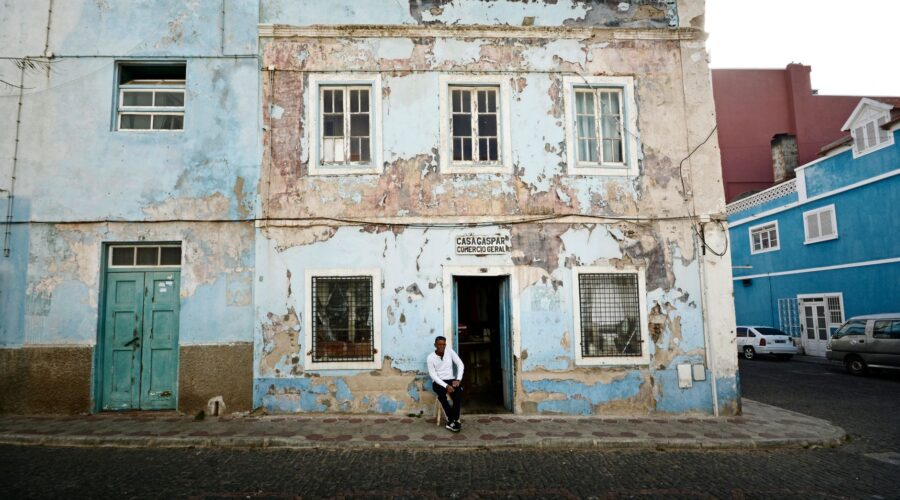
What sets Fontainhas apart from other mountain settlements is its deliberate and joyful use of color. In a landscape dominated by the earthy tones of basalt and the lush greens of sugarcane and banana trees, the residents have painted their homes in brilliant shades of ochre, sky blue, terracotta, and soft pink.
These colors aren’t just for show; they represent the identity of the community. Each house stands out against the terraced slopes, creating a mosaic that changes hue depending on the position of the sun. In the early morning mist, the colors are soft and ethereal; under the midday sun, they vibrate with energy; and at sunset, the village glows with a warm, golden radiance.
The Architecture of Survival
The architecture of Fontainhas is a testament to human ingenuity. The houses are built on narrow ledges, often with common walls to maximize space and provide structural support against the steep incline. Steps and narrow alleys replace streets, creating an intimate, pedestrian-focused environment where the sounds of daily life—children playing, the clucking of chickens, and the distant rhythm of Cape Verdean music—echo through the valley.
Life in the Ribeira: Culture and Community
Despite its fame, Fontainhas remains a quiet, working village. The economy here is deeply rooted in the land. The surrounding terraces are a marvel of traditional engineering, utilizing ancient irrigation systems known as levadas to channel water from mountain springs to thirsty crops.
Visitors will see locals tending to patches of corn, beans, yams, and coffee. Santo Antão is also famous for its production of grogue, the potent Cape Verdean rum distilled from sugarcane. In the valleys near Fontainhas, the smell of fermenting cane juice often wafts through the air during harvest season.
The community is tight-knit and welcoming. The concept of “Morabeza” is evident in the way villagers greet hikers with a smile and a “Bom dia.” Life here moves at a different pace—one dictated by the sun and the seasons rather than the frantic tick of a clock.
Sustainable Tourism and the Hiking Trail
Fontainhas is a primary highlight of the famous coastal hike from Ponta do Sol to Cruzinha. This trek is widely considered the most scenic in all of Cape Verde. The path offers breathtaking views of the “Falésia”—the dramatic cliffs that fall vertically into the sea—while passing through tiny hamlets that seem forgotten by time.
As tourism grows, there is a conscious effort to keep it sustainable. The village doesn’t have large hotels or commercial resorts. Instead, travelers find small guesthouses and local eateries where they can sample cachupa (the national corn and bean stew) while overlooking the valley. This low-impact tourism ensures that the village maintains its authentic charm while providing needed income for the residents.
Practical Tips for Visiting Fontainhas
- How to get there: First, fly into São Vicente (VXE) and take the one-hour ferry from Mindelo to Porto Novo on Santo Antão. From Porto Novo, take an aluguer (shared taxi) to Ponta do Sol.
- Best time to visit: The months between November and June offer the clearest skies and most comfortable hiking temperatures. After the rainy season (August–October), the landscape is at its greenest.
- What to bring: Sturdy hiking boots are essential. The cobblestone paths can be slippery and steep. Also, bring cash (Escudos), as there are no ATMs in the remote villages.
- Respect the locals: While Fontainhas is incredibly photogenic, remember that it is a private residential area. Always ask for permission before taking close-up portraits of people.
Why Fontainhas Matters
In an increasingly modernized world, Fontainhas stands as a reminder of a harmonious way of living. It represents the resilience of the Cape Verdean people, who have carved a vibrant life out of the most challenging terrains. The “colors of Fontainhas” are not just paint on walls; they are the vibrant expressions of a culture that finds beauty, joy, and community in the heart of the mountains.
Whether you are an avid hiker, a photography enthusiast, or a traveler seeking a moment of peace, visiting Fontainhas is a transformative experience. It is a place where the air is pure, the views are infinite, and the colors tell a story of a village that refuses to be anything less than extraordinary.
Image: Pexels – damien Saillet