
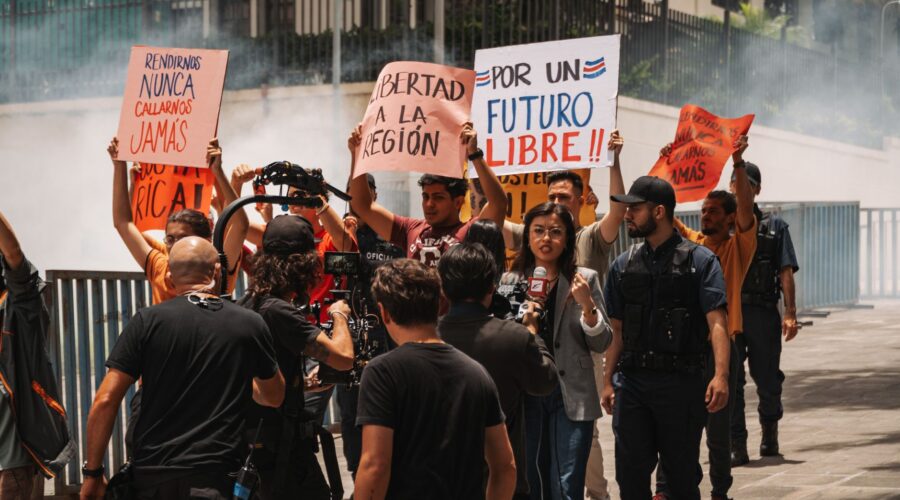
Ramos-Horta: Sovereignty is No Excuse for Human Rights Abuses
In a scathing critique of global inaction, Timor-Leste President and Nobel Peace Prize laureate José Ramos-Horta has labeled the use of “sovereignty” as a shield for systematic human rights abuses a “scandal” and a “profanity.”
Speaking to the Lusa news agency, Ramos-Horta rejected the notion that gross violations of human dignity should ever be dismissed as “internal matters.” His comments follow significant shifts in the Community of Portuguese Language Countries (CPLP), an organization currently presided over by Timor-Leste after a coup d’état in Guinea-Bissau forced a leadership change.
Sovereignty Is Not a License to Kill
“It is a scandal, it is a profanity that, when there are gross, systematic violations of human rights, torture, and disappearances, someone has the gall to say it is an internal matter,” Ramos-Horta declared. “Where is this civilized international community? There are no questions of internal matters when it comes to an affront to human dignity.”
The President was firm in his stance that national sovereignty has clear moral limits, particularly regarding state-sponsored violence. “There is no sovereignty that stands above or wishes to rise above genocide,” he said. “Sovereignty does not give you the right to perpetrate genocide against ethnic, linguistic, or religious communities. I do not align with that.”
Drawing the Line Between Politics and Crimes
Ramos-Horta clarified that he distinguishes between political disagreements and humanitarian crises. While he emphasized that he would not interfere in democratic elections in the United States, Europe, or Indonesia—regardless of whether he agrees with the winning party’s priorities—he argued that the threshold for international intervention is crossed once a government “violates everything that is humanity.”
The Timorese leader invoked the horrors of the 20th century to bolster his point, questioning if the Holocaust, South African apartheid, or the genocides in Bosnia and Cambodia could ever justify a policy of non-interference. “The international community must speak with one voice,” he insisted.
Fragile States and Global Failures
While taking a hard line on crimes against humanity, Ramos-Horta advocated for a more nuanced approach toward fragile states struggling with internal power games or ethnic tensions. In these instances, he suggests the international community should act as “neighbors and friends,” offering dialogue and mediation rather than condemnation to prevent tensions from escalating into catastrophe.
He criticized the current state of global diplomacy, particularly the United Nations and the Permanent Five (P5) members of the Security Council—the United States, Russia, China, France, and the United Kingdom—for failing to prevent the wars in Ukraine and the Middle East.
“That is a failure of the international community,” he remarked, noting that when the major powers fail to act as guardians of collective security, the UN Secretary-General is left with limited options. “When the P5 fails, there is very little the Secretary-General can do.”
Timor-Leste’s current leadership of the CPLP comes at a pivotal time for the Lusophone organization, which was founded in 1996 and includes nations across four continents. The young nation, which restored its independence in 2002 after its own long struggle against human rights abuses, now finds itself at the forefront of the debate over the organization’s role in defending democracy and human rights among its member states.
Image: Pexels – Mimo´s Photography (Helyin Bermúdez)