The Architecture of Cape Verde: Casa-Pau vs. Casa-Pedra
In the arid, volcanic landscapes of the Cape Verde archipelago, architecture is far more than a matter of aesthetics. It is a profound dialogue between geography, social hierarchy, and the enduring resilience of a people forged in the crucible of the Atlantic. At the heart of this built environment lies a fascinating dialectic: the tension and coexistence between the Casa-Pau (wood house) and the Casa-Pedra (stone house). These two archetypal structures are not merely shelters; they are the physical manifestations of Cape Verde’s complex social history, reflecting the evolution of class, labor, and identity from the colonial era to the present day.
The Stone Bastion: The Casa-Pedra and the Colonial Elite
The Casa-Pedra, or stone house, represents the architectural pinnacle of rural Cape Verdean life. Traditionally associated with the morgados (landowners) and the colonial administrative class, these structures were built to last for generations. Constructed using local volcanic basalt—the archipelago’s most abundant natural resource—the Casa-Pedra was a statement of permanence in a land defined by isolation and cycles of drought.
Architecturally, these homes often featured thick walls, high ceilings, and tiled roofs (often imported from Portugal or Marseille). In the interior islands like Santiago or Fogo, the Casa-Pedra took the form of the sobrado—a two-story manor house where the upper floor served as the living quarters for the elite, while the ground floor was reserved for storage or servant quarters. The use of stone was a luxury of labor; it required skilled stonemasons and a stable social position to oversee the quarrying and shaping of rock. Consequently, the stone house became synonymous with “fincapé”—the act of taking root and asserting dominance over the territory.
The Fragile Resilience: The Casa-Pau and the Working Class
Contrasting sharply with the permanence of stone is the Casa-Pau. Born out of necessity and the limited resources available to the disenfranchised, the wood house is the architectural signature of the Cape Verdean peasantry and the migrant labor force. Historically, wood was a scarce commodity on many of the islands, meaning that these structures were often built from scavenged timber, driftwood, or materials repurposed from shipwrecks and shipping crates.
The Casa-Pau is characterized by its lightweight, modular nature. Unlike the stone house, which demands a specific plot of land, the wood house was often “portable.” During the early 20th century, as workers moved between the plantations (fazendas) and the developing port cities like Mindelo, they took their homes with them. The Casa-Pau represents the “architectural of the temporary”—a reflection of a life lived on the move, dictated by the seasons of rain and the demands of colonial labor. In many ways, the Casa-Pau is a testament to Cape Verdean morabeza (hospitality) and ingenuity, showing how comfort can be carved out of the most humble materials.
The Social Dialectic: More Than Just Materials
The relationship between these two styles is what historians call a “dialectic”—a conversation between opposing forces that defines the whole. In Cape Verde, the transition from a Casa-Pau to a Casa-Pedra was the ultimate symbol of upward social mobility. For a returning emigrant who had spent years working in the United States or Europe, the first act of reclaiming their status in their home village was to replace their family’s wooden shack with a sturdy stone or concrete structure.
However, this dialectic also reveals a deeper cultural divide. The Casa-Pedra often mimicked European styles, aiming to align the inhabitant with the “civilized” world of the metropole. In contrast, the Casa-Pau, with its vibrant colors and improvised repairs, developed a distinctively Creole aesthetic. In cities like Mindelo on the island of São Vicente, the Casa-Pau districts became vibrant hubs of music, poetry, and social resistance, while the stone districts remained the bastions of the formal elite.
The Role of Geography: Wind, Rain, and Fire
The choice between wood and stone was also a gamble against the elements. Cape Verde is a land of extremes. In the highlands, where the mist (chapa) is constant, a wooden house would rot quickly, making stone the only viable option. Conversely, in the coastal areas, the salty Atlantic breeze would eat away at poorly maintained mortar, making the flexible, easily repaired Casa-Pau a practical alternative.
On the island of Fogo, the dialectic takes a unique turn with the funco—a circular stone hut with a thatched roof, often built directly from volcanic scoria. Here, the “stone” house takes on a more primitive, grounded form, blending the durability of the Casa-Pedra with the modest scale of the Casa-Pau. This shows that the architectural soul of the islands is not just about class, but about a deep, intuitive adaptation to the volcanic soil.
Modernity and the Decline of Traditional Styles
Today, the traditional dialectic is being disrupted by a third player: reinforced concrete. Since independence in 1975, the “Cement House” has become the new standard. While concrete offers durability and modern amenities, many architects and cultural historians lament the loss of the traditional aesthetic. The Casa-Pau is increasingly seen as a relic of poverty to be demolished, while the old stone sobrados often fall into disrepair due to the high cost of specialized restoration.
However, a new movement of “Neo-Vernacular” architecture is beginning to emerge in Cape Verde. Young architects are looking back at the Casa-Pau/Casa-Pedra divide, not as a social hierarchy to be forgotten, but as a source of inspiration for sustainable building. By combining the thermal mass of stone with the flexible, airy designs of wooden structures, they are creating a modern Cape Verdean style that honors both “souls” of the islands’ history.
Practical Information for the Cultural Traveler
For those visiting Cape Verde, the best places to witness this architectural history are:
- Cidade Velha (Santiago): As the first European colonial outpost in the tropics, it contains the oldest examples of stone masonry in the archipelago.
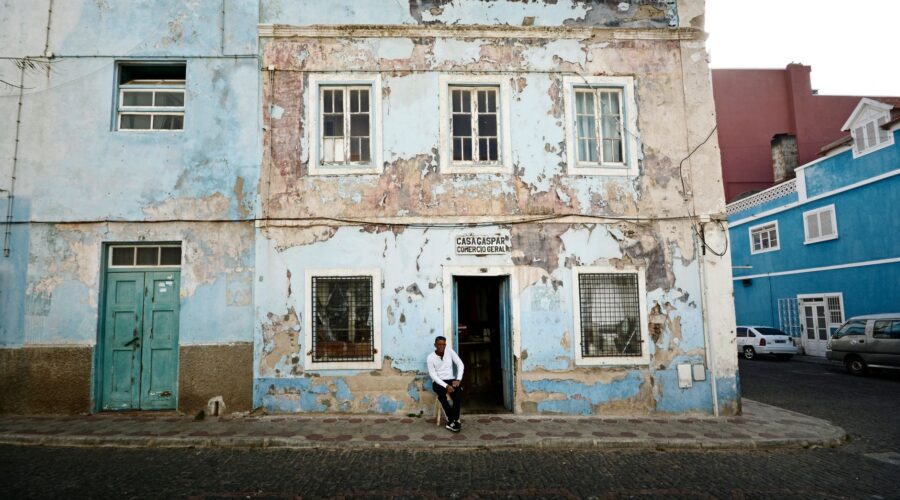
- Mindelo (São Vicente): Wander through the backstreets to see the colorful remnants of Casa-Pau culture, which birthed much of the island’s famous music.
- São Filipe (Fogo): Famous for its sobrados, the city offers the most well-preserved look at the aristocratic stone architecture of the 18th and 19th centuries.
- Chã das Caldeiras (Fogo): Observe the funco structures, a unique sub-category of stone housing built inside a volcanic crater.
Conclusion: A House Built on History
The dual architectural soul of Cape Verde tells the story of a nation that refused to be defined by its limitations. Whether through the defiant permanence of the Casa-Pedra or the resourceful adaptability of the Casa-Pau, Cape Verdeans have always found a way to turn the raw materials of their islands into a home. Understanding this dialectic is essential for anyone who wishes to look beyond the beautiful beaches and truly understand the social heart of this Atlantic crossroads.
Image: Pexels – damien Saillet