The 1960 HQ Shift: How the PAIGC Won Cape Verde Independence
The history of Cape Verde (Cabo Verde) is a narrative of resilience, defined by its transformation from an uninhabited mid-Atlantic outpost to a beacon of democracy in Africa. However, the path to independence was neither short nor simple. One of the most critical turning points in this journey occurred in 1960, when the African Party for the Independence of Guinea and Cape Verde (PAIGC) shifted its headquarters to Conakry, Guinea. This move was not merely a change of address; it was a strategic pivot that enabled the external mobilization necessary to dismantle Portuguese colonial rule.
The Seeds of Dissatisfaction: From Colony to Province
For centuries, the Cape Verdean archipelago served as a strategic hub for the transatlantic slave trade and later as a vital maritime refueling station. By the mid-20th century, however, the islands were suffering. Persistent droughts and a lack of sustainable investment from Portugal led to widespread economic hardship. While the islands’ position between 600 and 850 kilometers off the coast of West Africa made them a geographical asset for the Portuguese Empire, the local population felt increasingly abandoned.
In 1951, attempting to stifle the rising tide of nationalism sweeping across the African continent, Portugal unilaterally changed Cape Verde’s status from a “colony” to an “overseas province.” The Portuguese authorities hoped this administrative rebrand would imply integration and quell demands for autonomy. It had the opposite effect. The move signaled to intellectual leaders like Amílcar Cabral that Portugal had no intention of granting true self-determination.
1956–1959: The Clandestine Origins of the PAIGC
In 1956, Amílcar Cabral, a Cape Verdean agricultural engineer, along with a dedicated group of fellow Cape Verdeans and Guineans, founded the PAIGC in Bissau (then Portuguese Guinea). The party’s initial objective was rooted in nonviolent protest and political agitation, seeking improvements in social and economic conditions for both territories.
The relationship between Guinea-Bissau and Cape Verde was intrinsic to Cabral’s ideology. He envisioned a “binational” liberation movement, recognizing that the struggle for Cape Verde’s freedom was inseparable from the struggle on the African mainland. However, the Portuguese PIDE (secret police) began a brutal crackdown. The turning point came in 1959 with the Pidjiguiti Massacre in Bissau, where Portuguese forces opened fire on striking dockworkers. This state-sponsored violence convinced the PAIGC leadership that nonviolence had reached its limit; armed struggle was now the only viable path to sovereignty.
The 1960 Shift to Conakry: A Strategic Necessity
By 1960, the environment in Bissau had become too dangerous for the PAIGC to function as a revolutionary nerve center. The decision was made to move the party’s headquarters to Conakry, the capital of the Republic of Guinea. This move was strategically brilliant for several reasons:
1. Safe Haven and Sovereignty
The Republic of Guinea, under President Ahmed Sékou Touré, had gained independence from France in 1958 and was a staunch supporter of pan-African liberation movements. In Conakry, the PAIGC could operate openly, establish diplomatic offices, and train cadres without the constant threat of Portuguese arrest.
2. International Mobilization
From Conakry, Amílcar Cabral was able to travel the world, presenting the case for Cape Verdean and Guinean independence to the United Nations and various international forums. The Conakry HQ became a diplomatic hub where the PAIGC established “external mobilization”—building alliances with the Soviet bloc, Nordic countries, and other African nations to secure weapons, medical supplies, and scholarships for students.
3. Coordination of the Armed Struggle
The shift allowed the PAIGC to prepare for the revolutionary war that began in 1961. While the archipelago’s geography—ten volcanic islands spread across the Atlantic—made a traditional guerrilla land war difficult, the Conakry base allowed the party to focus its military efforts in Portuguese Guinea. The strategy was to break the Portuguese military on the mainland, thereby making their hold on the islands untenable.
Cape Verde’s Unique Path to 1975
The mobilization in Conakry created a dual-track revolution. On the mainland, 10,000 PAIGC soldiers engaged 35,000 Portuguese troops in a grueling conflict. Meanwhile, in Cape Verde, the movement remained largely political and clandestine. The PAIGC purposefully did not attempt to launch a full-scale armed rebellion on the islands, which lacked the dense forests and cross-border sanctuary found in Guinea-Bissau.
Tragically, Amílcar Cabral did not live to see the fruits of his labor; he was assassinated in Conakry in 1973. However, the foundation he built at the Conakry headquarters was unshakable. His half-brother, Luís Cabral, took up the mantle. Following the 1974 Carnation Revolution in Portugal, which saw the collapse of the Estado Novo regime, the PAIGC’s decades of external mobilization paid off. In December 1974, a transitional government was established, and on July 5, 1975, Cape Verde finally achieved its long-awaited independence.
Legacy of the Conakry Years
The 1960 shift to Conakry remains a masterclass in revolutionary logistics. It allowed a small group of islanders and mainlanders to outmaneuver a colonial power through a sophisticated blend of diplomacy and warfare. Today, Cape Verde stands as one of Africa’s most stable representative democracies, a “success story” as described by international leaders.
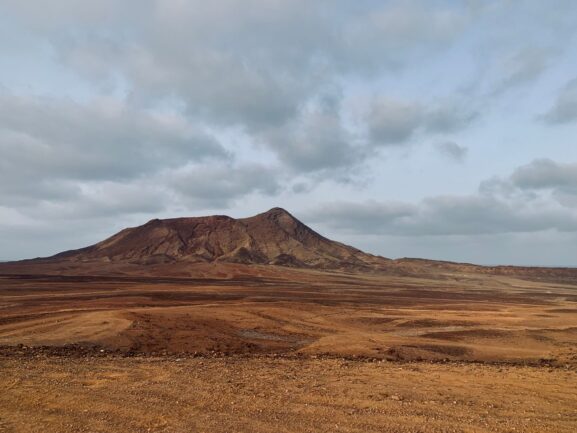
The spirit of the Conakry years is still reflected in Cape Verde’s modern foreign policy. The nation remains a member of the African Union and the Community of Portuguese Language Countries (CPLP), maintaining a policy of nonalignment and cooperation. From its volcanic peaks on Fogo to the bustling capital of Praia, the Republic of Cabo Verde owes its existence to the strategic foresight of those who recognized, back in 1960, that the fight for the islands had to be won through global mobilization.
Key Facts about Cape Verde’s Independence Era
- 1956: Founding of the PAIGC.
- 1960: HQ moves to Conakry, Guinea.
- 1961: Commencement of the armed struggle in Portuguese Guinea.
- 1973: Assassination of Amílcar Cabral in Conakry.
- July 5, 1975: Formal declaration of Cape Verdean independence.
Image: Pexels – damien Saillet