Sinal de Fumo: The Ancient Smoke Signals of Santo Antão
In the age of instant global connectivity, where fiber-optic cables traverse the Atlantic and satellite internet reaches the remotest corners of the earth, it is easy to forget that not long ago, communication was a matter of survival, geography, and ingenuity. Nowhere is this more evident than on the island of Santo Antão, the rugged, emerald crown of Cape Verde. Here, amidst the vertiginous cliffs and labyrinthine gorges (ribeiras), a fascinating social technology once thrived: the Sinal de Fumo (Smoke Signal) and its companion, the mirror flash.
The Topography of Isolation
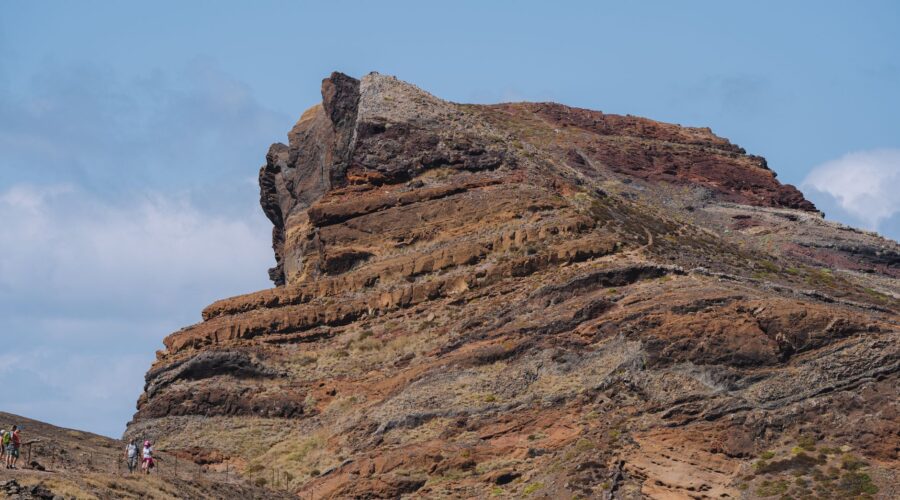
To understand the ‘Sinal de Fumo’ legacy, one must first understand the brutal beauty of Santo Antão. Unlike the flat, sandy expanses of Sal or Boa Vista, Santo Antão is defined by volcanic peaks reaching nearly 2,000 meters and deep, narrow canyons that plummet toward the sea. For centuries, these physical barriers dictated human interaction. A village visible across a gorge might be only 500 meters away as the crow flies, but reaching it on foot could involve a grueling three-hour descent and ascent along stone-paved mule tracks.
This isolation birthed a unique necessity. The inhabitants, known as Santantonenses, needed a way to bridge the void without crossing it. The result was a sophisticated system of visual semiotics—a “wireless” network built of fire, smoke, and light.
Decoding the Language: Fire, Smoke, and Mirrors
The traditional signaling on Santo Antão was never a random act; it was a codified language shared between families, shepherds, and farmers. While North American indigenous tribes are most famously associated with smoke signals in the global consciousness, the Cape Verdean iteration was distinct in its social logic and environmental adaptation.
1. Daytime: The Mirror and the White Sheet
On clear days, when the tropical sun struck the basalt cliffs, mirrors (or polished tin) were used to send flashes of light. This was often the “ping” of the 19th and early 20th centuries. A specific number of flashes could signal the arrival of a merchant ship in the harbor of Porto Novo or Ribeira Grande, or alert a family that a relative had safely reached the mountain pass. In cases where light wasn’t sharp enough, white sheets were draped over specific prominent rocks—a visual marker that could be seen from miles away against the dark volcanic backdrop.
2. Twilight and Night: The Fire Signal
The true Sinal de Fumo usually occurred in the late afternoon or at night. The logic was simple: dark smoke is visible against a bright sky, but bright fire is visible against a dark mountain. The fuels used were often damp vegetation to produce thick, white smoke for visibility, or dry tortolho (a native shrub) for a bright, sustained flame.
3. The Code of Urgency
The social logic was built on a binary system of urgency:
- A single steady column: All is well; the traveler has arrived; the task is complete.
- Two fires spaced apart: A call for a meeting or a non-urgent request for supplies.
- Three rapid, intermittent fires: The universal signal for distress. This usually meant a medical emergency, a fall in the mountains, or a death in the family.
The Social Logic: Solidarity in the Ribieras
The Sinal de Fumo was more than a technical tool; it was the glue of a communal society. In the remote Ribeiras like Paul, Torre, or Alto Mira, the “logic of the echo” prevailed. Because the sound of a human voice could be distorted by the wind or the roar of the Atlantic, visual signals provided a definitive truth.
This system created a network of “watchers.” Elders who were no longer able to climb the steep terraces often sat on their stone balconies (poiais), acting as the central nodes of the network. They would spot a signal from a distant peak and relay the message to the valley below. This allowed for a collective response to crises—when a distress signal was spotted, men from across the valley would drop their tools and converge at a central point, knowing that someone’s life depended on their collective speed.
The Cultural Impact and Oral Tradition
The legacy of these signals is deeply embedded in the island’s oral traditions and music. The Morna and Coladeira, Cape Verde’s soulful musical genres, often reference the isolation of the mountains and the longing of seeing a signal from a loved one. The signal represented saudade—that uniquely Lusophone feeling of bittersweet longing—rendered in light and shadow.
It also fostered a culture of extreme hospitality and vigilance. Even today, if you hike the trails of Santo Antão, you will find that locals are remarkably aware of your position on the mountain. This is a vestige of the signaling era; the mountain is always watching, not out of malice, but out of a deep-seated cultural habit of ensuring everyone is safe.
Transition to the Modern Era
The decline of the traditional Sinal de Fumo began in the mid-20th century with the arrival of the telegraph and, later, the transistor radio. However, the most significant blow was the introduction of the mobile phone. Today, Cape Verde has one of the highest mobile penetration rates in Africa, and even shepherds in the high plateaus of Norte carry smartphones.
Yet, the signals haven’t entirely disappeared. In the most remote corners of the island, where battery life is precious or reception is spotty, a flash of a mirror or a controlled fire is still used as a secondary backup. It remains a “fail-safe” protocol for a people who know that technology can be fickle, but the mountains are permanent.
Preserving the Legacy for Travelers
For the modern traveler trekking the Cova to Paul trail or exploring the crags of Fontainhas, the history of the Sinal de Fumo adds a layer of depth to the landscape. When you look across a canyon and see a lonely stone hut perched on a ridge, you aren’t just looking at a dwelling; you are looking at a historic communication hub.
Local guides are increasingly incorporating these stories into their tours, demonstrating how the signals worked and explaining the “social internet” of the 1800s. Understanding this history changes the way one views the topography of Santo Antão—it transforms the rugged terrain from an obstacle into a medium for human connection.
Conclusion: The Enduring Flame
The ‘Sinal de Fumo’ legacy of Santo Antão is a testament to the resilience of the human spirit. It reminds us that no matter how deep the gorge or how high the peak, the need to say “I am here” and “I am safe” will always find a way. As we move further into a digital future, the smoke signals of Cape Verde stand as a poignant reminder of a time when communication was tangible, communal, and written in the very elements of the earth.
If you ever find yourself standing on the edge of the Ribeira Grande at sunset, look closely at the distant ridges. You might just see the ghost of a signal—a flicker of light or a wisp of smoke—echoing a history of survival and solidarity that refuses to be forgotten.
Image: Pexels – Diogo Miranda