Operation Flying Launch: Cape Verde’s War on Trafficking
In the mid-2000s, the serene, volcanic archipelago of Cape Verde—officially known as Cabo Verde—found itself at a dangerous crossroads. Located 570 kilometers off the coast of West Africa, this ten-island nation has historically been defined by its strategic position along transatlantic shipping lanes. However, by 2007, that same geography had turned the country into a premier “reorder point” for international drug syndicates moving cocaine from South America to the lucrative markets of Europe.
The response to this existential threat was Operation Flying Launch (Operação Lancha Voadora), a watershed moment in Cape Verdean history. This tactical shift not only dismantled a powerful trafficking ring but also signaled to the world that this stable African democracy was prepared to fight far above its weight class in the global war on narcotics.
The Strategic Vulnerability of the Middle Atlantic
Cape Verde’s geography is its greatest asset and, at times, its greatest challenge. Forming part of the Macaronesia ecoregion alongside the Azores and Canary Islands, the archipelago sits directly between Colombia and the shores of the Netherlands and Germany. During the 16th and 17th centuries, this position made the islands a hub for the slave trade; by the 19th century, Mindelo’s deep-water harbor on São Vicente island became a vital coal refueling station for the British Empire.
In the 21st century, traffickers looked at the vast, porous maritime borders of Cape Verde and saw an ideal transit hub. The country’s service-oriented economy and its use of the Cape Verdean Escudo (indexed to the Euro) made it an attractive site for money laundering and logistical staging. By 2007, the threat had reached a boiling point, necessitating a transition of the national military’s focus.
From Sovereignty to Security: The Birth of Flying Launch
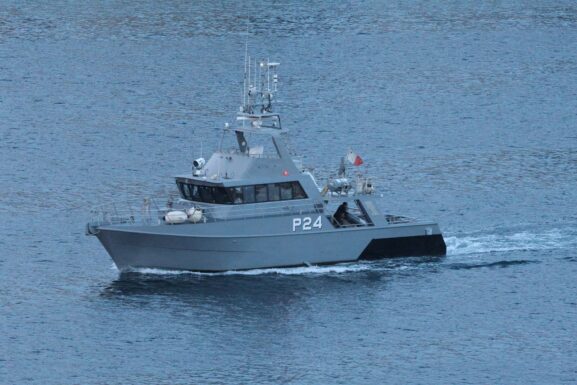
The Cape Verdean military, consisting of the National Guard and the Coast Guard, had seen little combat since the war for independence against Portugal in the mid-1970s. However, the rise of organized crime required a new kind of warfare. Launched in 2007, Operação Lancha Voadora was a joint initiative between the Cape Verdean Judicial Police and the Armed Forces.
The operation was characterized by its extreme secrecy and longevity. For the first two years, the mission remained entirely “under the radar,” involving deep surveillance of high-speed boats (from which the operation took its name) and the monitoring of communication networks between South American cartels and European distributors.
Key Objectives of the Operation:
- Disruption of Logistics: Identifying the “reorder points” where bulk shipments were broken down into smaller parcels for European entry.
- Financial Interdiction: Targeting the “kingpins” who had embedded themselves into the local economy to wash drug proceeds.
- International Cooperation: Working with Lusophone partners and EU agencies to track the flow of goods across the Atlantic.
The Impact and Outcome
The operation reached its crescendo between 2010 and 2011. It resulted in the seizure of record-breaking quantities of cocaine and the arrest of several high-profile individuals, including businessmen and foreign nationals who had used the capital city, Praia, as a base of operations.
The success of Operation Flying Launch was a turning point for the nation’s governance. It proved that despite having a population of only around 530,000, Cape Verde could maintain the rule of law. It solidified the country’s reputation as one of the most stable and democratic nations in Africa, a sentiment echoed by U.S. President Barack Obama in 2013 when he called the country a “real success story.”
A Lasting Legacy: The Modern Security Landscape
The legacy of Operation Flying Launch continues to shape Cape Verdean policy today. The country now allocates significant focus toward maritime security, bolstered by its special partnership status with the European Union (granted in 2007, the same year the operation began).
Today, the Cape Verdean Coast Guard works closely with international partners to patrol the waters of the “windward” (Barlavento) and “leeward” (Sotavento) islands. The focus has also expanded to include environmental security; as a nation on the frontlines of the climate crisis, Cape Verde recently entered a “debt-for-nature” swap with Portugal, trading debt for investments in renewable energy and conservation.
Cape Verde Fast Facts:
- Capital: Praia (Santiago Island)
- Official Language: Portuguese
- National Language: Cape Verdean Creole (Crioulo)
- Political Status: Semi-presidential representative democratic republic
- Key Achievement: Declared malaria-free in 2024
Conclusion
Operation Flying Launch was more than just a police raid; it was a declaration of sovereignty. By successfully dismantling a transatlantic trafficking route, Cape Verde proved that its small size does not equate to weakness. As the archipelago continues to grow as a hub for tourism and sustainable investment, the lessons of 2007 remain a cornerstone of its national security strategy, ensuring that these “Green Capes” remain a beacon of stability in the Atlantic.
Image: Pexels – Ana Marta Jorge