Luz de Vigia: The Legacy of Cape Verde’s Night Watchmen
As the sun dips below the Atlantic horizon, painting the volcanic peaks of Cape Verde in hues of violet and burnt orange, a quiet transformation begins. Today, this transition is marked by the hum of electric grids and the flicker of LED streetlamps. But for centuries, the arrival of night in the archipelago triggered a carefully choreographed ritual of light and vigilance. This is the story of the Luz de Vigia—the heritage of the traditional night watchmen and street lantern-lighters who once served as the pulse of Cape Verdean urban life.
The Dawn of Urban Illumination in the Islands
The history of public lighting in Cape Verde is deeply intertwined with the development of its major administrative centers: Ribeira Grande (now Cidade Velha), Praia, and Mindelo. In the 19th century, as these towns grew into bustling maritime hubs, the need for safety and navigation became paramount. Long before the first powerhouse was built, the streets were illuminated by candeeiros de azeite (oil lamps) and later, kerosene lanterns.
The responsibility for this illumination fell upon the Acendedores de Candeeiros (Lantern Lighters). These men were more than mere laborers; they were the custodians of the evening. Carrying long wooden poles with hooks and wicks, they navigated the cobblestone streets (calçadas) at dusk. Their presence was a rhythmic constant in the lives of the islanders, signaling the end of the workday and the beginning of the guarded night.
The Figure of the Night Watchman: The Guardian of the ‘Vigia’
Hand-in-hand with the lantern-lighters stood the Vigias—the night watchmen. In a society where police presence was often concentrated in forts or government buildings, the Vigia was the community’s primary line of defense against fire, theft, and the “disorders” of the night.
The role was rooted in a blend of Portuguese colonial administration and the local need for communal security. Clad in heavy coats to ward off the cooling trade winds (Braca), and often carrying a lantern and a staff, the watchman’s duty was to patrol specific neighborhoods. They were the eyes of the city when the rest of the world slept. In the port city of Mindelo, on the island of São Vicente, the Vigias became legendary figures, navigating the fog-heavy nights of the harbor to ensure that sailors and merchants remained safe.
The Social Code of the Night
The Vigias did more than just watch for crime. They acted as a primitive emergency service. If a woman went into labor in the middle of the night, it was often the Vigia who was summoned to fetch the midwife. If a fire broke out in the densely packed wooden structures of the old quarters, his whistle or shout would be the first alarm to wake the neighbors. This created a deep social bond between the watchman and the residents, a relationship built on the “Luz de Vigia”—the Light of the Watch.
Cultural Significance and the ‘Morabeza’ of the Dark
In Cape Verdean culture, the night has always held a mystical quality. It is the time for mornas and coladeiras, for storytelling on the doorsteps, and for the mysterious spirits of folklore. The lantern-lighters and watchmen provided the physical light that allowed this social fabric to persist after dark.
The Luz de Vigia represents a bridge between the physical safety of the community and the soulful “Morabeza” (the unique Cape Verdean spirit of hospitality and connection). By ensuring the streets were lit and guarded, these men allowed the praças (squares) to remain vibrant spaces of gathering. The flickering light of a kerosene lamp became a symbol of home and stability in an archipelago often battered by the elements and isolation.
The Evolution: From Kerosene to Electricity
The decline of the traditional lantern-lighter began in the early 20th century with the slow introduction of electricity. In Praia and Mindelo, the first electric streetlights were greeted with a mix of wonder and skepticism. As the “magic” of the wire replaced the labor of the pole, the profession of the Acendedor began to fade into the annals of history.
The Vigias lasted longer, evolving into the modern private security guards and municipal police seen today. However, the modern iteration lacks the intimate communal role of the old watchmen. The “Luz de Vigia” transitioned from a person to a machine, and in doing so, a certain level of human connection was lost. Today, when Cape Verdeans talk about the tempo de antigamente (the old times), the image of the man with the lantern remains a potent symbol of a simpler, more connected era.
Preserving the Heritage: Why It Matters Today
Why should we care about the lantern-lighters of 19th-century Praia? For Cape Verde, a nation that prides itself on its history of resilience and cultural synthesis, these figures are essential to understanding the evolution of the “Cape Verdean City.”
- Urban Identity: The routes mapped out by the lantern-lighters helped define the historical centers of the islands, many of which are now protected heritage sites.
- Social Resilience: The Vigia system proves that community-led security and mutual aid are deeply rooted in the islands’ DNA.
- Tourism and Memory: Historical walking tours in Mindelo and Cidade Velha often reference these figures, offering tourists a glimpse into the “nocturnal history” of the archipelago.
The Legacy in Literature and Art
The Vigia and the lantern-lighter have not been entirely forgotten. They live on in Cape Verdean literature and song. Poets have often used the “flickering lamp” as a metaphor for the islands’ struggle for independence and identity—a small light in a vast, dark ocean. The rhythmic footsteps of the watchman on the pedra de calçada (cobblestone) provide a percussion that many Cape Verdean artists have sought to capture in their work.
Conclusion: The Light That Never Truly Fades
The Luz de Vigia is more than a historical footnote about municipal services; it is a testament to the human element of urban development. The lantern-lighters and night watchmen were the unsung heroes who transformed the terrifying dark of the Atlantic nights into a space of community and safety.
As Cape Verde continues to modernize, moving toward sustainable energy and smart city technologies, the spirit of the Vigia remains relevant. It reminds us that at the heart of every bright street and every safe neighborhood is a legacy of care, vigilance, and the shared human need to keep the darkness at bay. Next time you walk through the historic streets of Plateau in Praia or the waterfront of Mindelo, look up at the streetlights and remember the men who, with a simple wick and a watchful eye, once held the light for an entire nation.
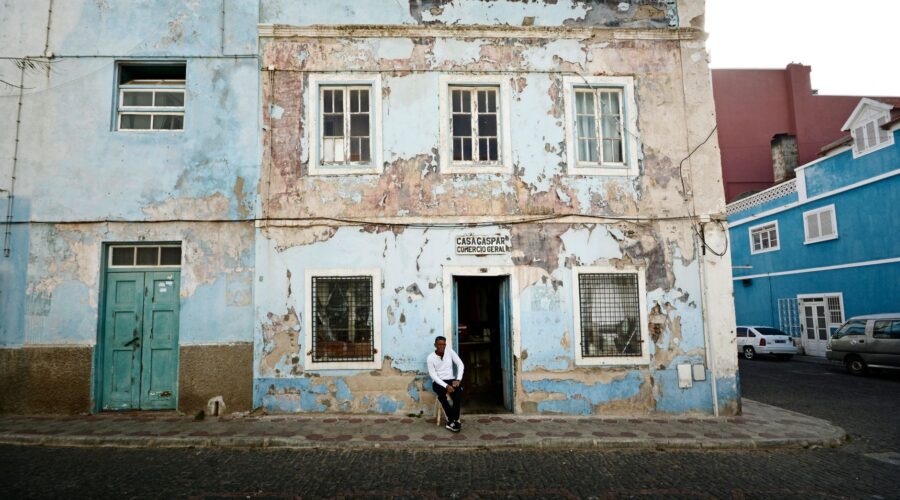
Image: Pexels – damien Saillet