IFC to Ignite Growth in Lusophone Africa via Key Sectors
PRAIA, Cape Verde – The International Finance Corporation (IFC) is doubling down on agribusiness, tourism, and logistics as the primary engines for job creation and economic stability across Portuguese-speaking Africa, according to top regional officials.
Speaking at the 2nd Lusophone Africa Business Forum in Cape Verde, Sameh Wahba, the IFC’s Regional Director for West Africa and the Sahel, emphasized that these sectors offer the highest “multiplier effect” for the region’s developing economies. “Agribusiness and tourism are focal sectors because they have the capacity to create jobs for the masses,” Wahba said. “For every direct job created by tourism, two or three indirect jobs emerge.”
A Growing Portfolio
The IFC, the private-sector arm of the World Bank, has significantly ramped up its commitment to the Lusophone bloc—comprising Angola, Mozambique, Cape Verde, Guinea-Bissau, Equatorial Guinea, and São Tomé and Príncipe. Over the last five years, the institution has mobilized approximately $1.2 billion across 10 major projects. The current active portfolio stands at $750 million, with a surge in new partnerships expected shortly.
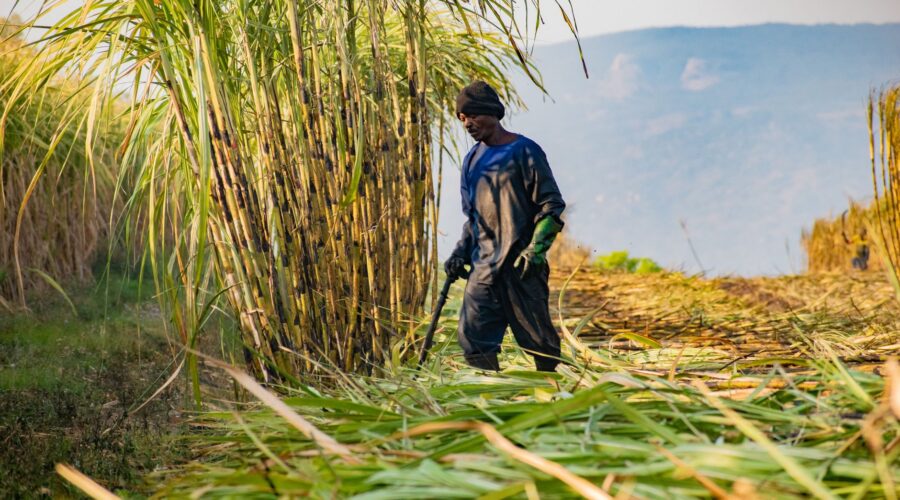
Cláudia da Conceição, IFC Regional Director for Southern Africa, noted that while infrastructure remains a heavy hitter in terms of financial volume, agribusiness is the rising star. “The area of agribusiness, including processing, is increasing significantly,” she said, highlighting recent successes in Mozambique and Angola where agricultural firms are increasingly integrating local small-scale producers into their supply chains.
From Fragmentation to a Unified Market
Historically, the Portuguese-speaking African countries (PALOP) have struggled with market fragmentation due to the vast geographic distances between them. Unlike the more integrated Francophone blocs, Lusophone Africa has often operated as a series of isolated markets. However, the IFC sees the tide turning.
The business forum itself saw a jump in attendance from 250 to 420 participants this year, signaling a growing appetite from international investors to view the 80-million-person bloc—which boasts a combined GDP of $174 billion—as a consolidated opportunity.
Turning Global Crisis into Opportunity
Despite global geopolitical instability, Wahba argues that the current climate is creating unique openings for African growth. The disruption of global trade caused by the war in Ukraine has accelerated the push for local food production, while rising fuel costs are fast-tracking the transition to renewable energy.
“The increase in fuel prices is creating many opportunities for countries to introduce renewable energy projects or gas-to-power conversions,” Wahba explained. “Similarly, food insecurity is encouraging more investment in local agribusiness.”
Lower Risk, Higher Returns
Addressing the common perception of high risk in African markets, Da Conceição countered that projects on the continent often show a lower probability of default and higher returns than those in other global regions. The challenge now, she says, is scaling that success to benefit micro, small, and medium-sized enterprises (SMEs).
As the forum concludes, the IFC plans to follow up on a pipeline of new projects, focusing on bridging the infrastructure gap and providing the technical assistance necessary to turn these “focal sectors” into long-term economic pillars.
Image: Pexels – Khaya Motsa