Darwin in Cape Verde: Where Evolution Began | HMS Beagle 1832
In the annals of scientific history, few voyages carry as much weight as the second journey of the HMS Beagle. While the Galápagos Islands often steal the spotlight as the birthplace of Charles Darwin’s theory of evolution, it was actually the sun-drenched, volcanic archipelago of Cape Verde (Cabo Verde) that provided the young naturalist with his first “lightbulb moment.”
A Strategic Stop in the Mid-Atlantic
In January 1832, after weeks of grueling seasickness, a 22-year-old Charles Darwin stepped off the HMS Beagle and onto the shores of Santiago, the largest island in the Cape Verde archipelago. Located roughly 600 to 850 kilometers off the coast of West Africa, these ten volcanic islands were a vital maritime crossroads. At the time of Darwin’s arrival, the islands were a Portuguese colony experiencing a shift from the height of the transatlantic slave trade toward a future as a commercial re-supply hub for global shipping.
For Darwin, Cape Verde was more than just a place to regain his “land legs.” It was his first encounter with the tropics, and the stark, volcanic landscape of Santiago offered a geological playground that would fundamentally reshape his understanding of the natural world.
The White Band of Santiago: A Geological Revelation
One of the most significant observations Darwin made during his three-week stay occurred near the capital city of Praia. While exploring the cliffs along the coast, he noticed a striking feature: a horizontal white band of crushed shells and corals embedded in the dark volcanic rock, sitting about 30 feet above sea level.
This discovery was a revelation. Drawing on Charles Lyell’s Principles of Geology—a book Darwin had been studying intensely on the voyage—he realized that this shell bed must have once been on the ocean floor. The fact that it was now high above the waves meant the land itself had been pushed upward by volcanic forces over immense periods of time.
This was Darwin’s first practical application of “uniformitarianism”—the idea that the Earth is shaped by slow, gradual processes rather than sudden catastrophes. This geological epiphany was the precursor to his biological theories; if the Earth itself changed slowly over millions of years, it stood to reason that the life inhabiting it might do the same.
Darwin’s Observations on Biodiversity
Beyond geology, Darwin was fascinated by the unique flora and fauna of the islands. He documented the “Iago sparrow” (Passer iagoensis), an endemic species that he initially noted for its similarity to the common European sparrow but with distinct variations. He also observed the arid environment of the Sotavento (leeward) islands, noting how life adapted to the harsh, dry conditions and the orographically induced precipitation that allowed lush vegetation to thrive in the mountainous interiors.
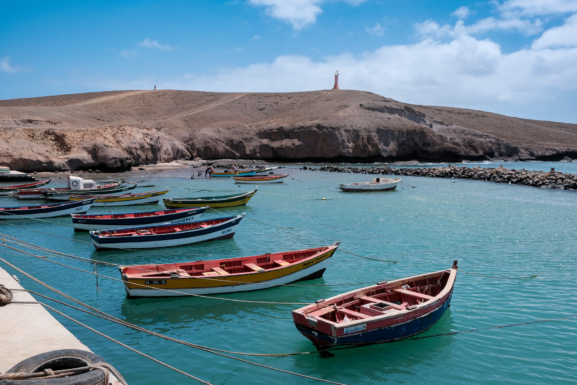
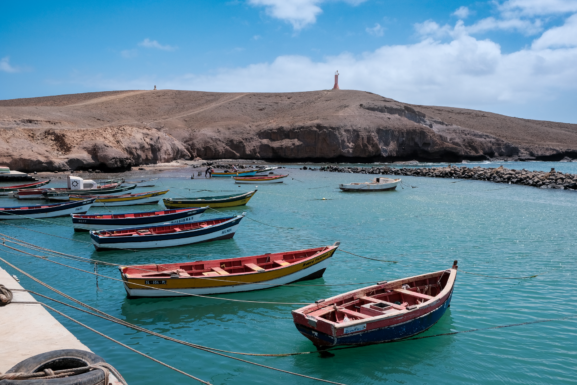
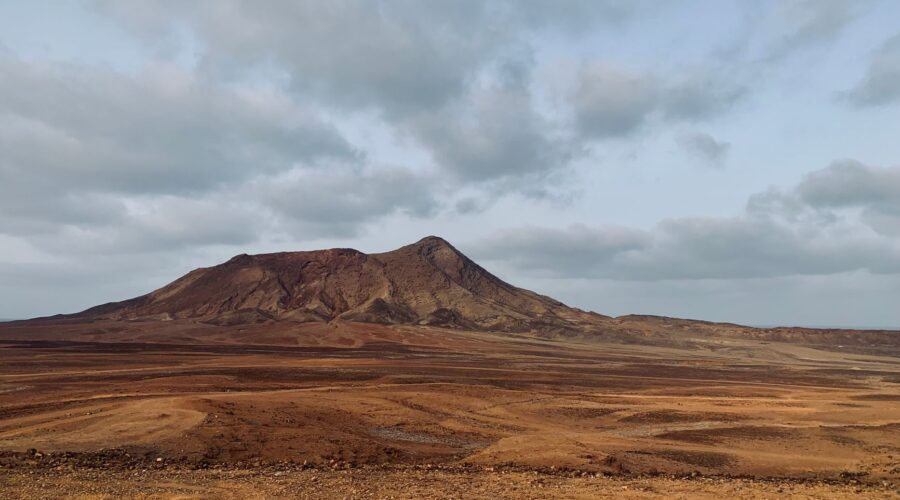
He wrote in his diary: “The island of St. Jago [Santiago]… is very far from being a pleasing object… but to a person accustomed only to an English landscape, the novel aspect of an utterly sterile land possesses a grandeur which more vegetation might spoil.”
Cape Verde Today: A Living Laboratory
Modern-day Cabo Verde remains a site of immense scientific interest. The archipelago is part of the Macaronesia ecoregion, shared with the Azores and Canary Islands, and serves as a critical habitat for endemic species. Darwin would likely be fascinated to know that Cape Verde is now a leader in conservation and environmental policy in Africa.
- Endemic Birds: The islands are home to the Raso lark and the Cape Verde warbler, species that continue to provide data for evolutionary biologists studying island biogeography.
- Climate Leadership: As a nation on the “frontlines of the climate crisis,” Cabo Verde has committed to generating 50% of its energy from renewable sources by 2030.
- Debt-for-Nature Swaps: In a historic 2023 agreement, Portugal forgave a portion of Cape Verde’s debt in exchange for investment in environmental projects, a model for sustainable development that mirrors the global importance Darwin first saw in these islands.
The Legacy of 1832
Darwin’s visit to Cape Verde in 1832 was the “seed” of the Beagle voyage. It was here that he transitioned from a student of theology and natural history to a rigorous scientific observer. The volcanic cliffs of Santiago taught him to look at the world not as a finished product, but as a work in progress—constantly shifting, eroding, and evolving.
For the traveler visiting Praia or the volcanic peaks of Fogo today, the landscape offers the same raw, geological power that greeted Darwin. Cape Verde stands not just as a beautiful tourist destination or a stable democracy, but as the place where one of the greatest ideas in human history first began to take root.
Practical Information for History and Science Enthusiasts
If you are planning a “Darwin-inspired” trip to Cape Verde, consider the following:
- Visit Cidade Velha: Located near Praia, this UNESCO World Heritage site was the first European settlement in the tropics and a place Darwin explored.
- Hike Pico do Fogo: To understand the volcanic forces Darwin theorized about, a visit to the active volcano on Fogo is essential.
- The Best Time to Visit: To experience the “humid air and condensation” Darwin noted in the mountains, visit between August and October, though the climate remains pleasantly warm year-round.
The 1832 visit of the HMS Beagle was a brief moment in Cape Verde’s long history, but its impact on the world’s scientific heritage is eternal. As Darwin left the shores of Santiago, he was no longer looking at just a “Green Cape”—he was looking at the history of life itself.
Image: Pexels – Bibi Kiekens