Mesa de Queijo: Cape Verdean Goat Cheese Rituals & Etiquette
In the high, arid peaks of Santo Antão and the volcanic slopes of Fogo, a centuries-old tradition continues to pulse through the veins of Cape Verdean social life. It is not a dance, nor a song, though it possesses the rhythm of both. It is the Mesa de Queijo—the Cheese Table. More than a simple snack or a course in a meal, the sharing of artisanal goat cheese (Queijo de Terra) is a foundational social ritual that decodes the archipelago’s history, hospitality, and communal identity.
The Artisanal Heart: What is Queijo de Terra?
To understand the etiquette of the table, one must first understand the craft behind the star of the show. Cape Verdean goat cheese, or Queijo de Cabra, is an unpasteurized, semi-hard cheese made from the milk of free-roaming goats. These hardy animals graze on the sparse, aromatic vegetation of the islands, giving the milk—and subsequently the cheese—a distinct “terroir” that reflects the specific island of its origin.
The process remains largely manual. Queijeiras (cheesemakers) use natural rennet to curdle the milk, which is then pressed into small, circular wooden or plastic molds. The result is a white, firm, and slightly salty cheese. While it can be eaten fresh (fresco), the most prized variety for a formal Mesa de Queijo is the curado (cured) version, which has been aged to develop a sharper tang and a denser texture.
The Ritual of the Mesa de Queijo
In Cape Verde, you do not simply “eat” cheese; you “share” it. The Mesa de Queijo typically occurs in the late afternoon or as a prelude to a long evening of conversation. It is the ultimate expression of Morabeza—the untranslatable Cape Verdean word for hospitality, kindness, and openness toward others.
The Presentation
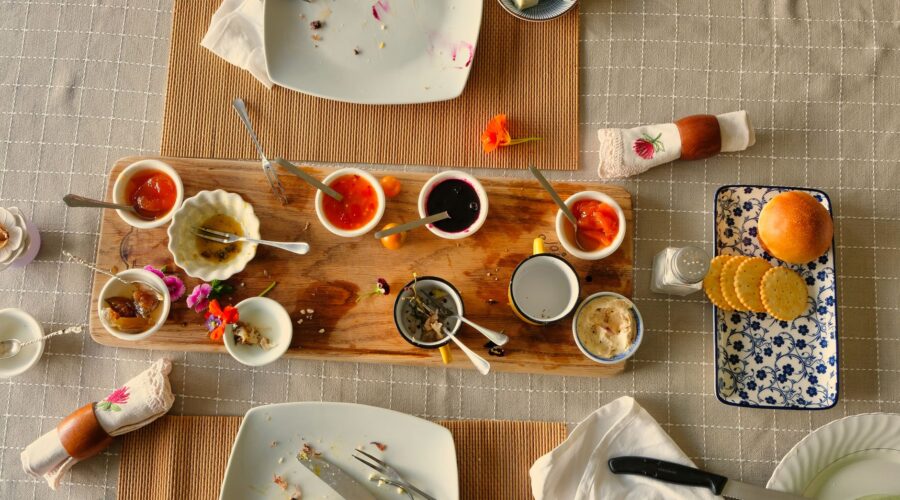
Etiquette dictates that the cheese is never served in isolation. A proper Mesa de Queijo is a symphony of flavors designed to balance the saltiness of the goat milk. The classic accompaniments include:
- Doce de Papaia: A thick, sweet papaya jam (often crystallized) that provides a sugary counterpoint to the savory cheese.
- Banana-passa: Dried bananas that offer a chewy, caramel-like sweetness.
- Bolacha de Terra: Hard, dry biscuits or crackers that provide the necessary crunch.
- Grogue or Wine: A glass of Grogue (the local sugarcane spirit) or a robust red wine from the Chã das Caldeiras region of Fogo.
The Social Order
When a guest enters a home, the arrival of the cheese platter signals that the visit has moved from a formal greeting to a meaningful social exchange. It is a sign of respect. The host will typically slice the cheese into thin, uniform wedges. One does not grab a handful; rather, you take a piece of cheese and a small portion of the doce (jam), often eating them together in a single bite to experience the “casamento” (marriage) of salt and sweet.
Regional Nuances: Fogo vs. Santo Antão
While the ritual is nationwide, the “etiquette” of the cheese changes slightly depending on which island’s Mesa you are sitting at. In Fogo, the cheese is often more influenced by the volcanic soil. It is frequently paired with the island’s famous coffee or its volcanic wine. Here, the cheese is a source of intense local pride, and discussing the quality of the year’s grazing is a common conversational gambit.
In Santo Antão, the ritual is often more rustic. You might find the cheese served alongside linguiça (cured sausage) or fresh bread baked in a wood-fired oven. Regardless of the island, the rule remains the same: the Mesa de Queijo is a space for parlatório (talk). It is where news is shared, politics are debated, and family bonds are reinforced.
The Economics of Heritage
Beyond the social rituals, the Mesa de Queijo represents a vital economic lifeline for rural communities. In the interior of islands like São Nicolau and Boa Vista, goat herding is one of the few sustainable livelihoods. The production of cheese is a family affair, with knowledge passed down through generations of women.
However, the tradition faces challenges. Climate change and recurring droughts make it harder for goats to find natural fodder, and younger generations are increasingly migrating to cities or abroad, leaving fewer hands to manage the laborious cheesemaking process. When you sit at a Mesa de Queijo today, you are participating in a preservation act—supporting an artisanal heritage that is fighting to stay relevant in a globalized world.
Etiquette Tips for Travelers
If you find yourself invited to a Mesa de Queijo during your travels in Cape Verde, keep these cultural pointers in mind:
- Don’t Rush: The cheese table is the antithesis of “fast food.” Expect to sit for at least an hour. Rushing through the snack is seen as a slight to the host’s hospitality.
- The Perfect Bite: Always try to balance the cheese with the sweet accompaniments. If you find the goat cheese too strong, the doce de papaia is your best friend.
- Accept the Grogue: Even if you only take a celebratory sip, accepting the local spirit offered with the cheese is a gesture of communal respect.
- Inquire About the Source: Cape Verdeans are proud of their local producers. Asking “Is this from Fogo?” or “Who made this?” is an excellent way to show interest in the local culture.
Conclusion: The Soul of the Archipelago
The Mesa de Queijo is a microcosm of Cape Verde itself: resilient, flavorful, and deeply communal. It is a ritual born from the necessity of preserving milk in a hot climate, transformed over centuries into a sophisticated social ceremony. Whether you are in a cosmopolitan apartment in Praia or a stone house in the mountains of Brava, the act of slicing a wheel of goat cheese remains the ultimate gesture of welcome.
In a world of mass-produced flavors, the Cape Verdean goat cheese stands as a testament to the power of slow, artisanal traditions. It is more than food; it is a shared language of Morabeza that continues to bring people together, one savory-sweet bite at a time.
Image: Pexels – Alexander F Ungerer