Cape Verde’s Climate Vulnerability & The Nauru Declaration
Rising from the cobalt depths of the Atlantic Ocean, approximately 570 kilometers off the coast of West Africa, lies the Republic of Cabo Verde. This ten-island archipelago, known for its volcanic peaks, Morna music, and stable democracy, has recently found itself at the center of a much more harrowing narrative: the global climate crisis. In 2011, a stark warning issued by the President of Nauru placed Cape Verde as the eighth most endangered nation on Earth due to flooding risks associated with climate change. This declaration served as a wake-up call, highlighting that for SIDS (Small Island Developing States), climate change is not a future threat—it is a present reality.
The 2011 Nauru Declaration: A Warning to the World
During a critical period of climate advocacy in 2011, the leadership of Nauru—acting as a representative voice for small island nations—highlighted a list of countries facing existential threats from rising sea levels. Cape Verde was ranked eighth. This ranking wasn’t merely a statistic; it was an assessment of vulnerability based on the archipelago’s unique geography and its reliance on a fragile ecosystem.
The “Nauru Declaration” sentiment emphasized that while these nations contribute the least to global carbon emissions, they are the first to suffer the consequences. For Cape Verde, a country formed 40–50 million years ago through volcanic activity, the threat is twofold: the physical disappearance of coastal infrastructure due to rising tides and the devastating impact of increasingly erratic weather patterns on its already scarce water resources.
Geographic Vulnerability: A Horseshoe in the Atlantic
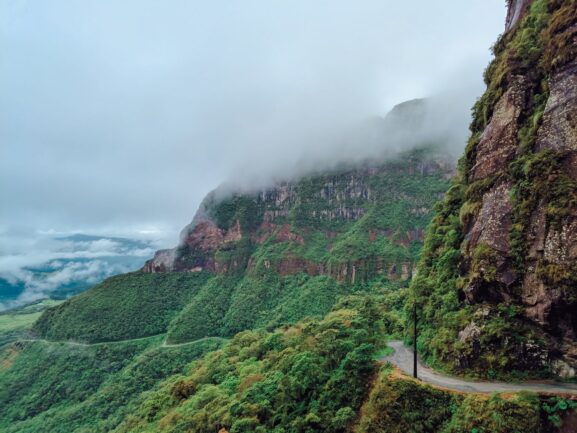
Cape Verde’s geography is a study in contrasts. The archipelago is divided into two groups: the Barlavento (windward) islands, including Sal and Boa Vista, and the Sotavento (leeward) islands, including the capital Santiago and the volcanic Fogo. While islands like Santiago and Santo Antão are defined by towering mountains and lush orographically induced forests, islands like Sal, Boa Vista, and Maio are flat, sandy, and dry.
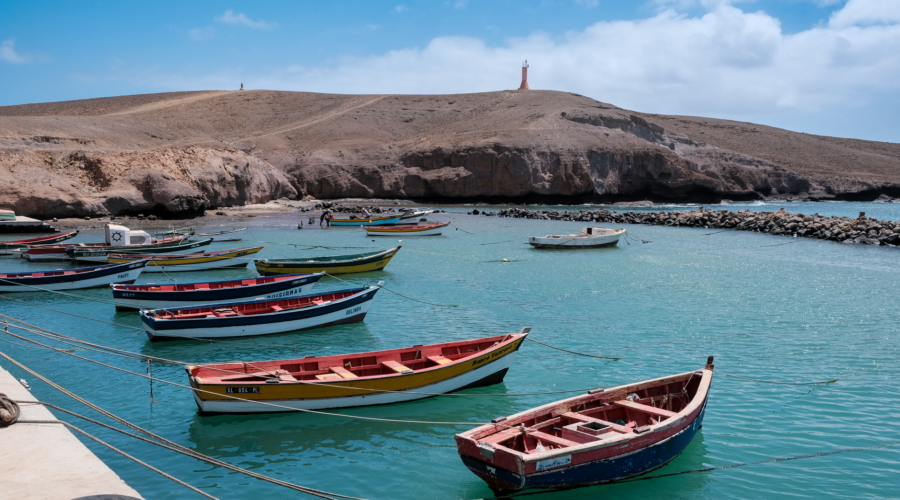
It is these flatter islands that face the most immediate threat from the flooding mentioned in the 2011 assessment. With extensive salt flats and low-lying coastal plains, a rise in sea levels threatens to contaminate groundwater with salt, destroy tourism infrastructure, and displace local communities. Even the more mountainous islands are not safe; they face “Cape Verde-type hurricanes.” These storms, which often originate near the islands, can become the largest and most intense in the Atlantic. While historically rare to strike the islands directly, 2015’s Hurricane Fred proved that the “safe zones” of the past are shifting.
The Aridity Paradox
Despite being surrounded by the ocean, Cape Verde is part of the Sahelian semi-arid belt. The islands receive irregular rainfall, often limited to brief, heavy downpours between August and October. In a warming world, this “Sahelian” characteristic is intensifying. Less than two percent of the land is currently arable, and increasing temperatures threaten to turn the already dry monsoon forests and laurel forests into barren landscapes, further straining the country’s ability to feed its 530,000 residents.
A Success Story Under Pressure
What makes Cape Verde’s climate vulnerability particularly tragic is the country’s status as a “real success story,” as described by former U.S. President Barack Obama. Since gaining independence from Portugal in 1975, Cape Verde has transformed into one of Africa’s most stable representative democracies. It ranks among the top democratic nations on the continent and recently celebrated becoming the third African country to be declared malaria-free in 2024.
The nation’s economy is service-oriented, with a heavy focus on tourism. However, tourism is intrinsically linked to the health of the coastline. If the beaches of Sal and Boa Vista are lost to rising tides, the economic engine of the country stalls. This creates a cycle where the very resources needed to build climate resilience—economic capital—are the ones most at risk from climate change.
Leading by Example: Renewable Energy and Debt Swaps
Cape Verde has not met these threats with complacency. Instead, the archipelago has become a leader in renewable energy in sub-Saharan Africa. As of 2023, 20% of its energy is sourced from renewables (wind and solar), with an ambitious goal to reach 50% by 2030. This is a remarkable feat for a nation lacking significant natural resources.
In a groundbreaking move in 2023, Portugal and Cape Verde signed one of Africa’s first “debt-for-nature” swaps. Portugal agreed to forgive €140 million of debt in exchange for Cape Verde investing that capital into environmental and climate projects. This innovative financial model provides a blueprint for other vulnerable nations, showing that international cooperation can provide the necessary fiscal space to fight environmental degradation.
The Global Call to Action
UN Secretary-General António Guterres, during his 2023 visit to the islands, reaffirmed that Cabo Verde is on the “frontlines of the existential crisis.” The 2011 ranking was a warning, but the actions taken since then show a nation determined to survive. For Cape Verde, climate action is not about politics; it is about protecting the “green cape” that Portuguese explorers named centuries ago.
Conclusion: The Future of the Archipelago
The story of Cape Verde is one of resilience. From the days of the transatlantic slave trade to its rise as a modern democratic beacon, the archipelago has always navigated stormy waters. However, the climate threat identified over a decade ago remains the greatest challenge in the nation’s history. As sea levels rise and weather patterns shift, the international community must look to Cape Verde—not just as a vulnerable island chain, but as a proactive leader in the global fight for a sustainable future. The 2011 Nauru Declaration was the alarm; the world’s response will determine if this Atlantic success story continues for generations to come.
Image: Pexels – Rob Mowe