Cape Verde Fruit Guide: Seasonal Flavors & Harvest Times
Nestled in the central Atlantic Ocean, the volcanic archipelago of Cape Verde (Cabo Verde) offers a surprising agricultural landscape. Despite its arid climate and rugged terrain, the islands have cultivated a rich tradition of fruit production that blends tropical African varieties with Mediterranean influences. For travelers and food enthusiasts, understanding the rhythm of the harvest is the key to tasting the islands at their best.
The agricultural calendar in Cape Verde is dictated by the “Azágua”—the rainy season—which typically runs from August to October. While water scarcity is a constant challenge, the fertile volcanic soil on islands like Santo Antão, Fogo, and Santiago produces fruits with intense, concentrated flavors that are often entirely organic. Here is a comprehensive guide to the vibrant fruits of Cape Verde and when to find them at their peak.
The King of Cape Verdean Fruits: The Mango (Manga)
If there is one fruit that defines the summer spirit of Cape Verde, it is the mango. Unlike the stringy varieties often found in global supermarkets, Cape Verdean mangoes are known for being incredibly buttery, sweet, and fragrant.
Season: May to September
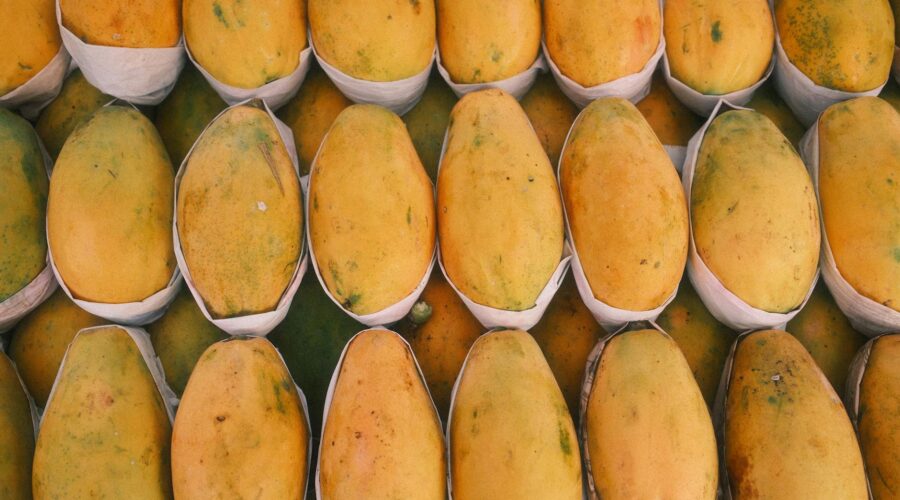
The mango season begins in late spring, peaking during the hot months of July and August. During this time, the valleys of Santiago and Santo Antão are heavy with fruit. You will find several varieties, ranging from the small, intense “Manga-maçã” (apple mango) to the large, succulent “Manga-espada.” In local markets, you’ll see women (Kondeiras) selling them in stacks, their perfume filling the air. Because they are grown in mineral-rich volcanic soil with constant sunlight, the sugar content is exceptionally high.
Papaya (Papaia): The Year-Round Staple
While many fruits are seasonal, the papaya is a constant presence in the Cape Verdean diet. It is often served at breakfast or turned into a popular local preserve known as “Doce de Papaia.”
Season: Year-Round (Peak: May to November)
While available throughout the year, papayas are particularly abundant and sweet following the first rains. Cape Verdean papayas are typically smaller than those from Brazil but have a vibrant deep-orange flesh. Locals often eat them with a squeeze of lime to balance the sweetness. When the fruit is green, it is grated and used in savory salads or stewed with sugar and cinnamon to create the traditional “Doce de Papaia,” which is almost always served alongside a slice of salty goat cheese (Queijo de Terra).
Grapes and the Spirit of Fogo (Uvas)
Perhaps the most unique agricultural feat in Cape Verde is the cultivation of grapes on the island of Fogo. Inside the caldera of an active volcano (Chã das Caldeiras), farmers grow grapes in the black volcanic ash, utilizing the dew and the soil’s moisture-retention properties.
Season: July to August
The grape harvest in Fogo is a short but significant window. These grapes are rarely exported as fresh fruit; instead, they are the backbone of the “Manecon” wine industry. The “Preta” (red) and “Moscatel” (white) varieties thrive here. If you visit Fogo in July, you can taste the fresh table grapes, which have a distinct mineral undertone reflective of their volcanic origin.
Bananas: A Lush Valley Treasure
The sight of vast banana plantations tucked away in the deep, emerald-green valleys of Santo Antão and Santiago is a stark contrast to the desert-like dunes of Sal or Boa Vista. Cape Verdean bananas are primarily of the “Dwarf Cavendish” variety.
Season: Year-Round
Bananas are harvested throughout the year in Cape Verde. Because the islands do not utilize the heavy industrial farming methods found in Central America, the bananas are smaller, firmer, and significantly sweeter. They are a staple snack for hikers trekking through the Paul Valley in Santo Antão, where they grow alongside coffee plants and sugarcane.
The Tropical Icons: Guava, Custard Apple, and Passion Fruit
As the rainy season yields to the cooler months, a new variety of tropical flavors emerges in the local markets.
Guava (Goiaba) – Season: September to December
Following the August rains, guava trees across the islands burst into fruit. The Cape Verdean guava is incredibly aromatic. While enjoyed fresh, its most famous iteration is “Goiabada”—a thick, red fruit paste. It is a cultural ritual to serve Goiabada with local Fogo cheese as a dessert known as “Romeo and Juliet.”
Custard Apple (Pinha) – Season: October to February
The Pinha, or sugar apple, is a favorite among locals. With a green, scaly exterior and a creamy, white interior filled with black seeds, it tastes like a blend of pineapple and vanilla custard. These are most common in the drier valleys of Santiago and São Nicolau during the late autumn and early winter.
Passion Fruit (Maracujá) – Season: August to December
Passion fruit in Cape Verde comes in two main varieties: the small purple fruit and the larger yellow variety. They are particularly abundant in late year. You will find passion fruit used extensively in “Ponche” (a traditional liqueur made with grogue/rum) and fresh juices.
Indigenous and Wild Fruits: Tambarina and Azinha
Cape Verde also boasts several “wild” fruits that are deeply rooted in the local culture, often used more for snacks or traditional medicines than as main food sources.
- Tambarina (Tamarind): Available mostly from March to June. The pods are harvested, and the sour-sweet pulp is used to make refreshing juices or medicinal syrups.
- Azinha (Jujube): These small, brownish fruits look like tiny apples and have a dry, sweet texture. They are a beloved childhood snack, often found in the markets of Praia during the dry season.
- Baobab Fruit (Calabaça): The iconic “Calabaceira” tree produces a hard-shelled fruit with a dry, powdery pulp rich in Vitamin C. It is harvested in the dry season and mixed with water and sugar to make a thick, nutritious drink called “Suco de Calabaceira.”
The Impact of Microclimates on Seasonality
It is important to note that the “season” can vary slightly between islands. The “Islands of Mountains” (Santo Antão, Santiago, Fogo, and São Nicolau) are the agricultural hubs. If you are staying on the “Islands of Sand” (Sal and Boa Vista), almost all fruit is shipped in from the other islands or imported from international markets. For the freshest, most authentic “farm-to-table” fruit experience, visiting the local “Mercado Municipal” on any island is highly recommended.
Practical Tips for Travelers
When shopping for fruit in Cape Verde, keep these tips in mind:
- Buy Local: Look for the “Kondeiras” (market women). Their produce is usually from small family farms rather than large imports.
- Wash Thoroughly: As with traveling in any tropical climate, wash your fruit with bottled or treated water before consumption.
- Try the Preserves: If a fruit is out of season, look for it in “Doce” (preserve) form. Cape Verdeans are masters at preserving the harvest to last through the dry months.
- Respect the Price: Agriculture is difficult work in Cape Verde due to water scarcity. Prices in the market are generally fair, and aggressive haggling is not part of the local culture.
Conclusion
The fruits of Cape Verde are a testament to the resilience of the local farmers and the richness of the volcanic earth. Whether it is the mid-summer explosion of mangoes or the winter sweetness of a custard apple, the islands offer a seasonal palette that is as vibrant as its music and culture. Tasting these fruits is not just a culinary experience—it is a way to connect with the very soil of Cabo Verde.
Image: Pexels – Gustavo Denuncio