Michelin Chefs Modernize Cape Verdean Cuisine: Blue Food Project
A six-month culinary exchange that paired European Michelin-starred chefs with local cooks in Cape Verde has concluded with a resounding success, sparking hopes for a permanent shift in the archipelago’s gastronomic landscape. The “Blue Food Roadshow,” a collaboration between the Sete Sóis Sete Luas festival and the European Union, aims to modernize the country’s tourism appeal through culinary innovation.
Planting Seeds of Innovation
Marco Abbondanza, director of the Sete Sóis Sete Luas festival, praised the project’s impact after a series of “gastronomic residencies” featuring top chefs from France, Spain, Luxembourg, and Portugal. Over the last six months, these culinary leaders spent ten days each traveling across three different islands to collaborate with local restaurant owners and students.
“We realized we can host Michelin-starred chefs and that there is a hunger for this exchange,” Abbondanza told Lusa. “The goal is to create a habit of renewal and awaken creativity to break long-standing cultural conventions.”
Challenging the Tradition of ‘Dry Fish’
One of the primary focuses of the residency was rethinking how Cape Verde utilizes its greatest natural resource: fresh fish. Historically, local techniques often involve heavy grilling, which can leave the product overcooked.
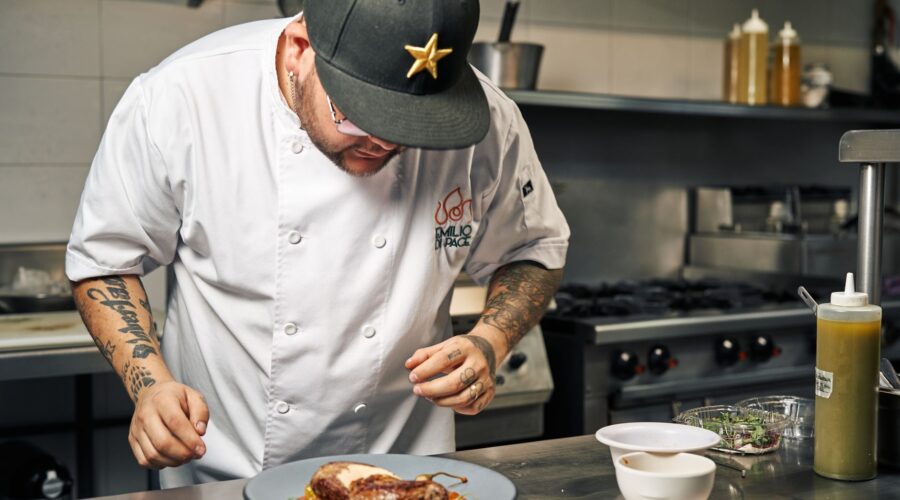
Portuguese chef Vasco Coelho Santos, owner of the Michelin-starred Euskalduna Studio in Porto, led the project’s final mission. He described the experience as “intense and challenging,” noting that many of his local collaborators had never tasted raw fish before he introduced them to new preparation styles.
“The raw materials are all here,” Santos said. “It was about sharing my know-how while learning from them. My goal was to plant a seed that encourages people to innovate rather than just follow tradition. Why does fish always have to be dry? We are showing that other horizons are possible.”
Boosting Tourism on Peripheral Islands
While the popular islands of Sal and Boa Vista account for nearly 80% of Cape Verde’s tourism, they are often dominated by large international hotels serving standardized global cuisine. Abbondanza argues that the smaller, “peripheral” islands—which preserve the most authentic Cape Verdean culture—represent the future of the country’s tourism.
“In the smaller islands, there is a social urgency,” Abbondanza explained. “Visitors are starting to arrive, but we must create a unique offering. We want to develop a destination that combines cultural, musical, and gastronomic richness.”
A Legacy of Cultural Dialogue
The Sete Sóis Sete Luas festival has operated for 34 years across 30 cities in 10 countries. Founded with the support of Nobel laureate José Saramago, who served as honorary president for nearly two decades, the festival uses arts and food to foster intercultural dialogue and social development.
Following the positive assessment of the 2026 mission, organizers are already looking toward 2027. “Something will come of this, sooner or later,” Abbondanza concluded. “We are building a more attractive sector that responds to the growth of tourism by focusing on quality and customer satisfaction.”
Image: Pexels – Willians Huerta