Exploring the Salt Flats of Maio: Cape Verde’s White Gold
Rising like a golden mirage from the turquoise depths of the Atlantic, the island of Maio remains one of the best-kept secrets of the Cape Verde (Cabo Verde) archipelago. While its neighbors Sal and Boa Vista have become synonymous with all-inclusive resorts, Maio offers a quieter, more primordial allure. At the heart of this charm lie the traditional Salinas—vast, shimmering salt flats that have shaped the island’s history, economy, and landscape for centuries.
The Island of Maio: An Introduction
Maio is one of the four islands that make up the Sotavento (leeward) group of Cape Verde, alongside Santiago, Fogo, and Brava. Geologically, it is one of the oldest islands in the archipelago, with exposed pillow lavas dating back nearly 130 million years. Unlike the dramatic, verdant peaks of Santo Antão, Maio is characterized by a flat, arid terrain that blends seamlessly into the ocean.
The island’s name, meaning “May” in Portuguese, reflects the month of its discovery. Historically, Maio’s identity was forged not just by its strategic position off the coast of West Africa, but by a single mineral: salt. For centuries, the island was a vital hub for international trade, where ships would dock to load “white gold” before crossing the Atlantic.
The Salinas of Porto Inglês: A Shimmering Heritage
The crown jewel of Maio’s coastal landscape is the Salinas of Porto Inglês. Located just a short distance from the island’s main town, these salt flats are among the largest in the country. The sight is nothing short of ethereal; the ground is partitioned into shallow geometric basins where seawater is allowed to evaporate under the relentless Sahelian sun.
As the water vanishes, it leaves behind a crust of brilliant white salt crystals, often tinged with hues of pink and orange due to specialized algae and minerals. Walking through the Salinas feels like stepping onto another planet. The silence is broken only by the sound of the Atlantic breeze and the occasional call of a wading bird.
The Traditional Extraction Process
Traditional salt production in Maio is a testament to the islanders’ resilience. Unlike modern industrial methods, the process here remains largely manual and artisanal. Seawater is funneled into the pans during high tide or through man-made channels. Nature then takes over; the intense heat and dry winds—typical of the Cape Verdean climate—accelerate evaporation.
Once the salt has crystallized, local workers (often women, who have historically led this industry) harvest it by hand, piling it into small, snowy pyramids. While the large-scale commercial peak of the salt trade has passed, these flats remain a source of livelihood for many families and a vital link to their ancestral heritage.
A Sanctuary for Biodiversity
The Salinas are more than just a site of human industry; they are a critical ecological habitat. The salt flats and the surrounding coastal wetlands are part of a protected landscape that supports diverse wildlife. Because Cape Verde is an isolated archipelago, it is home to numerous endemic species.
Birdwatchers often flock to Maio to spot rare avian life. The Salinas provide feeding grounds for migratory birds, including sandpipers and plovers. One might also spot the Iago sparrow (Passer iagoensis), an endemic species found only in Cape Verde, or the elegant Alexander’s swift darting through the air. The proximity of the salt flats to the ocean also makes this region a nesting site for the Loggerhead sea turtle, which utilizes Maio’s quiet, sandy beaches during the summer months.
Beyond the Salt: Exploring Maio’s Coastal Beauty
While the Salinas are the focal point, the entire coastline of Maio is a masterpiece of natural design. The island boasts some of the longest and most pristine beaches in West Africa. Unlike the crowded shores of international tourist hubs, beaches like Praia da Vila and Bitche Rocha offer solitude and untouched beauty.
Vila do Maio (Porto Inglês)
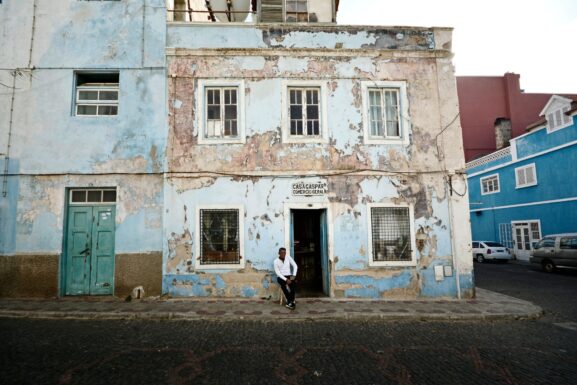
The main town, Vila do Maio, still carries the nickname “Porto Inglês” (English Port), a nod to the British ships that once dominated the salt trade here in the 17th and 18th centuries. The town is a colorful collection of pastel-painted houses, cobblestone streets, and a striking colonial-style church. It serves as the perfect base for exploring the nearby salt flats, offering a slow-paced lifestyle known locally as “Morabeza”—the spirit of Cape Verdean hospitality.
The Geological Marvels
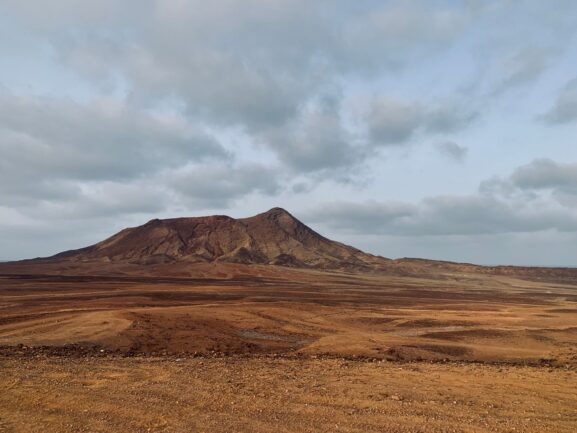
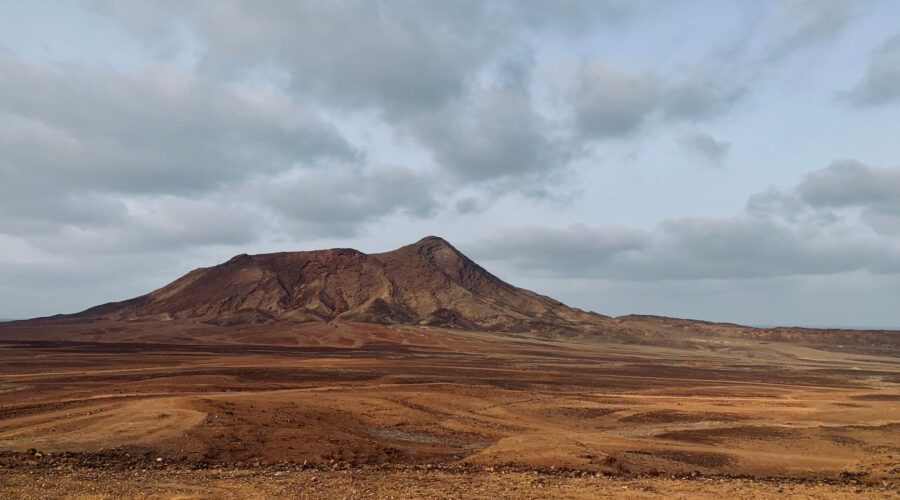
For those interested in the physical history of the earth, Maio is a living museum. The island is part of the Macaronesia ecoregion, and its flat plains hide ancient secrets. The salt flats themselves are located on a bathymetric swell known as the Cape Verde Rise. The contrast between the stark, desert-like interior and the vibrant blue of the Atlantic creates a visual spectacle that defines the Maio experience.
Practical Information for Travelers
Visiting the Salinas of Maio is an adventure for those who prefer the path less traveled. Here are a few tips for your journey:
- Getting There: Maio is accessible via short domestic flights from Praia (Santiago) or by ferry. Due to weather and logistics, schedules can change, so flexibility is key.
- Best Time to Visit: The dry season, from November to July, is ideal for witnessing the salt crystallization. To see the turtles nesting, plan your trip between July and October.
- What to Bring: High-SPF sunscreen, a hat, and plenty of water are essential. The reflection of the sun off the white salt flats can be intense.
- Respect the Environment: The Salinas are a fragile ecosystem. Visitors are encouraged to stay on designated paths and avoid disturbing the salt crust or local wildlife.
The Future of Maio’s Salinas
As Cape Verde moves toward a more sustainable and service-oriented economy, there is a growing focus on eco-tourism for islands like Maio. The government, recognizing the island as a “real success story” of stability and environmental potential, has sought to balance development with conservation. In recent years, debt-for-nature swaps and investments in renewable energy have highlighted the country’s commitment to protecting landscapes like the Salinas from the existential threat of climate change.
The Salt Flats of Maio are more than just a picturesque backdrop; they are a living record of Cape Verde’s geological birth and its human struggle. To walk through the Salinas is to understand the soul of Maio—an island that has turned the simple elements of sun and sea into a lasting legacy of “white gold.”
Image: Pexels – Bibi Kiekens