Charles Darwin in Cape Verde: The Birth of Evolutionary Theory
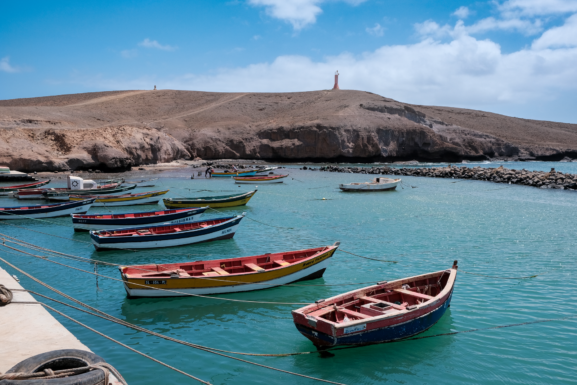
In January 1832, a small, sturdy vessel named the HMS Beagle dropped anchor in the turquoise waters of Porto Praya (modern-day Praia) on the island of Santiago. Onboard was a 22-year-old naturalist named Charles Darwin. While the world remembers Darwin for his later observations in the Galápagos, it was here, in the volcanic archipelago of Cape Verde, that the seeds of his revolutionary theories first began to germinate.
Cape Verde, or Cabo Verde, is a horseshoe-shaped cluster of ten volcanic islands located approximately 570 kilometers off the coast of West Africa. At the time of Darwin’s visit, the islands were a key maritime crossroads—a strategic stop for re-supplying ships traversing the Atlantic. For Darwin, however, this first landfall of the Beagle’s five-year voyage was not merely a rest stop; it was his first encounter with the raw, geological power of the tropics.
A Geological Awakening on Santiago
As Darwin stepped onto the shores of Santiago, he was greeted by a landscape that seemed harsh and desolate. The island’s arid climate, moderated by cold Atlantic currents, creates a stark environment where volcanic rock meets a restless sea. Darwin, who had been studying Charles Lyell’s Principles of Geology during his voyage, was eager to apply Lyell’s theories of “uniformitarianism”—the idea that the Earth is shaped by slow, gradual processes over vast periods of time.
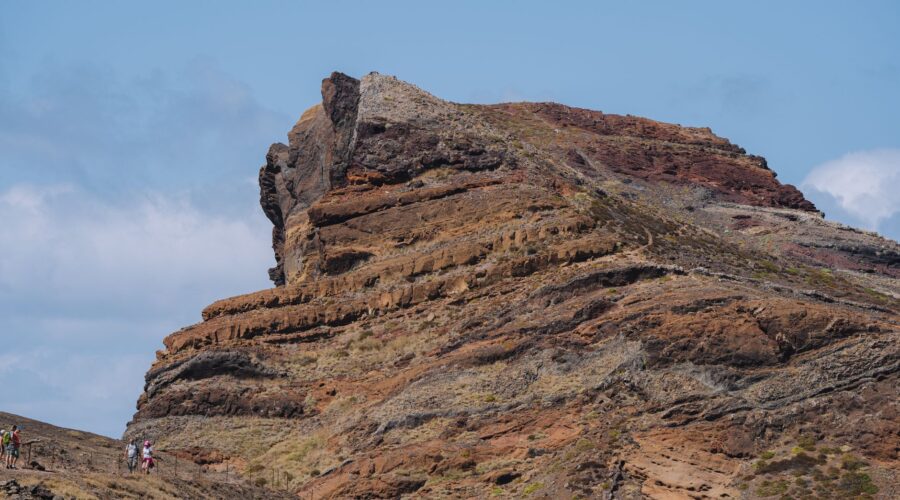
Walking along the cliffs of Porto Praya, Darwin made a discovery that would change his life. He observed a horizontal white band of crushed shells and coral embedded in the dark volcanic rock, high above the current sea level. This geological “sandwich” suggested that the land had once been beneath the ocean and had since been pushed upward by volcanic forces.
“It then first dawned on me,” Darwin later wrote, “that I might perhaps write a book on the geology of the various countries visited, and this made me thrill with delight.” Cape Verde provided the physical proof he needed to understand that the Earth was dynamic and ancient, providing the necessary timescale for biological evolution to occur.
The Flora and Fauna of an Isolated Archipelago
While Santiago is the largest island and home to the capital, Darwin also noted the incredible ecological diversity found within the Macaronesia ecoregion. The islands’ isolation, having formed 40 to 50 million years ago, allowed for the development of unique endemic species. Darwin collected samples of plants, insects, and birds, including the Iago sparrow (Passer iagoensis), which is native to the archipelago.
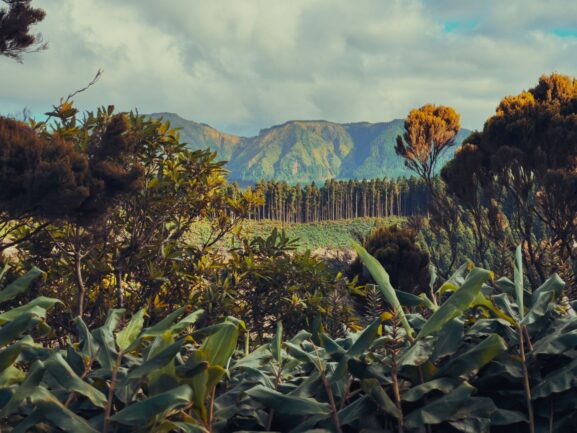
He was struck by how life had managed to take hold on these volcanic peaks. From the humid mountain forests of the interior to the salt flats of islands like Sal and Maio, the archipelago was a living laboratory of adaptation. Darwin’s notes on the birds and reptiles of Cape Verde laid the groundwork for his later realizations that species are not fixed, but rather adapt to their specific environments over generations.
Cape Verde in 1832: A Snapshot of History
Darwin’s visit occurred during a period of transition for Cape Verde. The islands, which had been uninhabited until Portuguese explorers arrived in the 15th century, had long served as a hub for the transatlantic slave trade. By the mid-19th century, the decline of this trade, coupled with persistent droughts, had led to economic hardship. However, the archipelago remained a vital commercial center due to its position along major shipping routes.
During his stay, Darwin also witnessed the social fabric of the islands. He described the Portuguese influence and the vibrant culture of the Cape Verdean people, who trace their ancestry to West African populations and European settlers. The official language was—and remains—Portuguese, but Darwin would have heard the rhythmic sounds of Cape Verdean Creole (Crioulo) spoken in the streets of Praia.
From Darwin’s Observations to Modern Innovation
Today, the same volcanic landscapes Darwin explored are the site of a new kind of evolution. Cape Verde has transformed from a colonial outpost into one of Africa’s most stable and developed democracies. Recognizing the fragility of its environment—Darwin himself noted the aridity of the coastal regions—the nation has become a global leader in sustainability.
In a historic “debt-for-nature” swap in 2023, Portugal agreed to forgive €140 million of Cape Verde’s debt in exchange for investment in environmental and climate projects. The islands, which once relied on passing ships for their economy, are now harnessing the very winds Darwin felt on the Beagle’s deck. As of 2023, 20% of the country’s energy is renewable, with a goal to reach 50% by 2030.
The Legacy of the Beagle
The 1832 visit of Charles Darwin remains a point of pride for Cape Verde. It serves as a reminder that these ten islands in the middle of the Atlantic were not just a waypoint, but a catalyst for one of the greatest shifts in human understanding. Darwin arrived in Santiago as a student of geology and left with the beginning of a vision that would eventually become On the Origin of Species.
For modern travelers following in Darwin’s footsteps, Cape Verde offers more than just sun and sand. Whether visiting the towering Pico do Fogo, the archipelago’s largest active volcano, or exploring the historic streets of Cidade Velha (the first permanent European settlement in the tropics), one can still feel the sense of discovery that captivated a young scientist nearly two centuries ago.
Practical Information for the Modern Naturalist
- Getting There: Most international flights land in Praia (Santiago) or Espargos (Sal).
- Best Time to Visit: To experience the climate Darwin described, visit between November and June when the weather is mild and dry.
- Top Sites: Visit the cliffs of Praia to see the geological formations Darwin studied, and take a trip to Fogo to witness the power of the islands’ volcanic origins.
In the end, Darwin’s time in Cape Verde proves that even the most desolate-looking landscapes can hold the keys to the universe’s greatest mysteries. The evolution of scientific thought began with the dust of Santiago on his boots.
Image: Pexels – Diogo Miranda