Cape Verde’s Highland Forests: Biodiversity & Cloud Mists
Rising dramatically from the azure depths of the central Atlantic, the archipelago of Cape Verde (Cabo Verde) presents a paradox of nature. While much of the country is defined by the arid, Sahelian landscapes associated with its proximity to the African coast, its volcanic peaks harbor a secret: lush, emerald sanctuaries of biodiversity. These are the dry monsoon and laurel forests of Cape Verde—fragile ecosystems kept alive by the peculiar magic of orographic precipitation.
A Macaronesian Sanctuary in the Atlantic
Cape Verde is a member of the Macaronesia ecoregion, sharing a biological and geological heritage with the Azores, Madeira, and the Canary Islands. Located between 600 and 850 kilometers west of Senegal, the ten islands of the archipelago were formed by volcanic activity 40 to 50 million years ago. While the easternmost islands like Sal and Boa Vista are relatively flat and desert-like, the “high islands”—including Santiago, Santo Antão, São Nicolau, and Fogo—reach elevations that pierce the clouds.
It is in these highlands that the climate shifts from the parched heat of the coast to a cool, humid embrace. Here, the interaction between the Atlantic trade winds and the rugged topography creates a microclimate capable of supporting specialized vegetation that seems entirely out of place in a region otherwise defined by water scarcity.
The Phenomenon of Orographic Precipitation
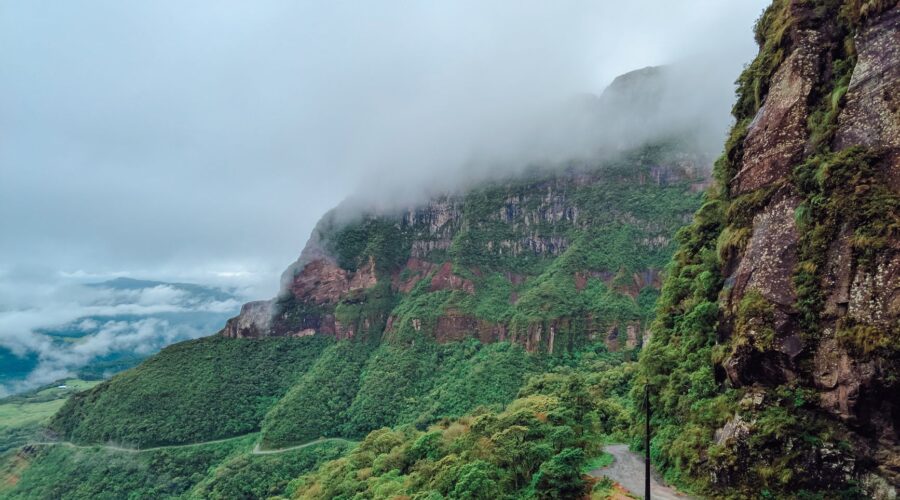
The survival of Cape Verde’s highland biodiversity relies on a process known as orographic precipitation. As moist air masses are blown across the Atlantic by the trade winds, they encounter the steep volcanic slopes of islands like Santiago and Santo Antão. Forced upward, the air cools and condenses, forming thick banks of fog and mist that drape the mountain peaks.
This “horizontal rain” is the lifeblood of the islands’ interior. Even when the lowlands receive no rainfall—which is common in this semi-arid belt—the highland forests are literally “milking” the clouds. The leaves of trees, the thick coats of moss, and the volcanic rocks act as collectors, trapping moisture from the mist and allowing it to drip into the soil. In some humid mountain areas, annual precipitation (including condensation) can exceed 1,000 millimeters, a stark contrast to the mere 67 millimeters recorded in the coastal deserts of Sal Rei.
The Dry Monsoon and Laurel Forests
Within the Cape Verde Islands dry forests ecoregion, two distinct forest types represent the pinnacle of the archipelago’s botanical diversity: the dry monsoon forests and the elusive remnants of Macaronesian laurel forests.
The Dry Monsoon Forests
These forests are adapted to the seasonal nature of West African weather patterns. While the surrounding seas moderate the heat compared to mainland Africa, Cape Verde still experiences a “monsoon” season between August and October. During these months, brief but heavy downpours saturate the highland valleys. The vegetation here is resilient, capable of thriving in high humidity during the wet season and surviving the long, arid stretches of the dry season. These areas often give way to agricultural terraces where sugarcane and banana plantations flourish in the fertile volcanic soil.
The Cloud Forests: Laurel remnants
Higher up, in the zones of permanent mist, lie the remnants of the laurel forests (Laurisilva). These are “relic” forests, descendants of the lush vegetation that covered much of the Mediterranean basin and North Africa millions of years ago. Characterized by evergreen trees with glossy, laurel-like leaves, these forests are sanctuaries for endemic species. The condensation here is so intense that the ground remains damp year-round, supporting a rich carpet of ferns and bryophytes that are absent from the rest of the archipelago.
Biodiversity and Endemism
The isolation of Cape Verde has fostered a unique evolutionary laboratory. The highland forests are critical habitats for the country’s endemic fauna. Birds such as the Cape Verde warbler (Acrocephalus brevipennis) and Alexander’s swift (Apus alexandri) rely on the cover and food sources provided by these wooded enclaves. The Iago sparrow (Passer iagoensis), perhaps the most famous of the islands’ feathered residents, is found throughout the archipelago but thrives in the varied terrains of the greener islands.
The flora is equally specialized. Many of the plants found in the high-altitude humid zones are found nowhere else on Earth. However, this endemism comes with high stakes; these species are extremely vulnerable to climate fluctuations and human encroachment.
The Challenge of Conservation
Despite their beauty, these forests face significant threats. Historically, the arrival of Portuguese settlers in the 15th century led to the clearing of land for agriculture and the introduction of goats, which decimated native vegetation. Today, the primary threat is climate change. As global temperatures rise, the “cloud base” (the altitude at which mist forms) may shift upward, potentially leaving the mountain peaks below the moisture line and causing these ancient forests to dry out.
Cape Verde has become a global leader in addressing these environmental challenges. The government has set ambitious goals for sustainability, aiming for 50% of its energy to come from renewable sources by 2030. Furthermore, innovative financial models like the “debt-for-nature” swap—recently pioneered with Portugal—allow the country to invest heavily in protecting its unique ecological zones in exchange for debt relief.
Visiting the Green Heart of Cabo Verde
For the eco-conscious traveler, these highland forests offer a side of Cape Verde far removed from the all-inclusive resorts of Sal. The island of Santo Antão is often cited as the crown jewel for hikers, with its dizzying ridges and deep, green valleys (ribeiras). Santiago, the largest island, offers the Serra Malagueta Natural Park, where visitors can walk through the mist and witness the dramatic transition from arid slopes to sub-humid forests.
Understanding the dry monsoon and laurel forests of Cape Verde is to understand the resilience of life. In a land where water is gold, these mountains serve as natural towers of life, catching the clouds and nurturing a biological heritage that is as rare as it is beautiful.
Image: Pexels – Claiton Conto