Cabo Verde Coast Guard: Fighting Drug Trafficking in the Atlantic
Strategically positioned at the crossroads of three continents, the Republic of Cabo Verde serves as a vital bridge between Africa, Europe, and the Americas. While its ten volcanic islands are celebrated for their stable democracy and burgeoning tourism, the archipelago’s vast maritime territory presents a monumental challenge. With an Exclusive Economic Zone (EEZ) covering roughly 800,000 square kilometers—nearly 200 times its land area—Cabo Verde has become a critical frontline in the global war against international drug trafficking. At the heart of this struggle is the Cape Verdean Coast Guard, a specialized branch of the military tasked with policing some of the most treacherous transit corridors in the Atlantic.
The Atlantic Gateway: Why Cabo Verde?
The geography that once made Cabo Verde a vital re-supplying station for 19th-century shipping lanes has, in the 21st century, made it an attractive “reorder point” for transnational criminal organizations. Situated approximately 570 kilometers off the coast of West Africa, the islands lie directly along the “Highway 10″—the 10th parallel north that serves as the primary maritime route for cocaine flowing from South America to the lucrative markets of Western Europe.
Traffickers often use the archipelago’s uninhabited islets and rugged coastlines to refuel vessels, stockpile illicit cargo, or transfer shipments from large “mother ships” to smaller, high-speed boats capable of evading radar as they approach the European mainland. For a nation of approximately 530,000 people, monitoring this immense expanse of blue water is a David-and-Goliath endeavor.
The Evolution of the Coast Guard’s Mission
Since gaining independence from Portugal in 1975, Cabo Verde has maintained a small but disciplined military force. Originally focused on territorial integrity, the military’s mandate shifted dramatically as the threat of narco-trafficking escalated in the late 1990s and early 2000s. Today, the Cape Verdean Armed Forces, which consist of the National Guard and the Coast Guard, dedicate the vast majority of their resources—roughly 0.7% of the national GDP—to maritime security and counter-narcotics operations.
The Coast Guard is no longer just a search-and-rescue entity; it is a specialized maritime police force. Its personnel are trained to conduct high-stakes boardings, maritime surveillance, and intelligence gathering. This transition was solidified by the landmark Operação Lancha Voadora (Operation Flying Launch).
Case Study: Operação Lancha Voadora
Launched in 2007, Operação Lancha Voadora remains one of the most successful counter-narcotics operations in African history. A joint effort between the Coast Guard and the Cape Verdean Judicial Police, the mission targeted a sophisticated criminal syndicate smuggling cocaine from Colombia to the Netherlands and Germany via the archipelago. The operation, which remained a closely guarded secret for its first two years, resulted in the seizure of massive quantities of narcotics and the dismantling of a local infrastructure that supported international cartels. This success proved that Cabo Verde was not merely a passive transit point but a proactive defender of international law.
Strategic Partnerships and International Cooperation
Cabo Verde recognizes that it cannot police the Atlantic alone. The country’s “Special Partnership” status with the European Union (established in 2007) and its close ties with the United States have been instrumental in modernizing the Coast Guard. International partners provide the technology and hardware that a service-oriented economy lacking natural resources might otherwise struggle to afford.
The Role of Technology and Joint Exercises
To combat modern traffickers who use GPS, satellite phones, and semi-submersible “narco-subs,” the Cape Verdean Coast Guard relies on:
- COSMAR (Maritime Security Operations Center): A state-of-the-art facility in Praia that integrates radar data, satellite imagery, and intelligence from the U.S. and EU to track suspicious vessels in real-time.
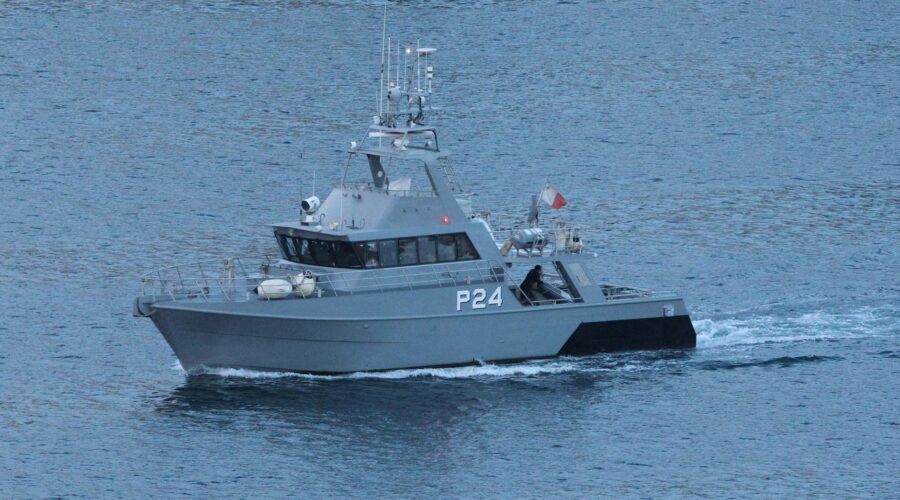
- Donated Assets: Patrol boats and aircraft provided by Portugal, Spain, and the U.S. that allow for long-range patrols far beyond the sight of the islands.
- African Lion and Obangame Express: Regular participation in multi-national military exercises helps Cape Verdean officers synchronize their tactics with international navies, ensuring a seamless response to maritime threats.
The Challenges of “Blue Crime”
Beyond drug trafficking, the Coast Guard faces a “cocktail” of maritime threats often referred to as Blue Crime. These include:
- Illegal, Unreported, and Unregulated (IUU) Fishing: Foreign trawlers often encroach on Cape Verdean waters, depleting local fish stocks which are vital for the nation’s food security.
- Human Trafficking: The islands occasionally serve as a waypoint for migrants attempting the perilous journey to the Canary Islands.
- Climate Change: As one of the most endangered nations regarding climate-driven flooding, the Coast Guard is increasingly called upon for disaster response as the Atlantic produces more intense “Cape Verde-type” hurricanes.
A Model for the Region
Despite its small size and the tragic 2016 “green-on-green” incident at Monte Tchota—which served as a somber reminder of the internal pressures faced by military forces—the Cape Verdean Coast Guard remains a model of efficiency in West Africa. The country’s status as the second most democratic nation in Africa (as of 2026) provides a stable political foundation that ensures the military remains accountable and focused on its international obligations.
By effectively combatting drug trafficking, Cabo Verde protects not only its own borders but also the security of the broader Atlantic community. The Coast Guard’s work ensures that the archipelago remains what President Barack Obama once called “a real success story”—a beacon of stability, democracy, and law in a complex maritime world.
Practical Information for the Global Community
For international observers and investors, Cabo Verde’s commitment to maritime security is a key indicator of its stability. The nation’s success in becoming malaria-free in 2024 and its leadership in renewable energy (aiming for 50% by 2030) are bolstered by the safety provided by its Coast Guard. As the islands continue to grow as a tourism hub, the silent vigil of the Coast Guard remains the invisible shield that keeps the Atlantic “Green Cape” safe for travelers and trade alike.
Image: Pexels – Drinu Cutajar